

Ten Habits of Highly Effective Living
Introduction
Success is not built on occasional moments of brilliance but on consistent daily habits. Highly effective individuals understand that their actions, decisions, and attitudes determine the quality of their lives far more than talent or luck. Effective living is a holistic approach that integrates physical health, emotional resilience, intellectual growth, ethical behavior, financial discipline, and meaningful relationships. Developing positive habits enables individuals to navigate challenges with confidence, maximize productivity, and create lasting value for themselves and society.
The following ten habits represent timeless principles that can help anyone lead a purposeful, productive, and fulfilling life.
1. Begin Each Day with Purpose
Every successful day starts with clarity. Rather than reacting to circumstances, effective individuals define what they want to accomplish before the day begins. A clear purpose improves focus, minimizes distractions, and aligns daily actions with long-term goals.
Morning planning may include reviewing priorities, setting realistic objectives, practicing gratitude, or engaging in meditation. Even spending ten minutes planning the day can significantly improve productivity and decision-making.
Key Benefits:
- Greater focus and motivation
- Better time management
- Reduced stress and confusion
2. Practice Lifelong Learning
Knowledge is one of the few assets that continuously appreciates over time. Highly effective people maintain curiosity throughout life by reading books, attending seminars, taking online courses, learning new skills, and seeking expert guidance.
Continuous learning improves problem-solving abilities, enhances career opportunities, and keeps individuals adaptable in a rapidly changing world.
Ways to Practice:
- Read at least 20–30 minutes daily.
- Learn a new professional skill every year.
- Follow credible educational resources.
- Reflect on lessons learned from daily experiences.
3. Maintain Physical and Mental Health
Health is the foundation upon which all achievements are built. Without physical energy and emotional stability, sustained success becomes difficult.
Effective individuals prioritize balanced nutrition, regular exercise, adequate sleep, stress management, and preventive healthcare. They also pay attention to their mental well-being by practicing mindfulness, seeking support when needed, and maintaining emotional balance.
Healthy habits improve concentration, creativity, resilience, and overall quality of life.
4. Master Time Instead of Managing It
Time is the only resource that cannot be replaced. Highly effective people understand that productivity depends more on prioritization than on working longer hours.
They identify important tasks, eliminate unnecessary activities, reduce digital distractions, and dedicate focused periods for meaningful work.
Popular approaches include:
- Prioritizing high-impact tasks
- Breaking large projects into smaller milestones
- Scheduling uninterrupted deep work sessions
- Reviewing daily progress
Small improvements in daily time management accumulate into remarkable long-term achievements.
5. Develop Emotional Intelligence
Intelligence alone does not guarantee success. Emotional intelligence—the ability to understand and manage emotions while empathizing with others—is equally important.
Individuals with strong emotional intelligence:
- Communicate respectfully
- Resolve conflicts calmly
- Accept constructive criticism
- Build meaningful relationships
- Lead with empathy
Emotional maturity strengthens personal and professional relationships while reducing unnecessary stress and conflict.
6. Build Financial Discipline
Financial stability provides freedom, confidence, and long-term security. Effective individuals develop healthy financial habits early in life.
These include:
- Saving regularly
- Avoiding unnecessary debt
- Investing wisely
- Creating emergency funds
- Tracking expenses
- Living below their means
Financial discipline is not about earning the highest income but about managing available resources responsibly.
7. Cultivate Integrity and Character
Character is revealed when no one is watching. Highly effective people build trust through honesty, responsibility, accountability, and ethical decision-making.
Integrity creates credibility, strengthens professional reputation, and fosters long-lasting relationships.
People who consistently honor their commitments become respected leaders because trust remains one of the most valuable forms of social capital.
8. Communicate with Clarity and Respect
Effective communication is a cornerstone of successful living. Whether speaking, writing, or listening, clear communication minimizes misunderstandings and strengthens collaboration.
Good communicators:
- Listen actively before responding.
- Express ideas confidently and respectfully.
- Provide constructive feedback.
- Adapt communication to different audiences.
- Practice empathy during conversations.
Strong communication skills improve leadership, teamwork, negotiation, and personal relationships.
9. Embrace Adaptability and Resilience
Life inevitably presents setbacks, failures, and unexpected changes. Highly effective individuals view challenges as opportunities for learning rather than reasons to quit.
Resilience involves:
- Accepting change positively
- Learning from mistakes
- Remaining solution-focused
- Maintaining optimism
- Persisting despite temporary failures
Adaptability allows individuals to thrive in uncertain environments while continuing to grow personally and professionally.
10. Contribute Beyond Yourself
The most fulfilling lives extend beyond personal achievement. Highly effective individuals contribute positively to their families, workplaces, communities, and society.
Contribution may include:
- Mentoring others
- Volunteering
- Sharing knowledge
- Supporting charitable causes
- Protecting the environment
- Inspiring future generations
Serving others creates purpose, strengthens communities, and leaves a lasting legacy.
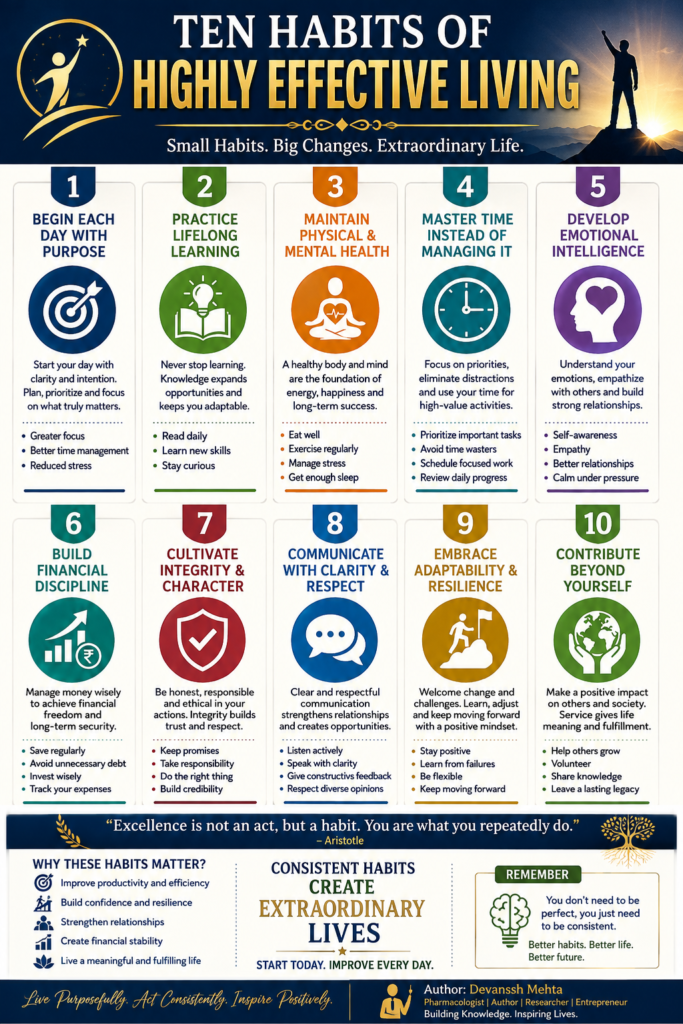
Bringing the Habits Together
These ten habits reinforce one another. Purpose encourages disciplined action. Learning expands opportunities. Health sustains performance. Time management improves productivity. Emotional intelligence strengthens relationships. Financial discipline creates stability. Integrity builds trust. Communication enhances collaboration. Resilience supports perseverance. Service gives life deeper meaning.
No one develops all these habits overnight. Sustainable growth occurs through consistent, incremental improvements practiced every day. Even adopting one new habit each month can produce transformative results over time.
Conclusion
Highly effective living is not defined by wealth, fame, or status but by the consistent pursuit of excellence in everyday life. Individuals who cultivate purposeful routines, lifelong learning, good health, ethical character, emotional resilience, financial responsibility, and a spirit of service are better equipped to overcome challenges and achieve lasting success.
Ultimately, success is less about extraordinary events and more about ordinary actions repeated with discipline and intention. By embracing these ten habits, anyone can build a life marked by productivity, resilience, fulfillment, and positive impact. The journey toward highly effective living begins with a single conscious decision to improve today, continue tomorrow, and never stop growing.