

How to Manage Finances Effectively: A Practical Guide to Financial Success
Introduction
Financial management is one of the most important life skills that determines long-term stability, security, and prosperity. Regardless of whether an individual is a student, salaried employee, entrepreneur, or retiree, the ability to manage money wisely influences the quality of life. Effective financial management is not about earning a huge income—it is about making informed decisions, controlling expenses, saving consistently, investing wisely, and preparing for future uncertainties.
With increasing inflation, changing economic conditions, and evolving financial markets, individuals must adopt disciplined financial habits to achieve their personal and professional goals. This article discusses practical strategies that can help anyone build a strong financial foundation and achieve lasting financial well-being.
1. Set Clear Financial Goals
Financial success begins with defining realistic and measurable goals. These goals should be categorized into:
- Short-term goals (within one year): Creating an emergency fund, purchasing a laptop, or paying off small debts.
- Medium-term goals (1–5 years): Buying a vehicle, pursuing higher education, or starting a business.
- Long-term goals (more than 5 years): Purchasing a house, children’s education, or retirement planning.
Clear goals provide direction and make financial decisions more purposeful.
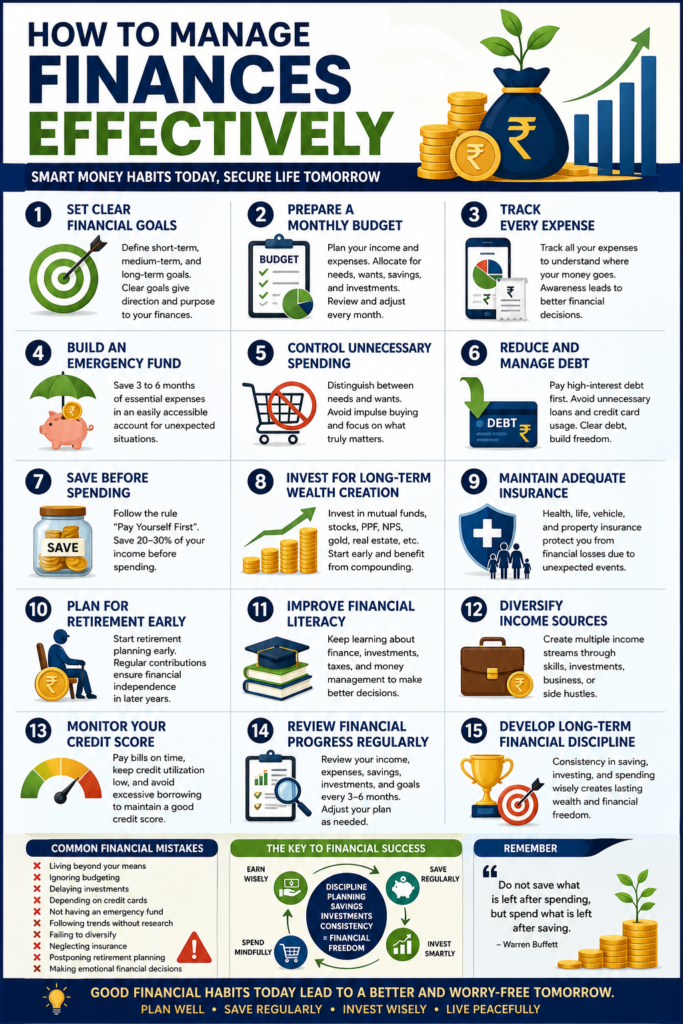
2. Prepare a Monthly Budget
A budget acts as a financial roadmap. It helps monitor income, expenses, and savings while preventing unnecessary spending.
A good budget should include:
- Total monthly income
- Fixed expenses (rent, EMI, insurance)
- Variable expenses (food, transportation, entertainment)
- Savings and investments
- Emergency expenses
Reviewing the budget every month allows individuals to identify unnecessary expenditures and improve financial discipline.
3. Track Every Expense
Many people underestimate how much they spend on small daily purchases. Maintaining a record of expenses helps identify spending patterns.
Useful methods include:
- Mobile budgeting applications
- Spreadsheet tracking
- Personal finance journals
- Digital banking statements
Regular expense tracking increases awareness and reduces impulsive purchases.
4. Build an Emergency Fund
Unexpected events such as job loss, medical emergencies, or major repairs can significantly impact financial stability.
Experts generally recommend maintaining an emergency fund equal to three to six months of essential living expenses.
The emergency fund should be:
- Easily accessible
- Kept separate from investment accounts
- Used only for genuine emergencies
This financial cushion reduces dependence on loans and credit cards during difficult times.
5. Control Unnecessary Spending
Financial discipline involves distinguishing between needs and wants.
Before making any purchase, ask:
- Is this necessary?
- Can I delay this purchase?
- Is there a less expensive alternative?
- Will this purchase improve my long-term financial well-being?
Avoiding impulse buying significantly increases savings over time.
6. Reduce and Manage Debt
Debt is not always harmful, but unmanaged debt can create financial stress.
Strategies include:
- Paying high-interest loans first
- Avoiding unnecessary credit card usage
- Making timely EMI payments
- Consolidating expensive debts when appropriate
- Borrowing only when necessary
Reducing debt improves creditworthiness and frees up money for savings and investments.
7. Save Before Spending
One of the most effective financial principles is “Pay Yourself First.”
Instead of saving whatever remains at the end of the month, allocate a fixed percentage of income toward savings immediately after receiving it.
A practical guideline is:
- 20–30% of monthly income for savings and investments
- Remaining income for expenses and lifestyle needs
Automating savings helps maintain consistency.
8. Invest for Long-Term Wealth Creation
Savings preserve money, whereas investments help money grow.
Diversification reduces investment risk. Common investment options include:
- Mutual funds
- Stocks
- Government securities
- Fixed deposits
- Public Provident Fund (PPF)
- National Pension System (NPS)
- Gold
- Real estate
The power of long-term investing becomes especially evident through compound growth.
Starting investments early allows returns to accumulate over time, making long-term financial goals easier to achieve.
9. Maintain Adequate Insurance
Insurance protects financial assets against unexpected losses.
Important types include:
- Health insurance
- Life insurance
- Vehicle insurance
- Property insurance
- Business insurance (if applicable)
Adequate insurance prevents financial setbacks caused by unforeseen events.
10. Plan for Retirement Early
Retirement planning should begin as early as possible.
Regular retirement contributions allow wealth accumulation over decades through disciplined investing.
Important retirement planning options include:
- Pension schemes
- Retirement mutual funds
- Provident funds
- Long-term equity investments
Early planning significantly reduces financial pressure later in life.
11. Improve Financial Literacy
Financial education enables better decision-making.
Individuals should continuously learn about:
- Budgeting
- Tax planning
- Investment strategies
- Inflation
- Risk management
- Insurance
- Personal finance
Reading books, attending financial workshops, and following credible financial experts can improve financial knowledge.
12. Diversify Income Sources
Relying solely on one source of income increases financial risk.
Additional income sources may include:
- Freelancing
- Consulting
- Dividend income
- Rental income
- Digital products
- Online businesses
- Investment returns
Multiple income streams improve financial resilience and accelerate wealth creation.
13. Monitor Credit Score
A healthy credit score helps secure loans at lower interest rates.
To maintain a good credit score:
- Pay bills on time.
- Avoid excessive borrowing.
- Keep credit utilization low.
- Regularly review your credit report.
Good credit management contributes to long-term financial health.
14. Review Financial Progress Regularly
Financial planning is an ongoing process.
Review financial performance every three to six months by assessing:
- Income growth
- Expense patterns
- Savings rate
- Investment performance
- Debt reduction
- Achievement of financial goals
Regular reviews help adjust strategies as circumstances change.
15. Develop Long-Term Financial Discipline
Successful financial management depends more on consistent habits than on high income.
Develop habits such as:
- Spending thoughtfully
- Saving regularly
- Investing consistently
- Avoiding unnecessary debt
- Living within your means
- Continuously learning about finance
Small disciplined actions performed consistently often produce significant financial success over time.
Common Financial Mistakes to Avoid
Many individuals struggle financially because of avoidable mistakes, including:
- Living beyond their income
- Ignoring budgeting
- Delaying investments
- Depending excessively on credit cards
- Not maintaining emergency savings
- Following investment trends without research
- Failing to diversify investments
- Neglecting insurance coverage
- Postponing retirement planning
- Making emotional financial decisions
Recognizing and avoiding these pitfalls greatly improves financial stability.
Conclusion
Effective financial management is not determined by how much money a person earns but by how wisely they manage available resources. Establishing clear goals, maintaining a realistic budget, saving consistently, investing for long-term growth, controlling debt, and improving financial literacy together create a strong foundation for financial independence. In an increasingly uncertain economic environment, disciplined money management provides security, reduces stress, and creates opportunities for future growth. By adopting sound financial habits today, individuals can build sustainable wealth, achieve their personal aspirations, and enjoy greater financial freedom throughout their lives.