

Dealing with Anxiety and Depression: 10 Practical Tips and Tricks for a Healthier Mind
Introduction
Anxiety and depression are among the most common mental health challenges affecting millions of people worldwide. While anxiety often involves excessive worry, fear, and nervousness, depression is characterized by persistent sadness, loss of interest, reduced motivation, and feelings of hopelessness. Although these conditions can occur separately, they frequently coexist and significantly impact physical health, relationships, work performance, and overall quality of life.
The good news is that anxiety and depression are manageable. Alongside professional medical care when needed, adopting healthy daily habits can improve emotional resilience, reduce stress, and support long-term mental well-being. Small, consistent changes often make a meaningful difference over time.
This article discusses ten practical and evidence-based strategies that can help individuals better manage anxiety and depression in their daily lives.
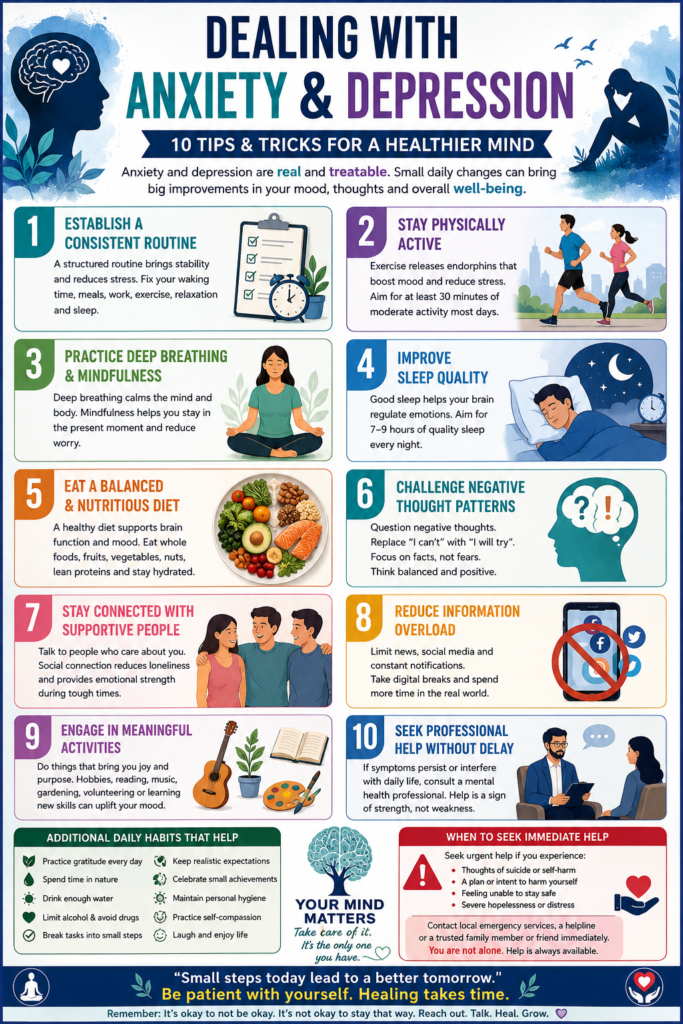
1. Establish a Consistent Daily Routine
One of the first steps toward emotional stability is creating a structured daily schedule. Anxiety often thrives in uncertainty, while depression can worsen when daily life lacks purpose or organization.
A healthy routine should include:
- Fixed wake-up and bedtime
- Regular meal timings
- Planned work or study periods
- Exercise
- Leisure activities
- Relaxation time
Following a routine helps restore a sense of control and predictability, reducing mental fatigue and emotional overwhelm.
2. Stay Physically Active
Exercise is one of the most effective natural mood boosters available. Physical activity stimulates the release of endorphins, serotonin, and dopamine—chemicals that improve mood and reduce stress.
Helpful activities include:
- Brisk walking
- Jogging
- Cycling
- Swimming
- Yoga
- Strength training
- Dancing
Aim for at least 30 minutes of moderate exercise five days a week. Even short walks outdoors can significantly reduce anxious thoughts.
3. Practice Deep Breathing and Mindfulness
Anxiety often causes racing thoughts and physical symptoms such as rapid heartbeat and muscle tension.
Simple breathing exercises can quickly calm the nervous system.
Example:
- Inhale for 4 seconds
- Hold for 4 seconds
- Exhale slowly for 6 seconds
- Repeat for 5–10 minutes
Mindfulness meditation teaches individuals to focus on the present moment rather than worrying about the future or dwelling on the past.
Regular mindfulness practice has been associated with lower stress levels and improved emotional regulation.
4. Improve Sleep Quality
Poor sleep can both trigger and worsen anxiety and depression.
Healthy sleep habits include:
- Sleeping 7–9 hours nightly
- Going to bed at the same time
- Avoiding screens before bedtime
- Limiting caffeine in the evening
- Keeping the bedroom cool and quiet
Quality sleep allows the brain to regulate emotions more effectively and improves concentration, memory, and resilience.
5. Eat a Balanced and Nutritious Diet
Nutrition plays an important role in brain health.
A balanced diet should include:
- Fresh fruits
- Green leafy vegetables
- Whole grains
- Lean proteins
- Nuts and seeds
- Healthy fats
- Plenty of water
Foods rich in omega-3 fatty acids, B vitamins, magnesium, and antioxidants may support normal brain function and mood.
Limiting excessive sugar, processed foods, alcohol, and high caffeine intake may also reduce mood fluctuations.
6. Challenge Negative Thinking Patterns
People experiencing anxiety or depression often develop automatic negative thoughts such as:
- “I always fail.”
- “Nothing will improve.”
- “Everyone is judging me.”
Learning to question these thoughts is an important cognitive strategy.
Ask yourself:
- Is there evidence for this belief?
- Am I assuming the worst?
- What would I tell a friend in this situation?
- Is there another explanation?
Replacing unrealistic thoughts with balanced ones gradually strengthens emotional resilience.
7. Stay Connected with Supportive People
Social support is one of the strongest protective factors against depression.
Reach out to:
- Family members
- Close friends
- Mentors
- Colleagues
- Support groups
Even brief conversations can reduce feelings of loneliness.
Avoid isolating yourself, as prolonged isolation often intensifies anxious and depressive symptoms.
8. Reduce Information Overload
Constant exposure to negative news, social media comparisons, and continuous notifications can increase anxiety.
Helpful digital habits include:
- Limiting daily news consumption
- Taking regular social media breaks
- Turning off unnecessary notifications
- Spending more time offline
- Reading books or engaging in hobbies instead
Creating healthy boundaries with technology promotes mental calmness.
9. Engage in Meaningful Activities
Depression often reduces motivation and enjoyment.
Rather than waiting to “feel motivated,” begin with small enjoyable activities.
Examples include:
- Reading
- Gardening
- Painting
- Playing music
- Volunteering
- Cooking
- Learning a new skill
- Writing in a journal
Meaningful engagement gradually rebuilds confidence and restores a sense of accomplishment.
10. Seek Professional Help Without Delay
Persistent anxiety or depression should never be ignored.
Consult qualified professionals if symptoms:
- Last more than two weeks
- Interfere with work or education
- Affect relationships
- Cause severe distress
- Include thoughts of self-harm or suicide
Treatment options may include:
- Psychological counseling
- Cognitive Behavioral Therapy (CBT)
- Medication when appropriate
- Lifestyle modification
- Stress-management programs
Seeking professional help is a sign of strength and proactive self-care, not weakness.
Additional Daily Habits for Better Mental Health
Simple habits that can support emotional well-being include:
- Practicing gratitude each day
- Spending time in nature
- Drinking enough water
- Limiting alcohol and recreational drugs
- Keeping realistic expectations
- Breaking large tasks into smaller steps
- Celebrating small achievements
- Practicing self-compassion instead of harsh self-criticism
- Maintaining personal hygiene and self-care
- Laughing and spending time with positive people
When to Seek Immediate Help
If someone experiences:
- Thoughts of suicide or self-harm
- A plan or intent to harm themselves
- Feeling unable to stay safe
- Severe hopelessness or emotional distress
they should seek emergency medical care or contact local emergency or crisis services immediately. Reaching out to a trusted family member or friend while getting professional help is also important.
Conclusion
Managing anxiety and depression is not about eliminating every difficult emotion but about developing healthy strategies to cope with life’s challenges. Regular exercise, quality sleep, balanced nutrition, mindfulness, supportive relationships, positive thinking, and professional care together form a strong foundation for better mental health.
Recovery is often gradual rather than immediate, and progress may come in small steps. By consistently practicing healthy habits and seeking help when needed, individuals can improve emotional resilience, regain confidence, and lead fulfilling lives. Every positive action, no matter how small, contributes to better mental well-being and a healthier future.