

20 Officer-Like Qualities for Effective Living: Building Character, Leadership, and Success
By Devanssh Mehta
Abstract
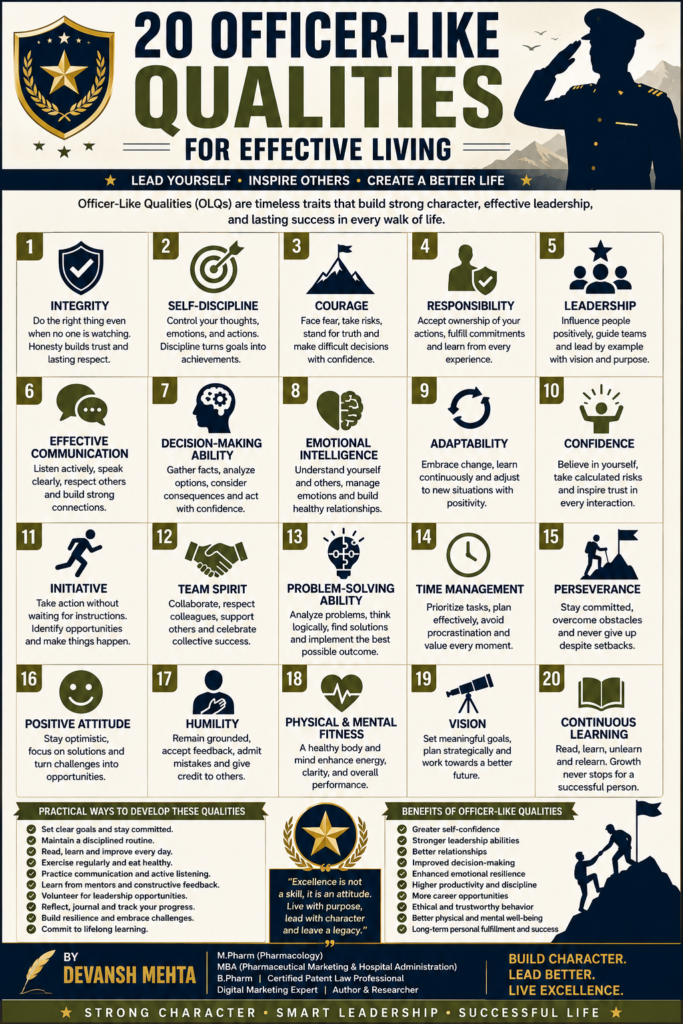
Officer-Like Qualities (OLQs) are a set of personality traits traditionally associated with military leadership, but their relevance extends far beyond the armed forces. These qualities help individuals make sound decisions, lead teams, solve problems, maintain discipline, and achieve personal and professional excellence. In today’s competitive world, effective living requires much more than academic knowledge or technical expertise. It demands emotional maturity, integrity, resilience, adaptability, and the ability to inspire others. This article explores twenty essential Officer-Like Qualities that can help individuals build stronger character, improve relationships, enhance career success, and lead meaningful lives.
Introduction
Success in life is rarely determined solely by intelligence or talent. Instead, it is often the result of one’s habits, mindset, discipline, and ability to overcome challenges. Officer-Like Qualities represent a comprehensive framework of personal excellence that enables individuals to become capable leaders and responsible citizens.
Originally developed to identify potential military leaders, these qualities are equally valuable for entrepreneurs, healthcare professionals, researchers, students, managers, teachers, and anyone striving for excellence. They encourage balanced decision-making, ethical behavior, emotional intelligence, and lifelong learning.
The following twenty qualities form the foundation of effective living.
1. Integrity
Integrity means doing the right thing even when no one is watching. Honest individuals gain trust, credibility, and long-term respect. Integrity forms the foundation of personal and professional relationships.
People with integrity remain truthful, keep promises, admit mistakes, and maintain ethical standards regardless of circumstances.
2. Self-Discipline
Discipline is the ability to control one’s thoughts, emotions, and actions.
Highly disciplined individuals:
- Wake up on time
- Complete tasks consistently
- Maintain healthy habits
- Avoid unnecessary distractions
- Stay committed to long-term goals
Discipline transforms ordinary people into extraordinary achievers.
3. Courage
Courage is not the absence of fear but the willingness to act despite fear.
Effective living requires courage to:
- Face failures
- Accept criticism
- Stand for truth
- Make difficult decisions
- Leave comfort zones
Every successful person develops courage through repeated action.
4. Responsibility
Responsible individuals accept ownership of their actions rather than blaming others.
They:
- Fulfill commitments
- Meet deadlines
- Learn from failures
- Protect relationships
- Take accountability
Responsibility builds maturity and reliability.
5. Leadership
Leadership is the ability to influence people positively.
Great leaders:
- Inspire confidence
- Guide teams
- Solve conflicts
- Encourage innovation
- Lead by example
Leadership begins with leading oneself before leading others.
6. Effective Communication
Communication is one of the most valuable life skills.
Good communicators:
- Listen actively
- Speak clearly
- Respect differing opinions
- Provide constructive feedback
- Resolve misunderstandings peacefully
Strong communication strengthens both personal and professional relationships.
7. Decision-Making Ability
Life constantly presents choices.
Effective decision-makers:
- Gather facts
- Analyze risks
- Consider consequences
- Act confidently
- Accept responsibility
Quick yet thoughtful decisions often determine success.
8. Emotional Intelligence
Understanding emotions is essential for effective living.
Emotionally intelligent people:
- Control anger
- Manage stress
- Understand others
- Show empathy
- Build healthy relationships
Emotional intelligence often contributes more to success than IQ alone.
9. Adaptability
The modern world changes rapidly.
Adaptable individuals:
- Learn continuously
- Accept change
- Develop new skills
- Adjust strategies
- Remain optimistic
Flexibility enables survival and growth.
10. Confidence
Confidence develops through preparation and consistent effort.
Confident individuals:
- Believe in themselves
- Take calculated risks
- Speak with clarity
- Handle criticism maturely
- Inspire trust
Confidence is built through competence rather than arrogance.
11. Initiative
Initiative means taking action without waiting for instructions.
People with initiative:
- Identify opportunities
- Solve problems proactively
- Volunteer for responsibilities
- Create improvements
- Lead innovation
Opportunity favors proactive individuals.
12. Team Spirit
No major achievement occurs in isolation.
Team-oriented individuals:
- Respect colleagues
- Share knowledge
- Support others
- Celebrate collective success
- Resolve conflicts constructively
Collaboration multiplies success.
13. Problem-Solving Ability
Challenges are inevitable.
Effective problem solvers:
- Analyze root causes
- Think logically
- Generate solutions
- Evaluate alternatives
- Implement improvements
Every problem represents an opportunity to learn.
14. Time Management
Time is the only resource equally available to everyone.
Successful individuals:
- Prioritize important work
- Avoid procrastination
- Plan effectively
- Eliminate distractions
- Maintain work-life balance
Managing time means managing life.
15. Perseverance
Success often requires sustained effort.
Persistent individuals:
- Continue despite setbacks
- Learn from failures
- Stay motivated
- Improve continuously
- Never give up easily
Persistence converts dreams into reality.
16. Positive Attitude
A positive mindset influences behavior, relationships, and performance.
Positive individuals:
- Focus on solutions
- Encourage others
- Learn from adversity
- Stay hopeful
- Maintain emotional stability
Optimism fuels resilience.
17. Humility
Humility reflects true strength.
Humble people:
- Accept feedback
- Respect everyone
- Continue learning
- Admit mistakes
- Share credit generously
Humility attracts respect and lifelong learning.
18. Physical and Mental Fitness
Good health supports effective decision-making and productivity.
Healthy habits include:
- Regular exercise
- Balanced nutrition
- Adequate sleep
- Meditation
- Stress management
Strong minds flourish in healthy bodies.
19. Vision
Vision gives direction to life.
Visionary individuals:
- Set meaningful goals
- Plan strategically
- Inspire others
- Anticipate future challenges
- Work consistently toward long-term success
Without vision, effort lacks direction.
20. Continuous Learning
Learning never ends.
Successful lifelong learners:
- Read regularly
- Develop new skills
- Attend workshops
- Learn from mentors
- Stay updated with technology
Continuous learning ensures sustained growth in an evolving world.
Practical Ways to Develop Officer-Like Qualities
Developing these qualities requires consistent effort rather than dramatic changes. Some practical approaches include:
- Set clear daily and long-term goals.
- Maintain a disciplined morning routine.
- Read books on leadership, psychology, and self-development.
- Exercise regularly and prioritize physical fitness.
- Practice public speaking and active listening.
- Reflect on your decisions through journaling.
- Learn from mentors and constructive feedback.
- Volunteer for leadership roles in your community or workplace.
- Build resilience by viewing setbacks as learning opportunities.
- Commit to lifelong learning through courses, reading, and practical experience.
Benefits of Officer-Like Qualities
Cultivating these qualities can lead to:
- Greater self-confidence
- Better leadership abilities
- Stronger personal and professional relationships
- Improved emotional resilience
- Enhanced decision-making skills
- Higher productivity and discipline
- Greater career opportunities
- Ethical and trustworthy behavior
- Better physical and mental well-being
- Long-term personal fulfillment and success
Conclusion
Officer-Like Qualities are not exclusive to military officers; they represent universal principles of character, leadership, and personal excellence. Integrity, discipline, courage, responsibility, emotional intelligence, adaptability, perseverance, and continuous learning empower individuals to navigate life’s challenges with confidence and purpose. By consciously developing these twenty qualities, anyone can become a more effective leader, dependable professional, supportive family member, and responsible citizen. Effective living is ultimately about becoming the best version of oneself, and Officer-Like Qualities provide a practical roadmap for that lifelong journey.