
Treatment and Management of Myasthenia Gravis: A Comprehensive Review
Introduction
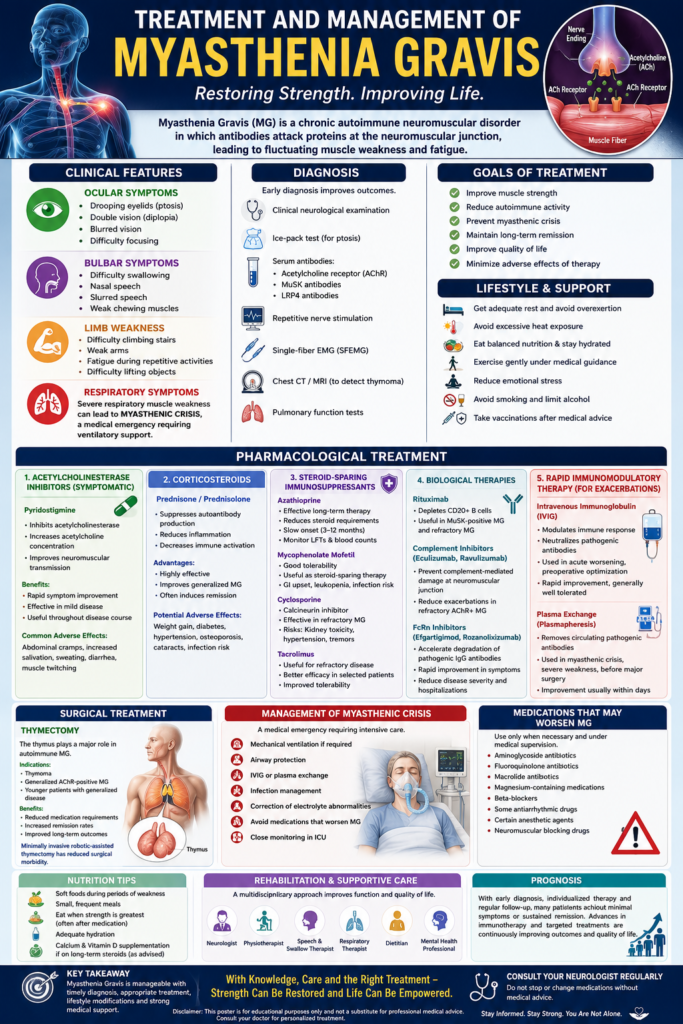
Myasthenia gravis (MG) is a chronic autoimmune neuromuscular disorder characterized by fluctuating skeletal muscle weakness and fatigue. The condition occurs because the body’s immune system mistakenly attacks proteins at the neuromuscular junction, disrupting communication between nerves and muscles. Most commonly, antibodies target the acetylcholine receptor (AChR), while others target muscle-specific kinase (MuSK) or low-density lipoprotein receptor-related protein 4 (LRP4).
Although there is currently no definitive cure for myasthenia gravis, significant advances in medical science have transformed it into a manageable disease for most patients. With appropriate treatment, many individuals lead productive and independent lives.
Understanding the Disease
The neuromuscular junction is where motor nerves communicate with muscle fibers using the neurotransmitter acetylcholine. In myasthenia gravis, autoimmune antibodies interfere with this process by:
- Destroying acetylcholine receptors
- Blocking receptor function
- Activating complement-mediated damage
- Disrupting neuromuscular transmission
As a result, muscles become weak after repeated use but recover partially with rest.
Clinical Features
The symptoms vary considerably between individuals.
Ocular Symptoms
- Drooping eyelids (ptosis)
- Double vision (diplopia)
- Blurred vision
- Difficulty focusing
Bulbar Symptoms
- Difficulty swallowing
- Nasal speech
- Slurred speech
- Weak chewing muscles
Limb Weakness
- Difficulty climbing stairs
- Weak arms
- Fatigue during repetitive activities
- Difficulty lifting objects
Respiratory Symptoms
The most severe complication is myasthenic crisis, characterized by respiratory muscle weakness requiring emergency ventilatory support.
Diagnosis
Early diagnosis improves long-term outcomes.
Diagnostic investigations include:
- Clinical neurological examination
- Ice-pack test (for ptosis)
- Edrophonium test (rarely used today)
- Serum antibodies:
- Acetylcholine receptor antibodies
- MuSK antibodies
- LRP4 antibodies
- Repetitive nerve stimulation
- Single-fiber electromyography (SFEMG)
- Chest CT or MRI to detect thymoma
- Pulmonary function tests
Goals of Treatment
Management aims to:
- Improve muscle strength
- Reduce autoimmune activity
- Prevent myasthenic crisis
- Maintain long-term remission
- Improve quality of life
- Minimize adverse effects of therapy
Pharmacological Treatment
1. Acetylcholinesterase Inhibitors
These are the first-line symptomatic treatment.
Pyridostigmine
Mechanism:
- Inhibits acetylcholinesterase
- Increases acetylcholine concentration
- Improves neuromuscular transmission
Benefits:
- Rapid symptom improvement
- Effective in mild disease
- Useful throughout disease course
Common adverse effects:
- Abdominal cramps
- Increased salivation
- Sweating
- Diarrhea
- Muscle twitching
2. Corticosteroids
Prednisone or prednisolone remains one of the most effective immunosuppressive therapies.
Mechanism:
- Suppresses autoantibody production
- Reduces inflammation
- Decreases immune activation
Advantages:
- Highly effective
- Improves generalized MG
- Often induces remission
Potential adverse effects:
- Weight gain
- Diabetes
- Hypertension
- Osteoporosis
- Cataracts
- Increased infection risk
Steroids are usually introduced gradually because some patients may experience temporary worsening before improvement.
3. Steroid-Sparing Immunosuppressive Agents
Long-term corticosteroid exposure can cause significant adverse effects, so additional immunosuppressants are often used.
Azathioprine
Advantages:
- Effective long-term therapy
- Reduces steroid requirements
Limitations:
- Slow onset (3–12 months)
- Requires monitoring of liver function and blood counts
Mycophenolate Mofetil
Benefits:
- Better tolerability in many patients
- Useful as steroid-sparing therapy
Adverse effects:
- Gastrointestinal upset
- Leukopenia
- Infection risk
Cyclosporine
Mechanism:
- Calcineurin inhibitor
- Suppresses T-cell activation
Major adverse effects:
- Kidney toxicity
- Hypertension
- Tremors
Tacrolimus
Increasingly used because of:
- Better efficacy in selected patients
- Improved tolerability
- Useful for refractory disease
4. Biological Therapies
Modern biologics have revolutionized treatment, particularly for refractory myasthenia gravis.
Rituximab
Especially beneficial in:
- MuSK-positive MG
- Refractory generalized MG
Mechanism:
- Depletes CD20-positive B cells
- Reduces autoantibody production
Complement Inhibitors
Examples include:
- Eculizumab
- Ravulizumab
Mechanism:
- Prevent complement-mediated destruction of acetylcholine receptors
Benefits:
- Significant improvement in refractory AChR-positive MG
- Reduced exacerbations
FcRn Inhibitors
Examples include:
- Efgartigimod
- Rozanolixizumab
Mechanism:
- Accelerate degradation of pathogenic IgG antibodies
Advantages:
- Rapid symptom improvement
- Reduced disease severity
- Fewer hospitalizations in appropriate patients
Rapid Immunomodulatory Therapy
Used during severe exacerbations or myasthenic crisis.
Intravenous Immunoglobulin (IVIG)
Mechanism:
- Modulates immune responses
- Neutralizes pathogenic antibodies
Indications:
- Acute worsening
- Preoperative optimization
- Bridge therapy
Benefits:
- Rapid improvement
- Generally well tolerated
Plasma Exchange (Plasmapheresis)
Mechanism:
- Removes circulating pathogenic antibodies
Indications:
- Myasthenic crisis
- Severe generalized weakness
- Before major surgery
Improvement usually occurs within days.
Surgical Treatment
Thymectomy
The thymus plays a major role in autoimmune MG.
Indications:
- Thymoma
- Generalized AChR-positive MG
- Younger patients with generalized disease
Benefits:
- Reduced medication requirements
- Increased remission rates
- Improved long-term outcomes
Minimally invasive robotic-assisted thymectomy has reduced surgical morbidity compared with traditional open surgery.
Management of Myasthenic Crisis
A medical emergency requiring intensive care.
Treatment includes:
- Mechanical ventilation if required
- Airway protection
- IVIG or plasma exchange
- Infection management
- Correction of electrolyte abnormalities
- Avoidance of medications that worsen MG
Lifestyle and Supportive Management
Successful long-term care extends beyond medication.
Patients should:
- Get adequate rest
- Avoid excessive heat exposure
- Eat balanced nutrition
- Exercise gently under medical guidance
- Reduce emotional stress
- Avoid smoking
- Limit alcohol intake
- Maintain vaccinations after discussing them with their healthcare provider
Medications That May Worsen Myasthenia Gravis
Certain drugs can aggravate neuromuscular weakness and should only be used with medical advice when necessary. Examples include:
- Aminoglycoside antibiotics
- Fluoroquinolone antibiotics
- Macrolide antibiotics
- Magnesium-containing medications
- Beta-blockers
- Some antiarrhythmic drugs
- Certain anesthetic agents
- Neuromuscular blocking drugs
Patients should inform all healthcare providers that they have myasthenia gravis before receiving new medications or anesthesia.
Nutrition
Recommended dietary practices include:
- Soft foods during periods of weakness
- Small, frequent meals
- Eating when strength is greatest (often after medication)
- Adequate hydration
- Calcium and vitamin D supplementation if taking long-term corticosteroids, as advised by a healthcare professional
Rehabilitation
A multidisciplinary approach may involve:
- Neurologists
- Physiotherapists
- Occupational therapists
- Speech and swallowing therapists
- Respiratory therapists
- Dietitians
- Mental health professionals
Rehabilitation helps maintain independence and quality of life.
Recent Advances
Research continues to improve outcomes through:
- Personalized immunotherapy based on antibody subtype
- Long-acting complement inhibitors
- FcRn inhibitors
- Biomarker-guided treatment
- Improved minimally invasive thymectomy techniques
- Investigational cell-based and gene-targeted therapies
These advances are expanding treatment options, particularly for patients with refractory disease.
Prognosis
With modern therapies, the outlook for people with myasthenia gravis has improved substantially. Many patients achieve minimal symptoms or sustained remission with appropriate treatment. Early diagnosis, individualized therapy, regular follow-up, and prompt management of exacerbations are key to preventing complications and preserving quality of life.
Conclusion
Myasthenia gravis is a complex autoimmune disorder that requires comprehensive and individualized management. Treatment combines symptomatic therapies, immunosuppressive medications, biologic agents, thymectomy when indicated, and supportive care. Newer targeted therapies, such as complement inhibitors and FcRn inhibitors, have significantly improved outcomes for many patients with difficult-to-control disease. Ongoing research into immune modulation and precision medicine is expected to further enhance long-term disease control, reduce treatment-related adverse effects, and improve quality of life.
Selected References
- Gilhus NE. Myasthenia Gravis. New England Journal of Medicine. 2016;375(26):2570–2581.
- Narayanaswami P, Sanders DB, Wolfe G, et al. International Consensus Guidance for Management of Myasthenia Gravis (2020 Update). Neurology. 2021;96(3):114–122.
- Gilhus NE, Tzartos S, Evoli A, et al. Myasthenia gravis. Nature Reviews Disease Primers. 2019;5:30.
- Wolfe GI, Kaminski HJ, Aban IB, et al. Randomized Trial of Thymectomy in Myasthenia Gravis. New England Journal of Medicine. 2016;375:511–522.
- Howard JF Jr, Bril V, Vu T, et al. Safety and Efficacy of Eculizumab in Refractory Generalized Myasthenia Gravis. Lancet Neurology. 2017;16(12):976–986.
- Howard JF Jr, Bril V, Burns TM, et al. Randomized Phase 3 Trial of Efgartigimod in Generalized Myasthenia Gravis. Lancet Neurology. 2021;20(7):526–536.
- Sanders DB, Wolfe GI, Benatar M, et al. International Consensus Guidance for Management of Myasthenia Gravis. Neurology. 2016;87(4):419–425.
- Gilhus NE. Myasthenia Gravis: Current Treatment and Emerging Therapies. Current Opinion in Neurology. 2023;36(5):535–542.