

Top Twenty Qualities of an Effective Army Officer
An army officer is far more than a commander in uniform. Effective military leadership requires exceptional character, unwavering discipline, strategic thinking, and a deep commitment to serving the nation. Army officers are entrusted with the responsibility of protecting national sovereignty, leading soldiers under challenging conditions, making critical decisions under pressure, and maintaining the highest standards of professionalism.
Throughout history, successful military leaders have demonstrated a common set of qualities that distinguish them from ordinary individuals. These qualities are developed through rigorous training, experience, continuous learning, and personal commitment. The following twenty qualities define an effective army officer.
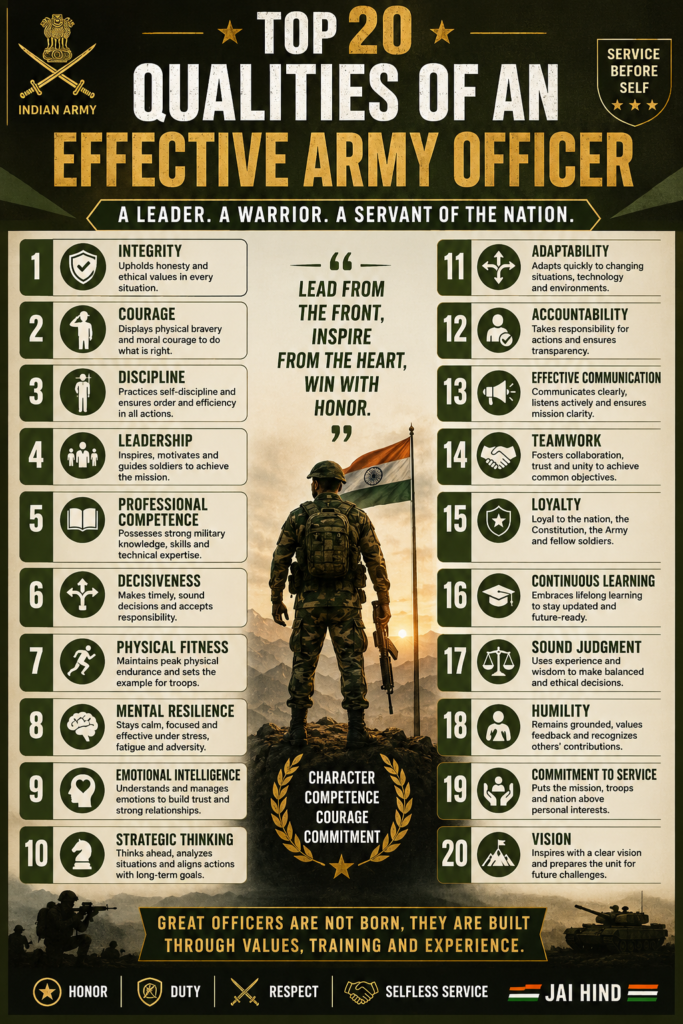
1. Integrity
Integrity forms the foundation of military leadership. An effective army officer remains honest, ethical, and trustworthy regardless of circumstances. Soldiers willingly follow leaders whose actions consistently reflect their words.
2. Courage
Military courage extends beyond physical bravery. It also includes moral courage—the willingness to make difficult decisions, admit mistakes, and stand by ethical principles even when faced with opposition or adversity.
3. Discipline
Discipline ensures order, efficiency, and operational success. Effective officers demonstrate self-discipline before expecting discipline from others. Their consistent adherence to military standards inspires confidence throughout the ranks.
4. Leadership
Leadership is the ability to motivate, inspire, and guide individuals toward achieving a common mission. Great army officers lead by example, communicate clearly, and create an environment of mutual respect and trust.
5. Professional Competence
An effective officer continuously develops military knowledge, tactical expertise, and technical skills. Competence builds confidence among subordinates and enables sound operational decision-making.
6. Decisiveness
Military operations often require immediate decisions with limited information. Effective officers assess situations quickly, weigh available options, and make timely decisions while accepting responsibility for the outcomes.
7. Physical Fitness
Military service demands exceptional physical endurance. Maintaining high levels of fitness enables officers to perform under extreme environmental conditions while setting an example for their troops.
8. Mental Resilience
Combat and military operations expose officers to tremendous psychological stress. Mental resilience allows them to remain calm, focused, and effective despite uncertainty, fatigue, and adversity.
9. Emotional Intelligence
Understanding emotions—both one’s own and those of others—is essential for leading diverse teams. Officers with emotional intelligence resolve conflicts effectively, build trust, and strengthen unit cohesion.
10. Strategic Thinking
Effective officers think beyond immediate challenges. They analyze the broader operational environment, anticipate future developments, and align tactical actions with long-term strategic objectives.
11. Adaptability
Modern warfare evolves rapidly through technological advances, cyber threats, and changing geopolitical conditions. Successful officers remain flexible and adapt quickly to new missions and unforeseen circumstances.
12. Accountability
Effective leaders accept responsibility for both successes and failures. Accountability promotes transparency, strengthens organizational trust, and reinforces professional standards within military units.
13. Effective Communication
Clear communication prevents misunderstandings and ensures mission success. Army officers must communicate precise instructions, provide constructive feedback, and actively listen to their personnel.
14. Teamwork
Military success depends upon coordinated teamwork. Effective officers foster collaboration, mutual support, and unity among personnel from diverse backgrounds and specializations.
15. Loyalty
Loyalty involves commitment to the nation, the Constitution, the military organization, fellow soldiers, and the mission. Genuine loyalty strengthens morale and reinforces military values.
16. Continuous Learning
Military doctrine, technology, and global security environments constantly evolve. Outstanding officers remain lifelong learners by studying military history, leadership, technology, and emerging security challenges.
17. Sound Judgment
Army officers frequently encounter complex situations with incomplete information. Sound judgment enables balanced decisions that consider operational objectives, ethical responsibilities, and potential risks.
18. Humility
Despite authority and rank, effective officers remain humble. They value feedback, recognize the contributions of their soldiers, and continue learning throughout their careers.
19. Commitment to Service
Military leadership is fundamentally about service before self. Effective officers prioritize the welfare of their troops, the success of the mission, and the interests of the nation above personal gain.
20. Vision
Exceptional officers possess the ability to inspire others with a clear vision of mission success. They prepare their units not only for current operations but also for future challenges, fostering innovation and continuous improvement.
Developing These Qualities
While some leadership traits may come naturally, most are developed through deliberate effort and experience. Aspiring army officers can strengthen these qualities by:
- Maintaining strict personal discipline.
- Building physical and mental fitness.
- Studying military history and leadership.
- Practicing ethical decision-making.
- Seeking mentorship from experienced leaders.
- Continuously improving communication skills.
- Embracing challenges as opportunities for growth.
- Leading by example in every situation.
Conclusion
An effective army officer is defined not merely by rank or authority but by character, competence, and commitment to service. Integrity, courage, discipline, resilience, strategic thinking, humility, and leadership together create officers capable of leading soldiers through the most demanding circumstances. As military operations continue to evolve in an increasingly complex global environment, these timeless qualities remain the cornerstone of professional military excellence and national security. Officers who consistently cultivate these attributes not only accomplish missions successfully but also inspire confidence, strengthen organizational culture, and leave a lasting legacy of honorable service.