

Management of Diabetic Nephropathy and the Emerging Role of Natural Drugs: A Review
Author: Devanssh Mehta
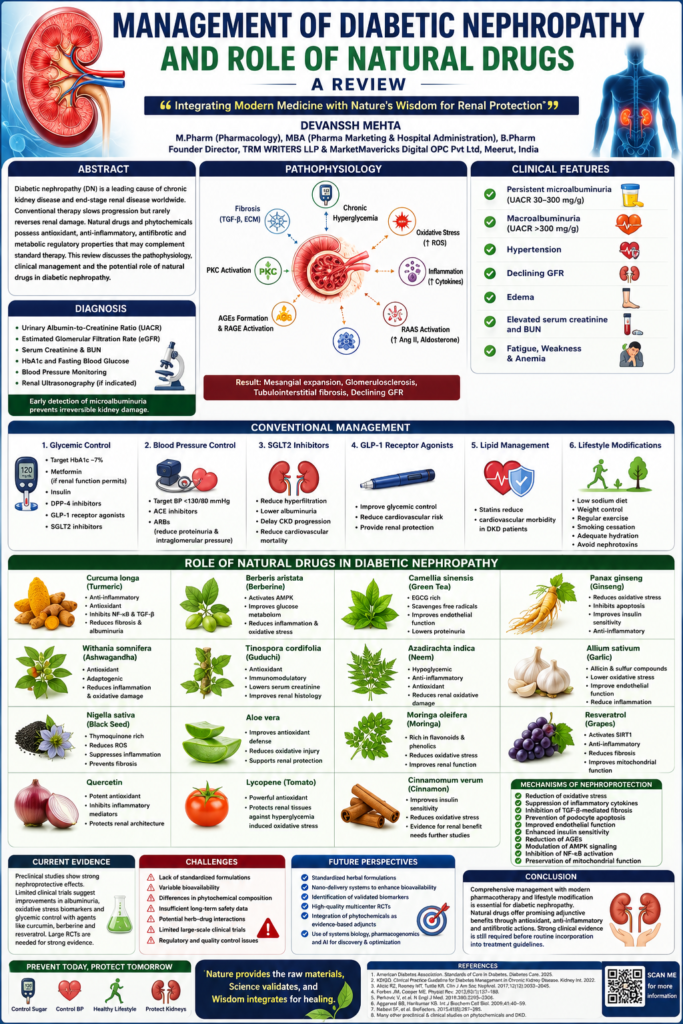
Abstract
Diabetic nephropathy (DN), also known as diabetic kidney disease (DKD), is one of the most common and severe microvascular complications of diabetes mellitus. It remains a leading cause of chronic kidney disease (CKD) and end-stage renal disease (ESRD) worldwide. Persistent hyperglycemia induces oxidative stress, inflammation, fibrosis, and glomerular damage, ultimately resulting in progressive deterioration of renal function. Conventional management primarily includes glycemic control, blood pressure regulation, renin-angiotensin-aldosterone system (RAAS) blockade, sodium-glucose cotransporter-2 (SGLT2) inhibitors, glucagon-like peptide-1 (GLP-1) receptor agonists, and lifestyle modifications. Although these therapies effectively delay disease progression, they rarely halt or reverse renal injury. Consequently, growing attention has been directed toward natural drugs and phytochemicals possessing antioxidant, anti-inflammatory, antifibrotic, and nephroprotective properties. This review discusses the pathophysiology, clinical management, and therapeutic potential of natural drugs in diabetic nephropathy while highlighting future research opportunities.
Keywords: Diabetic nephropathy, diabetic kidney disease, natural drugs, medicinal plants, antioxidants, phytochemicals, nephroprotection
Introduction
Diabetes mellitus has emerged as one of the most significant global public health challenges. According to the International Diabetes Federation, hundreds of millions of individuals are affected worldwide, and the prevalence continues to increase. Approximately 30–40% of diabetic patients eventually develop diabetic nephropathy, making it one of the leading causes of renal failure.
Diabetic nephropathy develops gradually through persistent hyperglycemia-induced structural and functional alterations in the kidneys. The disease is characterized by albuminuria, declining glomerular filtration rate (GFR), hypertension, glomerulosclerosis, and tubulointerstitial fibrosis. Without appropriate management, diabetic nephropathy progresses toward chronic kidney disease and eventually end-stage renal disease requiring dialysis or kidney transplantation.
Recent advances in pharmacotherapy have significantly improved patient outcomes. However, adverse effects, high treatment costs, incomplete renal protection, and residual disease progression have encouraged researchers to investigate plant-derived compounds as adjunctive therapeutic options.
Pathophysiology of Diabetic Nephropathy
The development of diabetic nephropathy involves multiple interconnected molecular pathways.
Persistent hyperglycemia increases glucose metabolism within renal cells, leading to excessive production of reactive oxygen species (ROS). Oxidative stress damages endothelial cells, podocytes, mesangial cells, and renal tubular epithelial cells.
Formation of advanced glycation end products (AGEs) promotes irreversible protein cross-linking and activates inflammatory signaling pathways through interaction with RAGE receptors.
Activation of protein kinase C (PKC) contributes to endothelial dysfunction, increased vascular permeability, and extracellular matrix deposition.
Transforming growth factor-beta (TGF-β) stimulates excessive collagen synthesis and renal fibrosis.
Chronic activation of inflammatory cytokines including tumor necrosis factor-alpha (TNF-α), interleukin-1β, and interleukin-6 accelerates renal injury.
Activation of the renin-angiotensin-aldosterone system results in intraglomerular hypertension, proteinuria, and progressive nephron loss.
These mechanisms collectively contribute to mesangial expansion, glomerular basement membrane thickening, podocyte loss, glomerulosclerosis, and declining renal function.
Clinical Features
Patients initially remain asymptomatic.
As disease progresses, common clinical manifestations include:
- Persistent microalbuminuria
- Macroalbuminuria
- Hypertension
- Edema
- Declining GFR
- Elevated serum creatinine
- Fatigue
- Electrolyte imbalance
- Proteinuria
- Progressive renal insufficiency
Diagnosis
Diagnosis involves clinical evaluation combined with laboratory investigations.
Major diagnostic tools include:
- Urinary albumin-to-creatinine ratio (UACR)
- Estimated glomerular filtration rate (eGFR)
- Serum creatinine
- Blood urea nitrogen
- HbA1c
- Blood pressure monitoring
- Renal ultrasonography when indicated
Early identification of microalbuminuria remains the cornerstone of preventing irreversible renal damage.
Conventional Management
Glycemic Control
Strict glycemic control reduces progression of diabetic nephropathy. HbA1c should generally be maintained around 7%, individualized according to patient characteristics.
Common antidiabetic drugs include:
- Metformin (when renal function permits)
- Insulin
- DPP-4 inhibitors
- GLP-1 receptor agonists
- SGLT2 inhibitors
Blood Pressure Control
Blood pressure should generally be maintained below 130/80 mmHg.
Preferred antihypertensive drugs include:
- ACE inhibitors
- Angiotensin receptor blockers (ARBs)
These agents reduce intraglomerular pressure and proteinuria while slowing renal disease progression.
SGLT2 Inhibitors
Drugs such as empagliflozin, dapagliflozin, and canagliflozin have transformed diabetic nephropathy management.
Benefits include:
- Reduced hyperfiltration
- Lower albuminuria
- Delayed CKD progression
- Reduced cardiovascular mortality
GLP-1 Receptor Agonists
Semaglutide and liraglutide improve metabolic control and reduce cardiovascular risk while offering additional renal protection.
Lipid Management
Statins reduce cardiovascular morbidity associated with diabetic kidney disease.
Lifestyle Modifications
Lifestyle interventions include:
- Low sodium diet
- Weight reduction
- Smoking cessation
- Regular exercise
- Protein intake optimization
- Adequate hydration
- Avoidance of nephrotoxic drugs
Role of Natural Drugs
Medicinal plants contain bioactive compounds capable of targeting oxidative stress, inflammation, apoptosis, fibrosis, and metabolic dysfunction.
Curcuma longa (Turmeric)
Curcumin exhibits powerful antioxidant and anti-inflammatory properties.
Mechanisms include:
- NF-κB inhibition
- TGF-β suppression
- Reduced oxidative stress
- Decreased renal fibrosis
- Improved albuminuria
Berberis aristata
Berberine activates AMP-activated protein kinase (AMPK), improving glucose metabolism while reducing inflammatory cytokines and oxidative stress.
Camellia sinensis (Green Tea)
Epigallocatechin gallate (EGCG) provides nephroprotection through:
- Free radical scavenging
- Reduced inflammation
- Improved endothelial function
- Lower proteinuria
Panax ginseng
Ginsenosides improve renal function by:
- Reducing oxidative stress
- Inhibiting apoptosis
- Improving insulin sensitivity
- Suppressing inflammatory pathways
Withania somnifera (Ashwagandha)
Ashwagandha possesses antioxidant and adaptogenic activities that may reduce oxidative damage and inflammatory responses in diabetic kidneys.
Tinospora cordifolia (Guduchi)
Guduchi demonstrates:
- Antioxidant activity
- Immunomodulatory effects
- Reduction in serum creatinine
- Improvement in renal histology in experimental models
Azadirachta indica (Neem)
Neem exhibits:
- Hypoglycemic activity
- Anti-inflammatory effects
- Antioxidant properties
- Reduced renal oxidative damage
Allium sativum (Garlic)
Garlic contains allicin and sulfur compounds that:
- Lower oxidative stress
- Improve endothelial function
- Reduce lipid peroxidation
- Decrease inflammatory cytokines
Nigella sativa (Black Seed)
Thymoquinone protects kidneys by:
- Reducing reactive oxygen species
- Suppressing inflammation
- Improving antioxidant enzyme activity
- Preventing renal fibrosis
Aloe vera
Experimental studies indicate that Aloe vera improves antioxidant defense and reduces diabetic renal injury.
Moringa oleifera
Moringa contains flavonoids and phenolic compounds that reduce oxidative stress and improve renal function in diabetic experimental models.
Resveratrol
Resveratrol, a polyphenol found in grapes, demonstrates:
- SIRT1 activation
- Anti-inflammatory effects
- Improved mitochondrial function
- Reduced fibrosis
- Improved endothelial health
Quercetin
Quercetin inhibits inflammatory mediators while reducing oxidative injury and preserving renal architecture.
Lycopene
Lycopene acts as a potent antioxidant that protects renal tissues against hyperglycemia-induced oxidative stress.
Cinnamon (Cinnamomum verum)
Cinnamon may improve insulin sensitivity and reduce oxidative stress, although clinical evidence for renal outcomes remains limited.
Mechanisms of Nephroprotection by Natural Drugs
Natural compounds exert renoprotective effects through multiple pathways:
- Reduction of oxidative stress
- Suppression of inflammatory cytokines
- Inhibition of TGF-β-mediated fibrosis
- Prevention of podocyte apoptosis
- Improved endothelial function
- Enhanced insulin sensitivity
- Reduction of advanced glycation end products
- Modulation of AMPK signaling
- Inhibition of NF-κB activation
- Preservation of mitochondrial function
Current Evidence
Most natural compounds have shown promising renoprotective effects in cell culture and animal studies. Limited clinical trials suggest improvements in albuminuria, oxidative stress biomarkers, and glycemic control with agents such as curcumin, berberine, and resveratrol. However, the evidence is generally based on small studies with heterogeneous designs, and robust multicenter randomized controlled trials are still needed before these therapies can be recommended as standard care.
Challenges
Several barriers limit the clinical adoption of natural drugs:
- Lack of standardized formulations
- Variable bioavailability
- Differences in phytochemical composition
- Insufficient long-term safety data
- Potential herb-drug interactions
- Limited large-scale randomized clinical trials
- Regulatory and quality-control issues
Future Perspectives
Future research should focus on standardized herbal formulations, nanotechnology-based delivery systems to enhance bioavailability, identification of validated biomarkers for monitoring response, high-quality multicenter clinical trials, and integration of phytochemicals as evidence-based adjuncts to conventional therapy. Systems biology, pharmacogenomics, and artificial intelligence may further support the discovery and optimization of plant-derived nephroprotective agents.
Conclusion
Diabetic nephropathy remains a major cause of chronic kidney disease and end-stage renal disease despite advances in conventional pharmacotherapy. Comprehensive management with optimized glycemic control, blood pressure management, RAAS inhibition, SGLT2 inhibitors, GLP-1 receptor agonists, and lifestyle modification is the current standard of care. Natural drugs—including curcumin, berberine, green tea catechins, garlic, black seed, resveratrol, quercetin, and other phytochemicals—demonstrate promising antioxidant, anti-inflammatory, and antifibrotic activities that may complement conventional treatment. While preclinical evidence is encouraging, stronger clinical evidence from well-designed randomized controlled trials is required before routine incorporation into treatment guidelines. Until then, these agents should be viewed as potential adjuncts rather than replacements for established therapies.
References
World Health Organization. Global Report on Diabetes. Geneva: WHO; 2016.
American Diabetes Association. Standards of Care in Diabetes. Diabetes Care. 2025.
Kidney Disease: Improving Global Outcomes (KDIGO). Clinical Practice Guideline for Diabetes Management in Chronic Kidney Disease. Kidney International. 2022.
Alicic RZ, Rooney MT, Tuttle KR. Diabetic Kidney Disease: Challenges, Progress, and Possibilities. Clinical Journal of the American Society of Nephrology. 2017;12(12):2032–2045.
Forbes JM, Cooper ME. Mechanisms of diabetic complications. Physiological Reviews. 2013;93(1):137–188.
Tuttle KR, et al. Diabetic Kidney Disease: A Report From an ADA Consensus Conference. Diabetes Care. 2014;37(10):2864–2883.
Perkovic V, et al. Canagliflozin and Renal Outcomes in Type 2 Diabetes and Nephropathy. New England Journal of Medicine. 2019;380:2295–2306.
Heerspink HJL, et al. Dapagliflozin in Patients with Chronic Kidney Disease. New England Journal of Medicine. 2020;383:1436–1446.
Bakris GL, et al. Effect of Finerenone on Chronic Kidney Disease Outcomes in Type 2 Diabetes. New England Journal of Medicine. 2020;383:2219–2229.
Aggarwal BB, Harikumar KB. Potential Therapeutic Effects of Curcumin. International Journal of Biochemistry & Cell Biology. 2009;41:40–59.
Gupta SC, Patchva S, Aggarwal BB. Therapeutic Roles of Curcumin. AAPS Journal. 2013;15(1):195–218.
Cicero AFG, Baggioni A. Berberine and Metabolic Disorders. Biomedicine & Pharmacotherapy. 2016;84:1205–1211.
Nabavi SF, et al. Resveratrol: A Double-Edged Sword in Health Benefits. BioFactors. 2015;41(5):287–295.
Rask-Madsen C, King GL. Vascular Complications of Diabetes. Cell. 2013;148(6):1245–1257.