

Strategic Branding Framework for the Indian Market
Introduction: The Strategic Importance of Brand Building in India
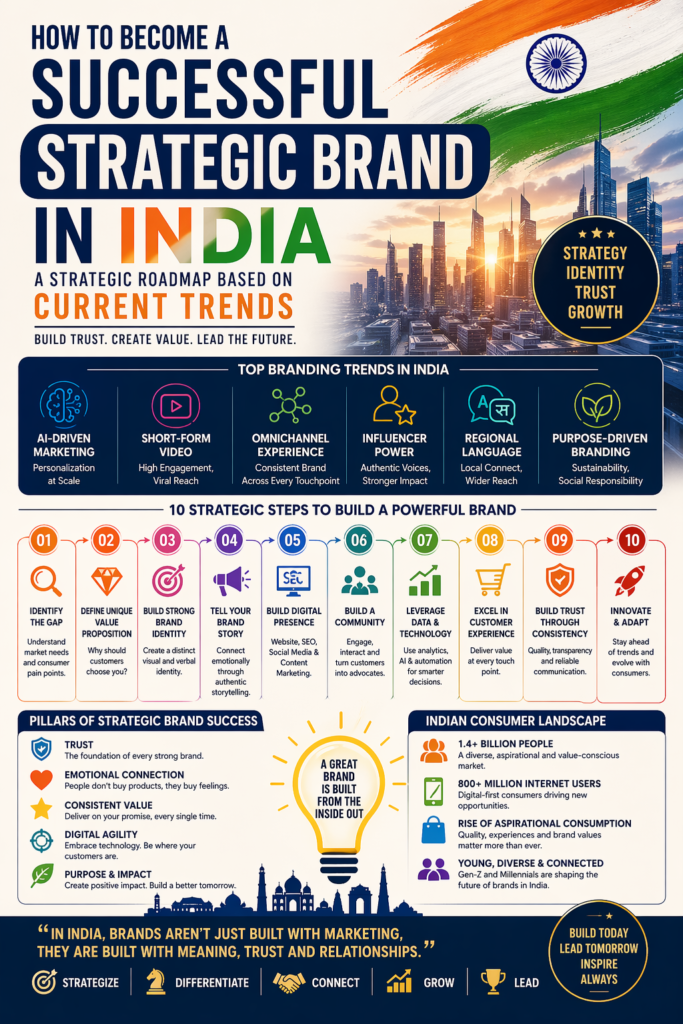
India today represents one of the most dynamic and competitive consumer markets in the world. With a population exceeding 1.4 billion people, rapid digital transformation, rising disposable income, and a young demographic profile, the country offers unprecedented opportunities for businesses to build powerful brands. However, success in India requires more than simply offering a good product. It requires strategic brand building, deep cultural understanding, digital agility, and long-term trust creation.
Over the last decade, branding strategies have evolved significantly. Traditional advertising channels such as television and print media are no longer sufficient on their own. Instead, modern brands rely on digital ecosystems, influencer marketing, AI-driven personalization, omnichannel experiences, and purpose-driven storytelling to build lasting relationships with consumers. (Optimist Brand Design)
Furthermore, India’s digital revolution is accelerating rapidly. The country has added tens of millions of internet users in recent years, with total users surpassing 800 million, and digital media consumption continues to rise dramatically. (Ipsos)
This transformation has reshaped the marketing landscape. Brands must now compete not only on price and quality but also on identity, storytelling, and customer experience.
This article presents a detailed strategic roadmap on how to build a successful brand in India, integrating current market trends, digital transformation insights, and consumer behavior patterns.
1. Understanding the Indian Consumer Landscape
1.1 Diversity of the Indian Market
India is not a single homogeneous market. Instead, it consists of multiple micro-markets defined by:
- language
- culture
- income levels
- geography
- digital access
- consumption behavior
A brand that succeeds in metropolitan cities may not necessarily resonate with consumers in tier-2 or rural regions.
Therefore, strategic branding in India requires localization and cultural sensitivity.
Key Consumer Segments
- Urban aspirational middle class
- Gen-Z digital consumers
- Rural value-driven consumers
- Premium lifestyle buyers
- Conscious consumers focused on sustainability
Each segment requires a different communication strategy and value proposition.
1.2 Rise of the Digital Consumer
India’s internet penetration and smartphone usage have transformed consumption patterns.
Digital platforms now influence almost every stage of the buying process:
- Discovery
- Research
- Social proof
- Purchase
- Post-purchase engagement
Consumers frequently discover brands through:
- YouTube
- Influencer reviews
- E-commerce platforms
Thus, digital visibility has become the foundation of modern branding in India.
1.3 Rise of Aspirational Consumption
India is witnessing a surge in aspirational consumption, particularly among young consumers.
Brands that represent:
- aspiration
- success
- modern identity
- cultural pride
tend to achieve higher brand recall and loyalty.
For example, several consumer brands in India have expanded rapidly by targeting young urban aspirational consumers and leveraging strong digital engagement. (Reuters)
This demonstrates that brand identity and lifestyle positioning are becoming more important than price alone.
2. The Foundations of Strategic Branding
Strategic branding refers to the systematic process of building long-term brand equity through identity, storytelling, customer experience, and trust.
The core elements of strategic branding include:
- Brand identity
- Brand positioning
- Brand narrative
- Brand experience
- Brand consistency
Brand marketing plays a crucial role because it creates trust, loyalty, and differentiation even when products are similar. (HT Media)
2.1 Brand Identity
Brand identity is the visual and conceptual representation of a company.
It includes:
- logo
- colors
- typography
- messaging
- tone of communication
- brand personality
A consistent identity helps consumers recognize and remember a brand across different channels.
2.2 Brand Positioning
Brand positioning answers a fundamental question:
Why should customers choose your brand instead of competitors?
Effective positioning strategies include:
- premium positioning
- value positioning
- innovation positioning
- heritage positioning
- sustainability positioning
For example:
- Apple → innovation
- Nike → performance
- Tata → trust
In India, trust-based positioning is particularly powerful due to the importance of reputation and reliability in purchasing decisions.
2.3 Brand Storytelling
Consumers connect emotionally with stories, not products.
A compelling brand story typically includes:
- origin story
- mission
- vision
- values
- societal contribution
Storytelling humanizes a brand and strengthens emotional engagement.
3. Major Branding Trends in India
Modern strategic branding in India is shaped by several emerging trends.
3.1 AI-Driven Marketing
Artificial intelligence is transforming marketing by enabling:
- predictive analytics
- personalized recommendations
- automated content creation
- chatbots and customer service
AI enables brands to deliver hyper-personalized experiences, improving engagement and conversion rates. (Optimist Brand Design)
3.2 Short-Form Video Marketing
Short-form videos on platforms such as:
- Instagram Reels
- YouTube Shorts
- TikTok (globally)
have become extremely powerful marketing tools.
These videos provide:
- quick engagement
- emotional storytelling
- viral reach
Brands that master visual storytelling often dominate social media.
3.3 Omnichannel Branding
Modern consumers interact with brands through multiple channels.
Typical journey:
Instagram → website → WhatsApp → physical store.
Omnichannel branding ensures consistent experience across all platforms, improving brand trust and conversion. (Optimist Brand Design)
3.4 Influencer Marketing
Influencers have become powerful brand ambassadors.
Types of influencers include:
- mega influencers
- macro influencers
- micro influencers
- nano influencers
Micro-influencers often produce higher engagement rates due to their authenticity.
3.5 Regional Language Marketing
India has 22 official languages and hundreds of dialects.
Brands that create content in regional languages gain:
- deeper emotional connection
- stronger rural penetration
- broader audience reach.
3.6 Purpose-Driven Branding
Modern consumers increasingly support brands that demonstrate:
- social responsibility
- sustainability
- ethical practices
Purpose-driven brands build stronger emotional loyalty.
4. Strategic Steps to Build a Successful Brand in India
Step 1: Identify a Clear Market Gap
The first step is identifying a clear problem or unmet need.
Successful brands typically solve a specific consumer pain point.
Examples:
- affordable luxury
- convenience
- health-focused products
- sustainable alternatives
Market research is critical during this stage.
Step 2: Define a Unique Value Proposition
Your value proposition should answer:
Why should customers choose your brand?
Examples include:
- best quality
- best price
- best experience
- most innovative solution
A clear value proposition improves brand recall.
Step 3: Build a Strong Digital Presence
Digital platforms are essential for brand visibility.
Key platforms include:
- YouTube
- Amazon
- Flipkart
- company website
Digital presence should focus on:
- storytelling
- content marketing
- search engine optimization (SEO)
- social media engagement.
Step 4: Invest in Content Marketing
Content marketing is the backbone of modern branding.
Content types include:
- blogs
- podcasts
- videos
- infographics
- educational content
Content marketing builds authority and trust.
Step 5: Leverage Community Building
Modern brands succeed by building communities rather than just customer bases.
Communities can be built through:
- social media groups
- brand events
- online forums
- loyalty programs
Community members often become brand advocates.
5. The Role of Technology in Brand Building
Technology plays an increasingly important role in branding.
5.1 Data Analytics
Data analytics helps brands understand:
- consumer behavior
- purchasing patterns
- campaign performance
This enables more precise marketing decisions.
5.2 Automation
Marketing automation tools help brands manage:
- email marketing
- customer segmentation
- lead nurturing
Automation improves efficiency.
5.3 Customer Relationship Management (CRM)
CRM systems help companies track customer interactions and improve retention.
6. Strategic Branding in the Age of E-Commerce
E-commerce is transforming brand growth in India.
Online marketplaces such as:
- Amazon
- Flipkart
- Nykaa
- Meesho
have enabled startups to scale rapidly.
Brands must focus on:
- product reviews
- ratings
- customer experience
- logistics efficiency.
7. Importance of Trust in Indian Branding
Trust remains the most critical factor in brand success.
Trust is built through:
- product quality
- transparent communication
- ethical practices
- consistent customer service.
Brand trust leads to:
- repeat purchases
- word-of-mouth marketing
- long-term brand equity.
8. Branding for Startups and Entrepreneurs
Startups should focus on:
- niche markets
- digital-first strategies
- community building
- authentic storytelling.
Many successful Indian startups initially focused on direct-to-consumer digital branding before expanding into retail.
9. Common Branding Mistakes to Avoid
Common mistakes include:
- Lack of clear positioning
- Inconsistent messaging
- Ignoring regional diversity
- Over-reliance on advertising
- Weak customer experience
Avoiding these mistakes significantly improves brand success probability.
10. Future of Branding in India
Several trends will shape the future of branding in India:
AI-driven marketing
immersive brand experiences
social commerce
creator economy
sustainability branding
Brands that successfully integrate technology, culture, and storytelling will dominate the future market.
Conclusion: The Strategic Blueprint for Brand Success in India
Becoming a successful brand in India requires strategic thinking, cultural understanding, technological agility, and long-term commitment.
The modern Indian brand must simultaneously achieve five objectives:
- Build trust
- Create emotional connection
- Deliver consistent value
- Embrace digital transformation
- Adapt to evolving consumer expectations.
In a market as vast and dynamic as India, brand success does not come from short-term campaigns. It emerges from strategic vision, disciplined execution, and authentic engagement with consumers.
Brands that combine innovation, authenticity, and purpose will not only succeed commercially but will also become cultural symbols of modern India’s economic transformation.