

A Strategic, Scientific, and Economic Perspective
(Written by Author Devanssh Mehta
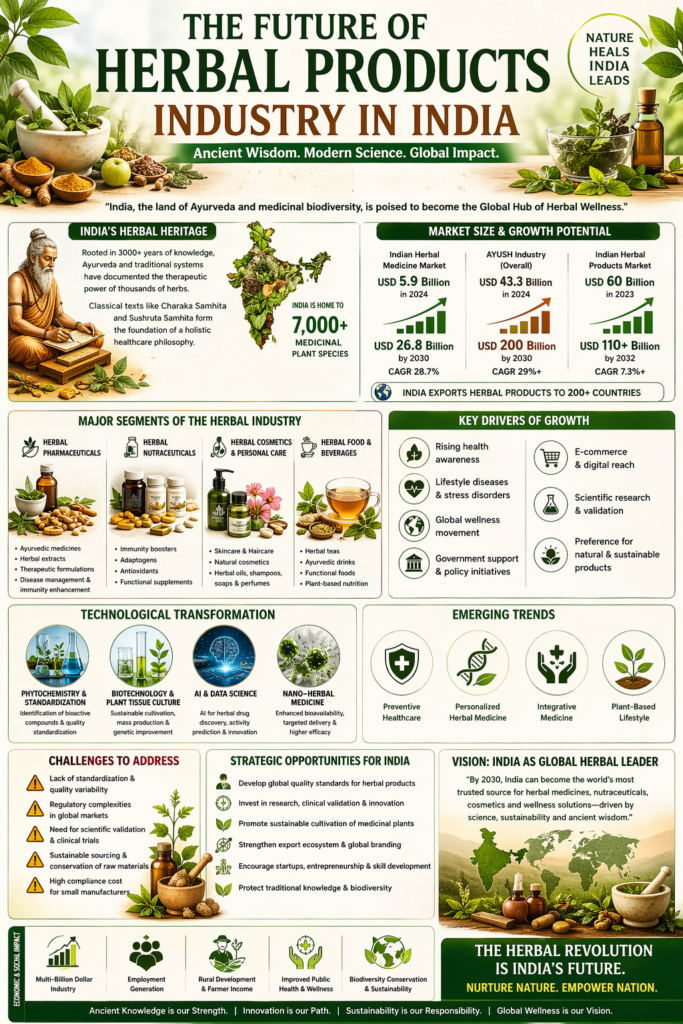
1. Introduction: The Renaissance of Nature-Based Healthcare
Human civilization has always been intertwined with nature. From ancient tribal healing traditions to sophisticated systems of medicine such as Ayurveda, plants have historically served as humanity’s earliest pharmacy. In India, the knowledge of medicinal plants is deeply embedded in cultural consciousness through classical texts such as the Charaka Samhita and Sushruta Samhita.
However, the 20th century witnessed the dominance of synthetic pharmaceuticals, which overshadowed traditional botanical medicine. Yet the early decades of the 21st century have witnessed a remarkable resurgence of herbal medicine and plant-based products across the world. This transformation is driven by increasing consumer preference for natural therapies, preventive healthcare models, sustainability concerns, and dissatisfaction with certain side effects of synthetic drugs.
India, with its vast biodiversity, ancient medical knowledge, and rapidly growing pharmaceutical infrastructure, is uniquely positioned to become the global epicenter of the herbal products industry. The country hosts more than 7,000 medicinal plant species, a thriving Ayurvedic ecosystem, and an expanding market for natural wellness products.
The economic indicators are equally compelling. The Indian herbal medicine market generated about USD 5.9 billion in 2024 and is expected to reach nearly USD 26.8 billion by 2030, growing at a CAGR of approximately 28.7%. (Grand View Research)
Similarly, the broader AYUSH industry is projected to expand from around USD 43.3 billion in 2024 to nearly USD 200 billion by 2030, reflecting unprecedented growth potential. (India Brand Equity Foundation)
These figures indicate that India is entering what may be described as a “Herbal Economy Revolution.”
This article presents a detailed analysis of the future of the herbal products industry in India, examining historical evolution, market dynamics, technological transformation, regulatory developments, economic opportunities, and strategic challenges.
2. Historical Foundations of Herbal Medicine in India
2.1 The Civilizational Roots of Herbal Medicine
India possesses one of the world’s oldest medical traditions. Ayurveda, literally meaning “the science of life,” evolved over 3,000 years ago and is based on holistic principles integrating body, mind, and environment.
Ancient Indian physicians classified hundreds of medicinal plants and developed sophisticated pharmacological preparations such as:
- Churnas (powders)
- Kwathas (decoctions)
- Asavas and Arishtas (fermented formulations)
- Tailas and Ghritas (medicated oils and ghee)
Plants such as Ashwagandha, Turmeric, Neem, Tulsi, Brahmi, and Amla became central components of therapeutic practice.
These botanical medicines were not merely therapeutic agents; they represented a comprehensive philosophy of preventive healthcare.
2.2 Colonial Disruption and Revival
During the British colonial period, Western allopathic medicine gained prominence, leading to the marginalization of traditional medical systems.
However, post-independence India witnessed gradual revival through:
- Establishment of Ayurvedic colleges
- Formation of research councils
- Government support for traditional medicine
The creation of the Ministry of AYUSH in 2014 marked a turning point in institutional support for herbal medicine and alternative healthcare systems.
3. Structure of the Herbal Products Industry
The herbal products industry in India is diverse and multifaceted. It encompasses several major segments.
3.1 Herbal Pharmaceuticals
These include Ayurvedic medicines, herbal extracts, and plant-derived formulations used for treating diseases.
Common therapeutic areas include:
- Immunity enhancement
- Digestive disorders
- Stress and anxiety
- Diabetes management
- Liver protection
The increasing prevalence of lifestyle diseases such as diabetes and hypertension is accelerating demand for herbal therapeutics.
3.2 Herbal Nutraceuticals
Nutraceuticals represent a rapidly expanding sector combining nutrition and pharmaceutical science.
Examples include:
- Herbal immunity boosters
- Adaptogenic supplements
- Plant-based antioxidants
- Herbal protein supplements
Recent industry observations indicate that nutraceuticals have become one of India’s fastest-growing consumer health segments, driven by rising health consciousness. (The Economic Times)
3.3 Herbal Cosmetics and Personal Care
Herbal cosmetics represent one of the most commercially successful categories.
Products include:
- Herbal shampoos
- Ayurvedic skincare
- Natural perfumes
- Herbal hair oils
- Plant-based soaps
The herbal cosmetic ingredients market in India was valued at USD 962 million in 2024 and is expected to exceed USD 2.5 billion by 2033. (IMARC Group)
3.4 Herbal Food and Functional Beverages
Functional foods infused with botanical ingredients are emerging as a major trend.
Examples include:
- Herbal teas
- Turmeric lattes
- Ayurvedic immunity drinks
- Plant-based nutraceutical beverages
These products are increasingly marketed as preventive health solutions.
4. Market Size and Economic Potential
The herbal products industry is rapidly becoming a major economic sector.
4.1 Market Growth Projections
Various industry studies highlight the extraordinary growth potential of herbal products.
Key indicators include:
- India herbal medicine market expected to reach USD 26.8 billion by 2030. (Grand View Research)
- Ayurvedic products market projected to grow from INR 1,017 billion in 2025 to INR 3,728 billion by 2034. (IMARC Group)
- Indian herbal products market estimated to grow from USD 60 billion in 2023 to over USD 110 billion by 2032. (LinkedIn)
Such projections suggest that India may soon become the global hub of herbal medicine manufacturing and exports.
4.2 Export Opportunities
India already exports herbal products to more than 200 countries, demonstrating significant global demand. (India Brand Equity Foundation)
Major export markets include:
- United States
- Europe
- Southeast Asia
- Middle East
- Africa
Indian herbs such as turmeric, ashwagandha, and moringa are gaining recognition as “superfoods” worldwide.
5. Drivers of Growth in the Herbal Industry
Several structural factors are driving the rapid expansion of herbal products.
5.1 Rising Health Awareness
Modern consumers are increasingly aware of the relationship between lifestyle, diet, and disease.
Concerns about synthetic drug side effects have encouraged consumers to explore natural therapies.
Herbal products are perceived as:
- Safer
- More holistic
- Preventive rather than reactive
5.2 Lifestyle Diseases
Urbanization and sedentary lifestyles have contributed to rising prevalence of:
- Diabetes
- Obesity
- Cardiovascular disease
- Stress disorders
Herbal formulations such as adaptogens and metabolic regulators are gaining popularity for managing such conditions.
5.3 Global Wellness Movement
The global wellness industry is expanding rapidly.
Consumers worldwide are seeking:
- Natural remedies
- Organic products
- Plant-based nutrition
- Holistic health practices
Ayurveda has become a central component of this movement.
5.4 Government Support
Government initiatives promoting herbal medicine include:
- Ministry of AYUSH
- National Medicinal Plants Board
- AYUSH export promotion councils
- Research grants for traditional medicine
Government policies emphasize standardization, research, and global promotion of Ayurvedic products.
5.5 Digital Commerce and E-Commerce
Online platforms have transformed the herbal products market.
Digital marketplaces allow consumers to access thousands of herbal products instantly.
E-commerce platforms such as:
- Amazon
- Nykaa
- Flipkart
have significantly expanded the reach of Ayurvedic brands.
6. Technological Transformation in Herbal Medicine
The future of the herbal industry will not rely solely on tradition. It will increasingly integrate modern scientific technologies.
6.1 Phytochemistry and Standardization
Traditional herbal medicine often suffers from variability in active compounds.
Modern phytochemical analysis allows researchers to:
- Identify bioactive compounds
- Standardize herbal extracts
- Improve therapeutic consistency
This scientific approach enhances the credibility of herbal medicine.
6.2 Biotechnology and Plant Tissue Culture
Biotechnological methods enable:
- Mass cultivation of medicinal plants
- Genetic improvement of plant species
- Sustainable production of rare herbs
Plant tissue culture techniques help produce uniform medicinal compounds at scale.
6.3 Artificial Intelligence in Herbal Drug Discovery
AI algorithms are increasingly used to:
- Identify therapeutic phytochemicals
- Predict biological activity
- Design novel botanical formulations
This convergence of traditional knowledge and artificial intelligence represents a revolutionary frontier.
6.4 Nano-Herbal Medicine
Nanotechnology is transforming herbal pharmacology.
Nano-herbal formulations improve:
- Bioavailability
- Drug stability
- Targeted delivery
This approach may significantly enhance the therapeutic efficacy of plant-derived medicines.
7. Role of Ayurveda in the Herbal Industry
Ayurveda remains the intellectual backbone of India’s herbal products sector.
The Ayurveda market in India generated around USD 11.8 billion in revenue in 2024 and may reach USD 35.7 billion by 2030, reflecting strong growth momentum. (Grand View Research)
Ayurvedic companies are increasingly blending classical knowledge with modern science.
Major industry players include:
- Dabur
- Patanjali
- Himalaya
- Baidyanath
- Vicco
These companies are investing in:
- clinical research
- international certification
- product innovation
8. Global Opportunities for Indian Herbal Products
India’s herbal industry has enormous export potential.
8.1 Ayurveda as Global Healthcare System
Ayurveda is gradually gaining recognition worldwide as a complementary healthcare system.
Countries including:
- Germany
- United States
- Russia
- Japan
are witnessing rising interest in Ayurvedic therapies.
8.2 Herbal Cosmetics Global Market
Indian herbal cosmetics brands are gaining global popularity due to their natural ingredients.
Several domestic brands are expanding internationally through premium Ayurveda-inspired skincare lines.
Global beauty companies are also investing heavily in Ayurvedic brands as the Indian beauty market expands. (Vogue)
8.3 Herbal Nutraceuticals Export
Plant-based nutraceuticals represent one of the fastest-growing global markets.
India has the potential to become a leading exporter of:
- botanical supplements
- herbal extracts
- plant-derived antioxidants
9. Challenges Facing the Herbal Products Industry
Despite tremendous opportunities, several challenges must be addressed.
9.1 Lack of Standardization
Variability in plant composition leads to inconsistent product quality.
This issue affects international acceptance of herbal medicines.
9.2 Regulatory Complexities
Regulatory frameworks for herbal medicines vary across countries.
Obtaining approval for herbal drugs in Western markets remains challenging.
9.3 Scientific Validation
Although traditional knowledge is extensive, many herbal medicines require:
- clinical trials
- pharmacological studies
- toxicological evaluation
Scientific validation will be essential for global credibility.
9.4 Raw Material Sustainability
Overharvesting of medicinal plants threatens biodiversity.
Sustainable cultivation practices must be developed to ensure long-term supply.
10. Emerging Trends in the Herbal Products Industry
Several transformative trends will shape the future of the industry.
10.1 Preventive Healthcare
Consumers are increasingly prioritizing prevention over treatment.
Herbal products will play a central role in preventive medicine.
10.2 Personalized Herbal Medicine
Advances in genomics may enable personalized herbal therapies tailored to individual genetic profiles.
10.3 Integrative Medicine
Modern healthcare systems are gradually adopting integrative models combining:
- allopathic medicine
- herbal medicine
- lifestyle therapy
10.4 Plant-Based Lifestyle
Global demand for plant-based diets and natural products will continue to accelerate.
Herbal products align perfectly with this movement.
11. Policy and Regulatory Landscape
The future growth of the herbal industry will depend heavily on regulatory frameworks.
Key policy priorities include:
- standardization of herbal drugs
- clinical validation of formulations
- export facilitation
- intellectual property protection
Government emphasis on research, quality assurance, and global branding is expected to strengthen the sector. (The Times of India)
However, regulatory compliance costs remain a challenge for small manufacturers.
12. Strategic Opportunities for Entrepreneurs
India’s herbal sector presents numerous opportunities for entrepreneurs.
Promising areas include:
- herbal nutraceutical startups
- Ayurvedic skincare brands
- plant-based functional foods
- herbal biotechnology companies
The convergence of traditional knowledge, digital marketing, and modern science will create new business models.
13. Vision for India as Global Herbal Leader
India possesses several strategic advantages:
- unparalleled medicinal plant biodiversity
- ancient medical knowledge
- growing pharmaceutical expertise
- expanding domestic market
With proper investment in research and innovation, India can emerge as the global leader in botanical medicine.
The herbal industry could become as significant as the pharmaceutical industry in terms of economic impact.
14. Ethical and Environmental Considerations
The herbal industry must also address ethical issues.
These include:
- fair compensation for indigenous knowledge
- biodiversity conservation
- sustainable cultivation practices
A responsible herbal economy must balance commercial success with ecological sustainability.
15. Conclusion: The Dawn of the Herbal Economy
The herbal products industry in India stands at the threshold of an extraordinary transformation.
Driven by consumer demand for natural wellness, technological innovations in phytochemistry and biotechnology, and strong government support, the industry is poised for exponential growth.
Market projections indicate that the herbal sector may evolve into a multi-billion-dollar pillar of India’s healthcare and wellness economy.
However, realizing this vision will require strategic investments in:
- scientific research
- global regulatory compliance
- sustainable cultivation
- technological innovation
The fusion of ancient botanical wisdom with modern scientific rigor will ultimately determine the success of the herbal revolution.
India, with its rich heritage of medicinal plants and holistic healthcare philosophy, has the potential to lead the world into a new era where nature once again becomes humanity’s most trusted pharmacy.