

Implications of Regenerative Pharmacology: Transforming the Future of Modern Medicine
Introduction
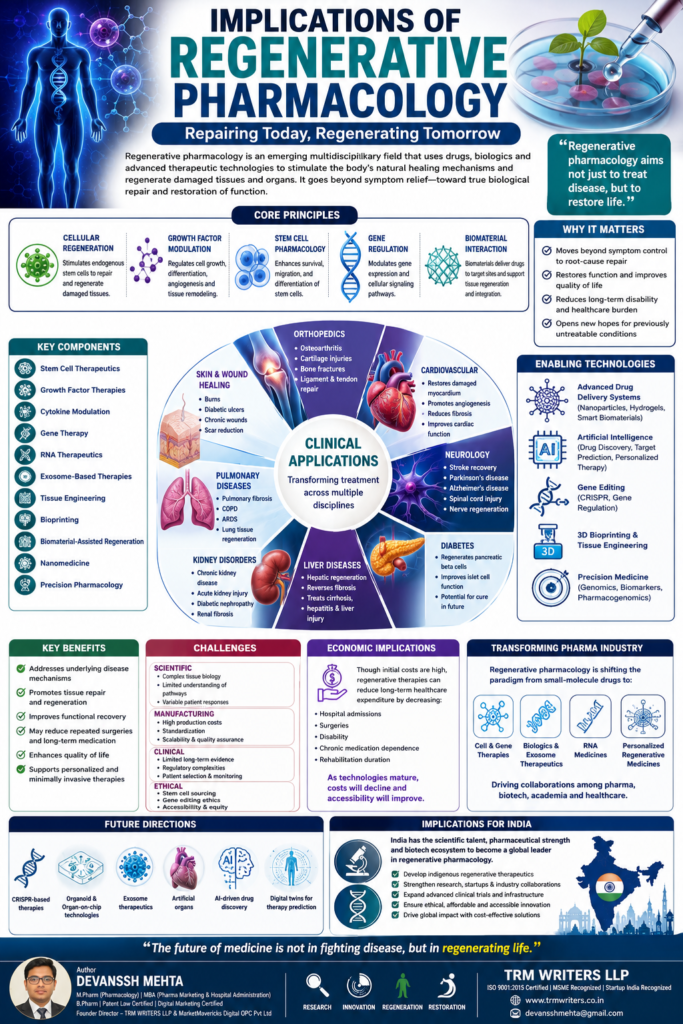
Regenerative pharmacology is an emerging multidisciplinary field that combines pharmacology, regenerative medicine, molecular biology, tissue engineering, stem cell science, biomaterials, gene therapy, and precision medicine to repair, regenerate, or replace damaged tissues and organs. Unlike conventional pharmacotherapy, which primarily focuses on alleviating symptoms or slowing disease progression, regenerative pharmacology seeks to activate the body’s intrinsic healing mechanisms while promoting functional tissue restoration.
The growing burden of chronic diseases, an aging population, traumatic injuries, organ failure, and degenerative disorders has created an urgent need for therapies that extend beyond disease management toward true biological repair. Advances in stem cell biology, growth factor therapeutics, gene editing technologies, extracellular vesicles, and biomaterial-based drug delivery systems have positioned regenerative pharmacology as one of the most promising frontiers in modern healthcare.
This article explores the scientific principles, clinical applications, technological advances, opportunities, challenges, and future implications of regenerative pharmacology across multiple medical disciplines.
Understanding Regenerative Pharmacology
Regenerative pharmacology refers to the development and application of drugs, biologics, biomolecules, and advanced therapeutic products that stimulate tissue regeneration rather than merely suppressing disease symptoms.
The discipline integrates knowledge from:
- Pharmacology
- Stem Cell Biology
- Molecular Medicine
- Tissue Engineering
- Nanotechnology
- Biotechnology
- Biomaterials Science
- Precision Medicine
- Artificial Intelligence
- Gene Therapy
Its primary objective is to restore normal physiological function by repairing injured tissues at the cellular and molecular levels.
Fundamental Principles
Regenerative pharmacology relies on several biological mechanisms.
Cellular Regeneration
Certain pharmacological agents stimulate endogenous stem cells, encouraging damaged tissues to regenerate naturally.
Growth Factor Modulation
Growth factors regulate:
- Cell proliferation
- Cell differentiation
- Angiogenesis
- Wound healing
- Tissue remodeling
Examples include VEGF, PDGF, EGF, FGF, and TGF-β.
Stem Cell Pharmacology
Pharmacological compounds can:
- Enhance stem cell survival
- Promote migration
- Improve differentiation
- Increase regenerative capacity
- Reduce apoptosis
Gene Regulation
Modern regenerative drugs may influence:
- Gene expression
- Epigenetic pathways
- Cellular signaling pathways
- Protein synthesis
Gene-editing technologies further enhance regenerative potential.
Biomaterial Interaction
Drug-loaded biomaterials enable:
- Controlled drug release
- Targeted tissue repair
- Enhanced scaffold integration
- Reduced systemic toxicity
Major Components of Regenerative Pharmacology
Modern regenerative pharmacology encompasses:
- Stem cell therapeutics
- Growth factor therapies
- Cytokine modulation
- Gene therapy
- RNA therapeutics
- Exosome-based therapies
- Tissue engineering
- Bioprinting
- Biomaterial-assisted regeneration
- Nanomedicine
- Precision pharmacology
Clinical Applications
Orthopedic Medicine
Regenerative pharmacology is transforming treatment of:
- Osteoarthritis
- Cartilage injuries
- Bone fractures
- Ligament damage
- Tendon injuries
- Intervertebral disc degeneration
Emerging therapies stimulate cartilage formation while reducing chronic inflammation.
Cardiovascular Diseases
Following myocardial infarction, regenerative pharmacology aims to:
- Restore damaged myocardium
- Improve cardiac function
- Promote angiogenesis
- Reduce fibrosis
- Enhance vascular repair
Growth factors and stem-cell-derived products show considerable promise.
Neurological Disorders
Potential applications include:
- Parkinson’s disease
- Alzheimer’s disease
- Stroke recovery
- Spinal cord injury
- Peripheral nerve injuries
- Multiple sclerosis
Neuroregenerative drugs may stimulate neuronal repair and synaptic plasticity.
Diabetes Management
Regenerative pharmacology may help regenerate:
- Pancreatic beta cells
- Insulin-producing tissues
- Islet cell function
Such advances could fundamentally change diabetes treatment in the future.
Liver Diseases
Research focuses on:
- Hepatic regeneration
- Liver fibrosis reversal
- Chronic hepatitis
- Cirrhosis
- Drug-induced liver injury
Novel regenerative compounds aim to restore liver architecture rather than merely slowing disease progression.
Kidney Disorders
Potential therapeutic targets include:
- Chronic kidney disease
- Acute kidney injury
- Diabetic nephropathy
- Renal fibrosis
Stem-cell-derived biologics and regenerative drugs may reduce the need for dialysis in selected patients.
Pulmonary Diseases
Investigational therapies target:
- Pulmonary fibrosis
- COPD
- Acute respiratory distress syndrome
- Lung injury
These treatments seek to regenerate damaged alveolar tissue and improve lung function.
Skin and Wound Healing
Applications include:
- Burns
- Diabetic ulcers
- Chronic wounds
- Pressure ulcers
- Cosmetic reconstruction
Advanced regenerative formulations accelerate tissue repair while minimizing scar formation.
Role of Stem Cells
Stem cells remain central to regenerative pharmacology.
Major stem cell sources include:
- Mesenchymal stem cells
- Induced pluripotent stem cells
- Hematopoietic stem cells
- Neural stem cells
- Adipose-derived stem cells
Rather than replacing damaged tissue directly, many therapeutic benefits appear to arise from the secretion of bioactive molecules that support repair.
Emerging Drug Delivery Systems
Modern regenerative medicine increasingly depends on sophisticated drug delivery technologies.
These include:
- Nanoparticles
- Liposomes
- Hydrogels
- Injectable scaffolds
- Biodegradable polymers
- Smart biomaterials
- Controlled-release implants
Such systems improve targeting while reducing adverse effects.
Artificial Intelligence in Regenerative Pharmacology
Artificial intelligence is accelerating drug discovery by:
- Predicting drug targets
- Identifying regenerative pathways
- Optimizing drug design
- Analyzing genomic data
- Supporting personalized treatment strategies
- Accelerating clinical trial design
Machine learning also assists in biomarker identification and treatment prediction.
Precision Medicine Integration
Every patient responds differently to regenerative therapies.
Precision pharmacology incorporates:
- Genomics
- Proteomics
- Metabolomics
- Biomarker analysis
- Pharmacogenomics
This allows clinicians to tailor regenerative therapies to individual biological characteristics.
Advantages of Regenerative Pharmacology
Several important benefits distinguish regenerative pharmacology from conventional treatment approaches:
- Addresses underlying disease mechanisms rather than only symptoms
- Promotes tissue repair and regeneration
- Potentially reduces long-term disability
- Improves functional recovery
- May reduce repeated surgeries
- Enhances quality of life
- Supports personalized treatment
- Encourages minimally invasive therapeutic approaches
- Opens new possibilities for previously untreatable conditions
Challenges and Limitations
Despite rapid progress, important challenges remain.
Scientific Challenges
- Complex tissue biology
- Limited understanding of regenerative pathways
- Variable patient responses
- Long-term safety concerns
Manufacturing Challenges
- High production costs
- Standardization issues
- Scalability
- Quality assurance
Clinical Challenges
- Limited long-term clinical evidence
- Regulatory complexities
- Patient selection
- Monitoring therapeutic outcomes
Ethical Challenges
Ethical considerations include:
- Stem cell sourcing
- Gene editing
- Clinical accessibility
- Equity in healthcare
- Long-term surveillance
Economic Implications
Although regenerative therapies often involve substantial upfront costs, successful regeneration may lower long-term healthcare expenditure by reducing:
- Hospital admissions
- Surgical procedures
- Disability
- Chronic medication dependence
- Rehabilitation duration
As manufacturing technologies mature, costs are expected to decline.
Pharmaceutical Industry Transformation
Regenerative pharmacology is reshaping pharmaceutical research by shifting the focus from conventional small-molecule drugs toward:
- Cell-based therapeutics
- Gene therapies
- RNA medicines
- Biologics
- Tissue-engineered products
- Personalized regenerative medicines
This transformation is fostering collaborations among pharmaceutical companies, biotechnology firms, academic institutions, and healthcare providers.
Future Research Directions
Key areas of ongoing investigation include:
- CRISPR-based regenerative therapies
- 3D bioprinting of functional tissues
- Organ-on-chip technologies
- Artificial organs
- Exosome therapeutics
- Organoid medicine
- Smart biomaterials
- AI-driven regenerative drug discovery
- Digital twins for therapy prediction
- Personalized regenerative medicine platforms
Implications for Healthcare Systems
The widespread adoption of regenerative pharmacology could profoundly influence healthcare by:
- Shifting medicine from disease management to tissue restoration
- Reducing the burden of chronic diseases
- Enhancing healthy aging
- Improving rehabilitation outcomes
- Decreasing dependence on organ transplantation
- Advancing personalized medicine
- Increasing demand for specialized regenerative medicine centers
- Creating new interdisciplinary healthcare roles
Implications for India
India is well-positioned to become a global leader in regenerative pharmacology due to its expanding biotechnology sector, robust pharmaceutical manufacturing capabilities, skilled scientific workforce, and growing investments in biomedical research. Opportunities include the development of indigenous regenerative therapeutics, strengthened academic–industry collaborations, expansion of advanced clinical trials, and integration of artificial intelligence into drug discovery. To realize this potential, continued investment in translational research, regulatory capacity, ethical oversight, and workforce training will be essential.
Conclusion
Regenerative pharmacology represents a paradigm shift in medical science by moving beyond symptom control toward biological restoration and functional healing. Through the integration of stem cell biology, pharmacology, tissue engineering, biotechnology, nanomedicine, gene therapy, and artificial intelligence, this rapidly evolving discipline has the potential to redefine the treatment of chronic and degenerative diseases.
Although significant scientific, regulatory, manufacturing, and ethical challenges remain, continuous advances in regenerative science are steadily bringing transformative therapies closer to routine clinical practice. As precision medicine, biomaterials, and computational technologies mature, regenerative pharmacology is expected to become a cornerstone of twenty-first-century healthcare, offering patients more durable, personalized, and restorative treatment options while reshaping the future of pharmaceutical innovation and clinical medicine.