

An In-Depth Industry Report Incorporating SWOT and PESTLE Analysis
Executive Summary
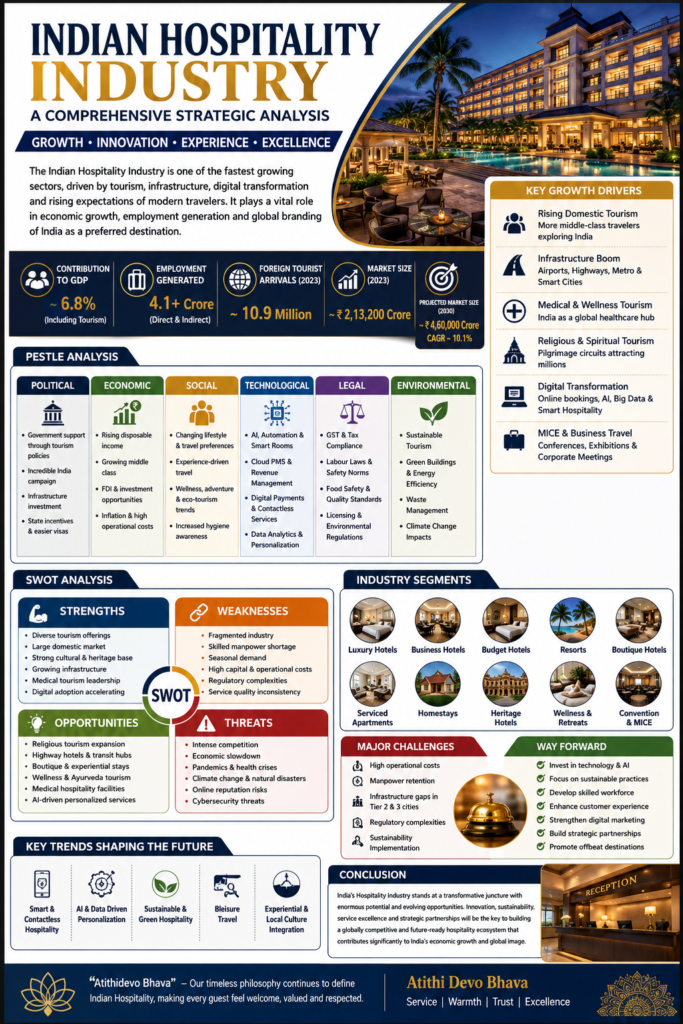
The Indian hospitality industry has emerged as one of the most dynamic and strategically significant sectors of the national economy. As India continues to position itself as a global tourism, business, healthcare, education, and cultural destination, the hospitality ecosystem has undergone a remarkable transformation. The sector encompasses hotels, resorts, restaurants, serviced apartments, homestays, convention centers, wellness retreats, and numerous ancillary services that collectively contribute to employment generation, infrastructure development, foreign exchange earnings, and regional economic growth.
The COVID-19 pandemic severely disrupted global travel and hospitality; however, India’s hospitality industry has demonstrated exceptional resilience through digital transformation, domestic tourism expansion, government initiatives, and renewed investor confidence. Increasing disposable incomes, rapid urbanization, improved transportation infrastructure, religious tourism, medical tourism, and the rise of digital booking platforms have accelerated the industry’s recovery. Simultaneously, evolving customer expectations regarding personalized experiences, sustainability, hygiene standards, and technology integration are reshaping business strategies.
Despite significant opportunities, the industry continues to face challenges including high operational costs, manpower shortages, regulatory complexities, environmental concerns, and intense competition. Consequently, strategic planning has become indispensable for hospitality organizations seeking long-term competitiveness.
Introduction
Hospitality represents far more than accommodation services; it encompasses the entire customer experience delivered through comfort, safety, convenience, cultural engagement, and service excellence. India’s rich cultural diversity, historical heritage, religious significance, ecological diversity, and expanding business ecosystem collectively create one of the world’s largest hospitality markets.
The sector contributes significantly to India’s GDP through tourism-related economic activities while simultaneously supporting millions of direct and indirect employment opportunities across urban and rural regions. Government initiatives such as Incredible India, Swadesh Darshan, PRASHAD, Digital India, and the expansion of highways, airports, and railway infrastructure continue to strengthen hospitality demand nationwide.
The emergence of premium boutique hotels, luxury resorts, wellness retreats, business hotels, budget accommodations, co-living spaces, and digitally enabled hospitality platforms reflects the industry’s increasing diversification.
Current Industry Landscape
India’s hospitality ecosystem consists of multiple market segments:
- Luxury Hotels
- Business Hotels
- Budget Hotels
- Mid-scale Hotels
- Boutique Hotels
- Resorts
- Homestays
- Heritage Hotels
- Serviced Apartments
- Religious Accommodation Facilities
- Eco-tourism Resorts
- Medical Tourism Hospitality
- Conference and Convention Hotels
Several structural drivers continue supporting long-term growth:
- Rising middle-class population
- Increasing domestic tourism
- Growth in international tourist arrivals
- Expansion of aviation connectivity
- Digital booking ecosystems
- Corporate travel
- Wedding tourism
- Spiritual tourism
- Medical tourism
- Educational tourism
- Sporting events
- Film tourism
Simultaneously, the hospitality industry increasingly integrates Artificial Intelligence, cloud property management systems, revenue management software, contactless check-ins, digital payments, customer analytics, and sustainability practices into operational workflows.
Market Drivers
1. Rising Domestic Tourism
Domestic travelers constitute the largest demand segment for Indian hospitality. Weekend tourism, religious circuits, family vacations, educational tours, and business travel collectively generate year-round occupancy.
2. Medical Tourism
India has become a preferred destination for affordable, high-quality healthcare. International patients require extended accommodation, thereby generating demand for hotels, serviced apartments, and recovery-oriented hospitality services.
3. Religious Tourism
Pilgrimage destinations such as Varanasi, Ayodhya, Haridwar, Rishikesh, Tirupati, Shirdi, Vaishno Devi, and numerous Jyotirlinga circuits continue attracting millions of visitors annually.
4. Highway Hospitality
Rapid expansion of expressways and national highways has created enormous opportunities for strategically located hotels, restaurants, and travel facilities. Properties situated on major transport corridors increasingly attract business travelers, tourists, logistics personnel, and transit guests.
5. Digital Transformation
Online Travel Agencies (OTAs), mobile applications, dynamic pricing, online reviews, digital marketing, and AI-driven customer engagement have fundamentally transformed hospitality operations.
PESTLE Analysis of the Indian Hospitality Industry
Political Factors
Political stability and government support significantly influence hospitality investment.
Positive drivers include:
- Tourism promotion campaigns
- Infrastructure development
- Smart City Mission
- Airport modernization
- Highway expansion
- Visa facilitation
- Heritage conservation
- Hospitality investment incentives
Potential risks include:
- Regulatory changes
- State-level taxation variations
- Licensing complexities
- Geopolitical tensions affecting international tourism
Economic Factors
Economic growth directly impacts hospitality demand.
Positive influences include:
- Increasing disposable income
- Expanding middle class
- Corporate travel
- Foreign Direct Investment
- Growth of service industries
- Real estate development
Challenges include:
- Inflation
- Rising operational expenses
- Energy costs
- Labour costs
- Currency fluctuations
- Economic recessions
Social Factors
Changing consumer behaviour has transformed hospitality.
Major trends include:
- Experience-driven travel
- Wellness tourism
- Solo travel
- Family vacations
- Staycations
- Digital nomad culture
- Sustainable travel
- Increased hygiene awareness
Customers increasingly value personalization, authenticity, convenience, and technological integration.
Technological Factors
Technology has become a competitive differentiator.
Key developments include:
- Artificial Intelligence
- Revenue Management Systems
- Contactless Check-in
- Cloud PMS
- Mobile Applications
- Chatbots
- Smart Rooms
- IoT Integration
- Data Analytics
- CRM Systems
- Digital Marketing
- Reputation Management Software
Hotels investing in digital innovation generally demonstrate stronger operational efficiency and customer satisfaction.
Legal Factors
Hospitality businesses operate within an extensive regulatory framework.
Major legal considerations include:
- Food Safety Regulations
- Fire Safety Compliance
- Labour Laws
- GST Regulations
- Environmental Compliance
- Building Permissions
- Licensing Requirements
- Consumer Protection Laws
- Data Privacy
- Employment Regulations
Regulatory compliance remains critical for operational continuity.
Environmental Factors
Environmental sustainability has become a strategic priority.
Industry initiatives include:
- Solar Energy
- Rainwater Harvesting
- Waste Management
- Plastic Reduction
- Green Buildings
- Water Conservation
- Energy-efficient Systems
- Sustainable Procurement
- Eco-tourism Development
Consumers increasingly prefer environmentally responsible hospitality brands.
SWOT Analysis
Strengths
Rich Tourism Diversity
India offers unparalleled cultural, historical, religious, ecological, and geographical diversity.
Massive Domestic Market
Domestic tourism provides stable year-round demand.
Growing Infrastructure
Modern airports, expressways, metro networks, and digital infrastructure strengthen accessibility.
Medical Tourism Leadership
Affordable, world-class healthcare supports hospitality demand.
Strong Government Support
Numerous tourism promotion initiatives encourage industry expansion.
Digital Adoption
Rapid integration of digital platforms enhances customer convenience.
Weaknesses
Fragmented Industry
A large number of independent operators limit standardization.
Skill Shortages
Employee retention and skilled workforce availability remain persistent challenges.
Seasonal Demand
Certain destinations experience significant occupancy fluctuations.
High Capital Investment
Hotel development requires substantial financial resources.
Operational Costs
Utilities, maintenance, salaries, and taxation significantly affect profitability.
Regulatory Complexity
Multiple approvals increase project timelines.
Opportunities
Religious Tourism Boom
Government investment in pilgrimage destinations continues creating hospitality demand.
Highway Hotels
Expansion of national highways presents substantial investment opportunities.
Boutique Hospitality
Customers increasingly prefer unique experiential accommodations.
Wellness Tourism
Ayurveda, Yoga, Meditation, and holistic wellness attract international visitors.
Medical Hospitality
Specialized accommodation for patients and caregivers represents a growing niche.
AI-Driven Personalization
Artificial Intelligence enables customized guest experiences.
International Events
Global conferences, sporting events, and exhibitions stimulate hotel demand.
Threats
Intense Competition
Large hotel chains, independent hotels, homestays, and alternative accommodations compete aggressively.
Global Economic Slowdowns
Reduced discretionary spending impacts travel demand.
Pandemics and Health Emergencies
Future outbreaks may disrupt tourism.
Climate Change
Extreme weather affects destination attractiveness.
Online Reputation Risks
Negative reviews rapidly influence consumer decisions.
Cybersecurity Threats
Digital hospitality systems remain vulnerable to cyberattacks.
Strategic Recommendations
To sustain long-term competitiveness, Indian hospitality businesses should prioritize digital transformation, customer-centric innovation, operational excellence, sustainability, and workforce development. Investments in Artificial Intelligence, predictive analytics, personalized guest services, and smart hotel technologies will increasingly differentiate successful enterprises.
Hotels located along expanding national highway corridors should position themselves as integrated travel hubs by offering premium accommodation, family dining, electric vehicle charging stations, conference facilities, wellness services, and secure parking. Simultaneously, luxury and boutique properties should focus on experiential tourism, local culture, wellness offerings, and personalized guest engagement.
Building a skilled workforce through continuous training, adopting environmentally sustainable operations, strengthening cybersecurity, and maintaining regulatory compliance will remain essential for resilient growth. Effective online reputation management, strategic digital marketing, and collaborations with online travel agencies can further enhance occupancy and revenue performance.
Conclusion
The Indian hospitality industry stands at a transformative juncture, driven by economic expansion, digital innovation, infrastructure development, and evolving consumer preferences. Its long-term prospects remain highly promising due to the country’s vast domestic travel market, expanding medical and religious tourism, improving connectivity, and supportive government initiatives.
Nevertheless, sustained success will depend upon the industry’s ability to address operational challenges, embrace technology, strengthen service quality, adopt sustainable business practices, and remain agile in responding to changing market dynamics. Organizations that successfully integrate innovation with exceptional guest experiences will not only achieve competitive advantage but also contribute significantly to India’s tourism-led economic growth. As India progresses toward becoming one of the world’s leading travel and tourism destinations, the hospitality industry is poised to play an increasingly strategic role in shaping inclusive development, employment generation, and global brand recognition.