
Effective Treatment and Management of Psoriasis
By Devanssh Mehta
Abstract
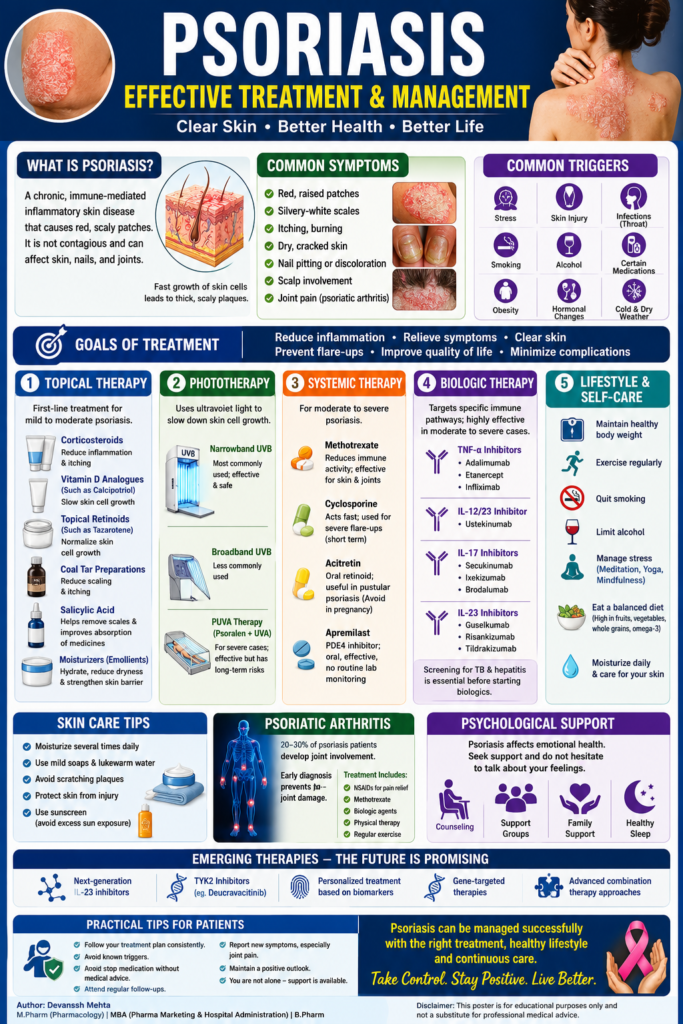
Psoriasis is a chronic, immune-mediated inflammatory skin disorder characterized by recurrent episodes of erythematous, scaly plaques that significantly affect physical, psychological, and social well-being. Although psoriasis has no permanent cure, remarkable advances in dermatology and immunology have made it possible to achieve long-term disease control and improve patients’ quality of life. Modern treatment strategies include topical therapies, phototherapy, systemic medications, biologics, lifestyle modifications, and patient education. Individualized treatment based on disease severity, patient characteristics, and associated comorbidities is essential for optimal outcomes. This article reviews current approaches to the effective treatment and management of psoriasis while highlighting practical strategies for patients and healthcare professionals.
Keywords: Psoriasis, autoimmune disease, biologics, topical therapy, phototherapy, immunomodulators, dermatology, skin disease.
Introduction
Psoriasis is a chronic inflammatory skin disease affecting approximately 2–3% of the global population. It results from an abnormal immune response that accelerates the growth cycle of skin cells. Instead of the normal 28-day turnover, skin cells may proliferate within just 3–5 days, leading to thickened, red, inflamed plaques covered with silvery-white scales.
Psoriasis is not contagious and can occur at any age, although it most commonly develops between the ages of 15–35 years. The disease follows a relapsing-remitting course, with periods of flare-ups and remission.
Besides skin manifestations, psoriasis is increasingly recognized as a systemic inflammatory disorder associated with cardiovascular disease, obesity, diabetes, metabolic syndrome, depression, anxiety, and psoriatic arthritis.
Understanding the Causes
Although the exact cause remains unknown, psoriasis develops due to a combination of:
- Genetic predisposition
- Immune system dysregulation
- Environmental triggers
- Lifestyle factors
Common triggers include:
- Emotional stress
- Skin injuries (Koebner phenomenon)
- Streptococcal infections
- Smoking
- Alcohol consumption
- Certain medications
- Obesity
- Hormonal changes
- Cold weather
Clinical Features
Patients commonly present with:
- Red raised plaques
- Thick silvery scales
- Dry cracked skin
- Itching
- Burning sensation
- Painful skin fissures
- Nail pitting
- Nail discoloration
- Scalp involvement
- Joint pain (psoriatic arthritis)
Commonly affected sites include:
- Elbows
- Knees
- Scalp
- Lower back
- Hands
- Feet
Goals of Psoriasis Treatment
The primary objectives include:
- Reduce inflammation
- Slow abnormal skin cell proliferation
- Relieve symptoms
- Prevent complications
- Improve cosmetic appearance
- Minimize flare-ups
- Improve quality of life
- Reduce psychological stress
1. Topical Therapy
Topical medications remain the first-line treatment for mild-to-moderate psoriasis.
Corticosteroids
These reduce inflammation and itching rapidly.
Examples include:
- Clobetasol propionate
- Betamethasone dipropionate
- Mometasone furoate
- Hydrocortisone (for sensitive areas)
Long-term use should be supervised to minimize risks such as skin thinning.
Vitamin D Analogues
Examples:
- Calcipotriol
- Calcitriol
Benefits:
- Slow skin cell growth
- Improve plaque resolution
- Often combined with corticosteroids
Topical Retinoids
- Tazarotene
Useful for plaque psoriasis by normalizing skin cell differentiation.
Coal Tar Preparations
Benefits:
- Reduce scaling
- Relieve itching
- Slow skin proliferation
Salicylic Acid
Used to:
- Remove scales
- Improve penetration of other topical medications
Moisturizers
Regular emollient use:
- Prevents dryness
- Reduces itching
- Maintains skin barrier function
- Improves treatment response
2. Phototherapy
Ultraviolet light therapy is highly effective for moderate psoriasis.
Types include:
Narrowband UVB
Most commonly recommended.
Advantages:
- High efficacy
- Fewer adverse effects
- Suitable for long-term use under supervision
Broadband UVB
Less commonly used today.
PUVA Therapy
Combination of:
- Psoralen
- UVA radiation
Reserved for severe psoriasis because of increased long-term risks, including skin aging and skin cancer.
3. Systemic Therapy
Patients with moderate-to-severe disease often require oral or injectable medications.
Methotrexate
Benefits:
- Reduces immune activity
- Effective for skin lesions
- Useful in psoriatic arthritis
Monitoring:
- Liver function
- Blood counts
- Kidney function
Cyclosporine
Acts rapidly by suppressing immune responses.
Used mainly for:
- Severe flare-ups
- Short-term disease control
Acitretin
An oral retinoid particularly useful in pustular psoriasis.
Contraindicated during pregnancy because of significant teratogenicity.
Apremilast
A phosphodiesterase-4 (PDE4) inhibitor.
Advantages:
- Oral administration
- No routine laboratory monitoring
- Effective in many patients with moderate disease
4. Biologic Therapy
Biologics have transformed psoriasis management by targeting specific inflammatory pathways.
Classes include:
TNF-α Inhibitors
Examples:
- Adalimumab
- Etanercept
- Infliximab
IL-12/23 Inhibitor
- Ustekinumab
IL-17 Inhibitors
Examples:
- Secukinumab
- Ixekizumab
- Brodalumab
IL-23 Inhibitors
Examples:
- Guselkumab
- Risankizumab
- Tildrakizumab
Benefits include:
- High skin clearance rates
- Long-lasting disease control
- Improved quality of life
- Effective management of psoriatic arthritis
Patients should be screened for infections such as tuberculosis and hepatitis before initiating biologic therapy.
5. Lifestyle Management
Lifestyle interventions substantially improve disease control.
Maintain Healthy Weight
Obesity contributes to chronic inflammation and can reduce treatment response.
Regular Exercise
Benefits include:
- Weight management
- Reduced inflammation
- Improved cardiovascular health
- Better mental well-being
Smoking Cessation
Smoking increases disease severity and the risk of treatment failure.
Limit Alcohol
Heavy alcohol consumption is associated with more severe psoriasis and may interact with medications.
Stress Management
Psychological stress frequently triggers flares.
Helpful practices include:
- Meditation
- Yoga
- Mindfulness
- Deep breathing
- Counseling when appropriate
6. Nutrition
Although no single diet cures psoriasis, healthy eating supports overall health.
Recommended dietary habits include:
- Fruits
- Vegetables
- Whole grains
- Fish rich in omega-3 fatty acids
- Nuts
- Olive oil
- Adequate hydration
Limiting highly processed foods, excessive sugar, and saturated fats may benefit overall health and weight management.
7. Skin Care
Daily skin care plays an important role.
Recommendations include:
- Apply moisturizers several times daily
- Avoid harsh soaps
- Take lukewarm baths instead of hot showers
- Avoid scratching plaques
- Protect skin from injury
- Use sunscreen appropriately
8. Management of Psoriatic Arthritis
Approximately 20–30% of patients with psoriasis develop psoriatic arthritis.
Early diagnosis is essential to prevent irreversible joint damage.
Treatment options include:
- Nonsteroidal anti-inflammatory drugs (NSAIDs)
- Methotrexate
- Biologic agents
- Physical therapy
- Regular exercise
9. Psychological Support
Psoriasis significantly affects emotional health.
Common psychological issues include:
- Depression
- Anxiety
- Social isolation
- Reduced self-esteem
- Sleep disturbances
Support strategies:
- Patient education
- Counseling
- Support groups
- Cognitive behavioral therapy when indicated
- Family support
10. Regular Medical Follow-Up
Long-term follow-up enables:
- Monitoring disease progression
- Detecting medication-related adverse effects
- Adjusting treatment
- Screening for comorbidities
- Maintaining treatment adherence
Emerging Therapies
Research continues to improve psoriasis care.
Promising areas include:
- Next-generation IL-23 inhibitors
- TYK2 inhibitors (such as deucravacitinib)
- Personalized medicine based on biomarkers
- Gene-targeted therapies
- Advanced combination treatment strategies
These developments may offer improved efficacy, convenience, and long-term safety for selected patients.
Practical Tips for Patients
- Follow the prescribed treatment plan consistently.
- Moisturize your skin every day.
- Avoid known triggers whenever possible.
- Maintain a healthy body weight.
- Stop smoking and limit alcohol intake.
- Manage stress through healthy coping strategies.
- Attend regular follow-up appointments.
- Report new symptoms, especially joint pain, promptly.
- Avoid stopping systemic or biologic medications without medical advice.
- Protect your skin from injury and excessive sun exposure.
Conclusion
Psoriasis is a lifelong inflammatory disease that requires comprehensive, individualized management rather than a one-size-fits-all approach. Advances in topical therapies, phototherapy, systemic medications, and targeted biologic agents have dramatically improved treatment outcomes, enabling many patients to achieve sustained skin clearance and a better quality of life. Alongside medical therapy, lifestyle modification, psychological support, patient education, and regular clinical follow-up remain fundamental components of effective disease management. Early diagnosis, prompt treatment of flares, and screening for associated comorbidities—including psoriatic arthritis and cardiovascular risk factors—can further improve long-term health outcomes. With a collaborative approach between patients and healthcare providers, most individuals with psoriasis can successfully control their symptoms and lead active, productive lives.
References
- Armstrong AW, Read C. Pathophysiology, clinical presentation, and treatment of psoriasis: A review. JAMA. 2020;323(19):1945–1960.
- Menter A, Strober BE, Kaplan DH, et al. Joint American Academy of Dermatology–National Psoriasis Foundation guidelines of care for the management of psoriasis. Journal of the American Academy of Dermatology. 2020.
- Griffiths CEM, Armstrong AW, Gudjonsson JE, Barker JNWN. Psoriasis. The Lancet. 2021;397(10281):1301–1315.
- Nast A, Smith C, Spuls PI, et al. EuroGuiDerm guideline on the systemic treatment of psoriasis vulgaris. Journal of the European Academy of Dermatology and Venereology. 2021.
- Warren RB, Blauvelt A, Poulin Y, et al. Biologic therapies for moderate-to-severe psoriasis. The Lancet. 2023.
- Elmets CA, Leonardi CL, Davis DMR, et al. Joint AAD-NPF guidelines of care for psoriasis with topical therapy and alternative medicine modalities. Journal of the American Academy of Dermatology. 2021.
- World Health Organization. Global Report on Psoriasis. Geneva: WHO; 2016.
- National Institute for Health and Care Excellence (NICE). Psoriasis: Assessment and Management. Updated guidance.
- International Psoriasis Council. Clinical treatment recommendations for psoriasis.
- Parisi R, Iskandar IYK, Kontopantelis E, et al. National, regional, and worldwide epidemiology of psoriasis. Journal of Investigative Dermatology.