

Building the Physicians of the Future in an Era of Medical Transformation
Introduction: The Changing Identity of the Indian Doctor
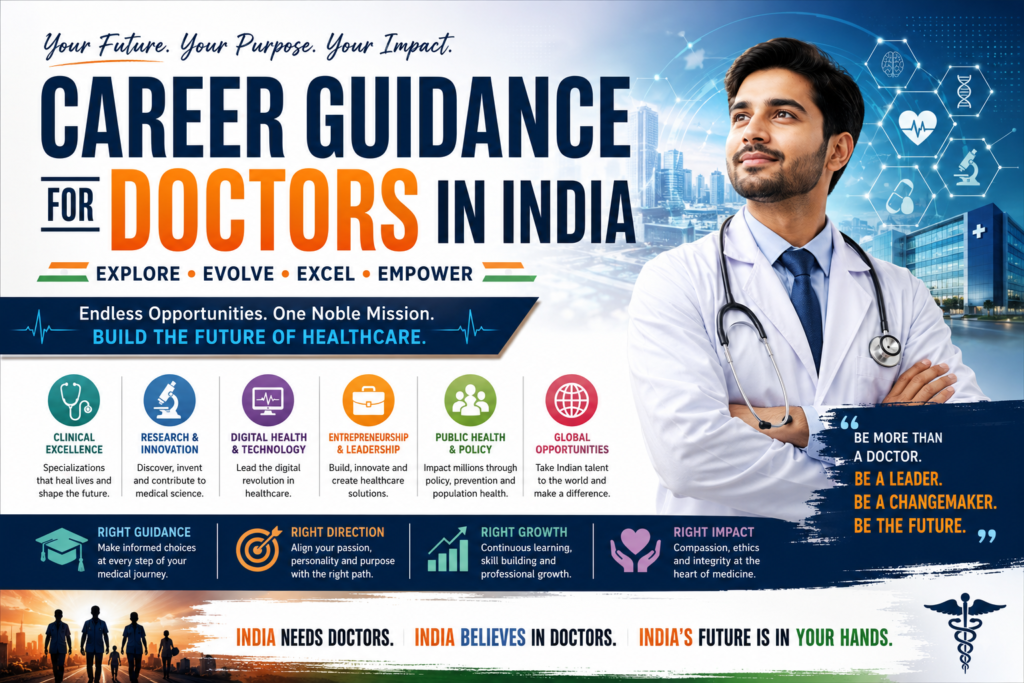
The medical profession in India has historically occupied a position of immense social respect, intellectual prestige, and humanitarian responsibility. For generations, doctors have symbolized healing, sacrifice, discipline, and scientific excellence. In contemporary India, however, the role of the physician is undergoing a profound transformation. The doctor of the twenty-first century is no longer confined merely to diagnosing diseases and prescribing medicines. The modern Indian physician is evolving into a multidisciplinary professional who must simultaneously function as a clinician, researcher, communicator, healthcare strategist, digital learner, entrepreneur, policymaker, educator, and technological innovator.
India today stands at the center of a massive healthcare revolution. Rapid population growth, urbanization, digital healthcare expansion, biotechnology advancement, telemedicine integration, pharmaceutical innovation, artificial intelligence, robotic surgery, precision medicine, genomics, and preventive healthcare awareness are reshaping the medical ecosystem at unprecedented speed. Simultaneously, the burden of infectious diseases coexists with a dramatic rise in non-communicable disorders such as diabetes, cardiovascular diseases, cancer, obesity, psychiatric illnesses, autoimmune disorders, and neurodegenerative conditions. This dual disease burden creates both enormous challenges and remarkable career opportunities for doctors across the nation.
The journey of becoming a doctor in India is intellectually demanding, emotionally exhausting, financially expensive, and psychologically transformative. Yet many medical students and young physicians enter the profession without comprehensive career guidance regarding specialization choices, emerging medical domains, research pathways, entrepreneurial opportunities, international prospects, digital medicine, hospital management, academic careers, medico-legal risks, or work-life sustainability. As a result, many doctors experience confusion, burnout, dissatisfaction, or career stagnation despite years of rigorous education.
Career guidance for doctors in India therefore requires a strategic, futuristic, and multidimensional framework. It is no longer sufficient to simply advise students to “complete MBBS and pursue PG.” The future doctor must understand the entire healthcare ecosystem and identify how his or her talents, personality, ambitions, and ethical values align with emerging opportunities within medicine.
This article presents a comprehensive roadmap for doctors in India, exploring educational pathways, specialization choices, emerging healthcare sectors, entrepreneurship, medical technology, research opportunities, international careers, financial growth strategies, mental health considerations, and the future evolution of the medical profession itself.
The Foundation Stage: Understanding MBBS Beyond a Degree
The Bachelor of Medicine and Bachelor of Surgery (MBBS) program represents the foundational gateway into the medical profession in India. However, MBBS should not be viewed merely as an academic qualification. It is the beginning of identity formation as a healthcare professional.
Medical students often enter MBBS with romanticized expectations about medicine, only to encounter immense academic pressure, sleep deprivation, competitive environments, emotionally traumatic clinical exposure, and prolonged years of uncertainty. Yet these years shape the scientific temperament and emotional resilience necessary for future practice.
The first critical career guidance principle for medical students is this: MBBS is a platform, not the final destination.
During MBBS, students must actively develop competencies beyond textbook learning. These include:
- Clinical communication skills
- Patient empathy
- Diagnostic reasoning
- Medical ethics
- Scientific writing
- Research methodology
- Digital literacy
- Public speaking
- Leadership
- Time management
- Psychological resilience
In today’s healthcare ecosystem, the most successful doctors are not always those with the highest academic marks alone. Success increasingly depends upon adaptability, interdisciplinary learning, emotional intelligence, and strategic career planning.
Students should begin career exploration early during MBBS itself. Exposure to various departments through internships, conferences, workshops, observerships, research projects, and clinical postings can help identify genuine interests and aptitudes.
Choosing the Right Specialization: The Most Defining Career Decision
One of the most critical turning points in a doctor’s life is the selection of a postgraduate specialization. This decision influences professional identity, income potential, lifestyle, stress levels, geographic flexibility, social prestige, and long-term career satisfaction.
Unfortunately, many students select specializations based solely on social trends, peer pressure, family influence, or perceived income potential. Such decisions often lead to dissatisfaction later.
The ideal specialization should align with multiple dimensions simultaneously:
- Intellectual interest
- Personality type
- Lifestyle preference
- Physical stamina
- Long-term emotional compatibility
- Economic goals
- Geographic aspirations
- Work-life balance expectations
For example, surgery requires high endurance, rapid decision-making ability, technical precision, and tolerance for prolonged operating hours. Internal medicine demands analytical reasoning, longitudinal patient management, and deep diagnostic thinking. Psychiatry requires emotional patience and psychological insight. Radiology demands visual analytical capability and technology-oriented thinking.
The future doctor must therefore understand both self-awareness and healthcare trends before choosing specialization pathways.
Major Clinical Specializations and Their Future Scope
Internal Medicine
Internal medicine remains one of the most intellectually respected medical branches. Physicians manage complex multisystem diseases and often function as diagnostic strategists.
India’s rising burden of diabetes, hypertension, obesity, metabolic syndrome, autoimmune disorders, and geriatric illnesses ensures long-term demand for internists.
Subspecialties such as:
- Cardiology
- Gastroenterology
- Endocrinology
- Nephrology
- Rheumatology
- Pulmonology
- Infectious disease medicine
are expected to witness explosive growth in coming decades.
General Surgery and Super-Specialization
Surgery continues to represent one of medicine’s most prestigious and technically demanding disciplines. Modern surgery is increasingly transitioning toward:
- Robotic surgery
- Minimally invasive procedures
- AI-assisted surgery
- Image-guided interventions
- Precision oncology surgery
Subspecialties with major future scope include:
- Neurosurgery
- Cardiothoracic surgery
- Surgical oncology
- Plastic surgery
- Vascular surgery
- Pediatric surgery
- Transplant surgery
India’s expansion in corporate hospitals and medical tourism is creating substantial opportunities for skilled surgeons.
Radiology: The Technology-Driven Specialty
Radiology has become central to modern diagnostics. With advances in:
- MRI
- CT imaging
- PET scans
- Functional imaging
- Interventional radiology
- AI-assisted diagnostics
radiologists are increasingly functioning as technological diagnosticians.
Artificial intelligence will not eliminate radiologists. Instead, future radiologists must learn to integrate AI tools into diagnostic workflows.
Dermatology
Dermatology has emerged as one of the fastest-growing specialties due to increasing awareness regarding:
- Cosmetic medicine
- Laser procedures
- Hair restoration
- Aesthetic dermatology
- Anti-aging medicine
Urban India’s beauty and wellness industry is generating substantial demand for dermatological services.
Psychiatry: The Rising Frontier
Mental health awareness in India is expanding rapidly. Depression, anxiety disorders, addiction, stress-related illnesses, sleep disorders, and suicide prevention are becoming major public health priorities.
Psychiatry is likely to become one of the most important specialties of the future. Integration with neuroscience, digital therapeutics, AI mental health tools, and psychopharmacology will further expand opportunities.
Oncology: The Battle Against Cancer
Cancer incidence in India is increasing due to aging populations, lifestyle factors, pollution, tobacco exposure, and delayed diagnosis.
Future demand will rise dramatically for:
- Medical oncologists
- Surgical oncologists
- Radiation oncologists
- Hemato-oncologists
- Molecular oncologists
Precision oncology, immunotherapy, targeted therapies, and genomic medicine are revolutionizing cancer treatment.
Emerging Medical Careers Beyond Traditional Clinical Practice
The future of medicine is no longer confined to hospitals alone. Doctors today can pursue numerous non-traditional yet highly impactful careers.
Medical Writing and Scientific Communication
The pharmaceutical, biotechnology, and healthcare industries increasingly require scientifically trained professionals capable of translating complex medical information into understandable content.
Doctors can build careers in:
- Regulatory writing
- Clinical trial documentation
- Scientific publications
- Medical journalism
- Continuing medical education
- Health communication
- Medical content strategy
India’s growing pharmaceutical industry offers immense opportunities in this sector.
Clinical Research
Clinical research is becoming central to global drug development. India’s large patient population and expanding research infrastructure create significant opportunities.
Doctors can work in:
- Clinical trial management
- Pharmacovigilance
- Medical monitoring
- Regulatory affairs
- Bioethics
- Data analysis
- Translational medicine
The integration of genomics and personalized medicine will further strengthen research careers.
Hospital Administration and Healthcare Management
Healthcare today requires strategic leadership. Hospitals are complex systems involving finance, operations, logistics, digital systems, insurance, legal compliance, quality assurance, and patient satisfaction.
Doctors pursuing MBA or healthcare management qualifications can become:
- Hospital administrators
- Healthcare strategists
- Medical directors
- Quality assurance leaders
- Health policy consultants
Physician-leaders are increasingly preferred because they understand both medicine and organizational dynamics.
Digital Health and Telemedicine
The COVID-19 pandemic accelerated telemedicine adoption across India. Digital healthcare now represents one of the most transformative sectors in medicine.
Doctors can participate in:
- Teleconsultation platforms
- AI healthcare startups
- Remote patient monitoring
- Digital therapeutics
- Electronic health record systems
- Health informatics
- Mobile health applications
The integration of technology into healthcare will redefine medical careers over the next two decades.
Entrepreneurship Opportunities for Doctors
Modern medicine increasingly intersects with innovation and business development. Doctors possess unique insights into healthcare problems, making them ideal healthcare entrepreneurs.
Potential entrepreneurial pathways include:
- Specialty clinics
- Diagnostic centers
- Telemedicine platforms
- Healthcare startups
- Wellness centers
- Rehabilitation facilities
- Digital health products
- Medical education institutes
- Research organizations
Healthcare entrepreneurship requires additional skills in:
- Finance
- Branding
- Marketing
- Team leadership
- Regulatory compliance
- Strategic planning
Doctors who combine scientific expertise with entrepreneurial vision may become major healthcare innovators in future India.
The Importance of Research and Academic Medicine
India requires a stronger culture of physician-scientists. Historically, many doctors focused predominantly on clinical practice while research remained underdeveloped compared to Western nations.
However, the future of healthcare will increasingly depend upon:
- Evidence-based medicine
- Genomic research
- AI-driven diagnostics
- Drug discovery
- Translational medicine
- Precision therapeutics
Doctors interested in academic medicine should develop expertise in:
- Biostatistics
- Research methodology
- Scientific writing
- Clinical trial design
- Data interpretation
Publishing research papers, participating in conferences, and contributing to innovation can significantly elevate professional standing.
International Career Opportunities
Indian doctors continue to enjoy strong global recognition due to rigorous clinical exposure and high patient volumes during training.
Many physicians pursue international licensing pathways such as:
- USMLE for the United States
- PLAB for the United Kingdom
- AMC for Australia
- MCCQE for Canada
International careers offer advantages such as:
- Higher salaries
- Advanced infrastructure
- Research opportunities
- Structured training systems
- Better work-life balance
However, challenges include:
- Licensing exams
- Cultural adaptation
- Immigration barriers
- Emotional displacement
- Competitive residency systems
Doctors must carefully evaluate whether international migration aligns with their long-term personal and professional goals.
Financial Planning for Doctors
One of the most neglected aspects of medical education in India is financial literacy.
Doctors spend years in training while often lacking education regarding:
- Investment planning
- Taxation
- Insurance
- Wealth management
- Retirement planning
- Practice economics
Contrary to social assumptions, many doctors face financial instability during early career phases due to prolonged training periods and educational expenses.
Young doctors should develop disciplined financial habits including:
- Emergency savings
- Systematic investments
- Risk management
- Professional indemnity insurance
- Diversified income sources
Financial independence reduces career anxiety and improves long-term decision-making.
Burnout, Mental Health, and Emotional Sustainability
The medical profession carries profound psychological burdens. Long working hours, patient deaths, litigation fears, sleep deprivation, emotional exhaustion, and workplace toxicity contribute to high burnout rates among doctors.
Many physicians silently experience:
- Anxiety
- Depression
- Emotional fatigue
- Substance dependence
- Relationship instability
- Professional dissatisfaction
Career guidance must therefore include psychological resilience training.
Doctors must learn:
- Emotional self-awareness
- Stress management
- Work-life boundaries
- Mindfulness practices
- Physical fitness maintenance
- Peer support engagement
A doctor who neglects personal health eventually compromises patient care as well.
Women Doctors and Changing Career Dynamics
Women now constitute a rapidly growing segment of India’s medical workforce. However, female doctors often face unique challenges involving:
- Marriage pressures
- Maternity interruptions
- Gender bias
- Safety concerns
- Work-life imbalance
Yet women physicians are increasingly excelling across:
- Surgery
- Cardiology
- Oncology
- Academic medicine
- Healthcare leadership
Future healthcare systems must ensure equitable opportunities, flexible career structures, maternity support, and leadership inclusion for women doctors.
Artificial Intelligence and the Future Doctor
Artificial intelligence represents one of the most transformative forces in medicine. AI systems are increasingly capable of:
- Pattern recognition
- Image analysis
- Predictive analytics
- Clinical decision support
- Drug discovery assistance
Some fear that AI may replace doctors. This assumption is fundamentally flawed.
AI will not replace doctors. However, doctors who understand AI may replace those who do not.
The future physician must therefore become technologically literate. Doctors should learn:
- Digital health systems
- AI fundamentals
- Data interpretation
- Health informatics
- Machine learning applications in healthcare
Human empathy, ethical judgment, and nuanced clinical reasoning remain irreplaceable strengths of physicians.
Rural Healthcare: India’s Greatest Medical Opportunity
Despite urban medical expansion, rural India continues to suffer from inadequate healthcare access. Rural healthcare therefore represents not only a national responsibility but also a major career opportunity.
Doctors working in rural sectors can contribute enormously through:
- Primary healthcare
- Preventive medicine
- Maternal health
- Infectious disease control
- Telemedicine outreach
- Public health interventions
Future government initiatives and digital connectivity may significantly strengthen rural healthcare infrastructure.
Public Health and Policy Careers
The COVID-19 pandemic demonstrated the strategic importance of public health leadership.
Doctors with training in public health can contribute to:
- Epidemiology
- Health policy
- Disease surveillance
- Vaccination programs
- Health economics
- International health organizations
Public health professionals influence healthcare systems at population scale rather than individual patient level.
Building a Personal Brand as a Doctor
In the digital era, professional visibility matters enormously. Doctors who establish ethical and educational online presence can expand impact significantly.
Personal branding should focus upon:
- Educational credibility
- Ethical communication
- Public awareness
- Research visibility
- Patient trust
Doctors may build professional authority through:
- Scientific publications
- Educational videos
- Healthcare blogs
- Public lectures
- Social media outreach
- Conference participation
However, branding must remain ethically responsible and evidence-based.
Ethical Challenges in Modern Medicine
The commercialization of healthcare has generated serious ethical dilemmas involving:
- Overdiagnosis
- Corporate pressure
- Defensive medicine
- Unnecessary procedures
- Pharmaceutical influence
- Data privacy concerns
Future doctors must protect ethical integrity despite market pressures.
Medicine is not merely a business. It remains fundamentally a humanitarian scientific profession.
Ethics, compassion, and patient-centered care must remain the foundation of medical practice even in highly technological healthcare systems.
The Future CEO of Healthcare: The Emerging Identity of the Indian Doctor
The doctor of the future will not survive merely through memorization-based medical education. The future physician must become a multidimensional leader.
The future doctor must simultaneously evolve into:
- Scientist
- Clinician
- Technologist
- Innovator
- Researcher
- Communicator
- Entrepreneur
- Policymaker
- Digital learner
- Public health advocate
India is entering a defining healthcare century. With its enormous population, expanding pharmaceutical industry, digital revolution, biotechnology ecosystem, and global healthcare influence, India may emerge as one of the world’s most important medical powers.
Doctors will stand at the center of this transformation.
Conclusion: Medicine as a Mission Beyond a Profession
Career guidance for doctors in India must move beyond narrow conversations about postgraduate seats and salary packages. Medicine is not simply a pathway toward economic stability or social prestige. It is a lifelong intellectual and humanitarian journey requiring continuous evolution.
The Indian doctor today stands at the intersection of science, technology, ethics, public health, artificial intelligence, biotechnology, economics, and human suffering. Those physicians who adapt intelligently to changing realities while preserving compassion and integrity will become the true healthcare leaders of the future.
Success in medicine will no longer be defined solely by degrees or hospital affiliations. The future successful doctor will be defined by:
- Scientific competence
- Emotional intelligence
- Ethical integrity
- Technological adaptability
- Strategic thinking
- Lifelong learning
- Human compassion
India’s healthcare future depends not only upon advanced hospitals or pharmaceutical innovation but upon the quality, vision, resilience, and wisdom of its doctors.
The doctor of the future will not merely treat diseases.
The doctor of the future will shape the future of civilization itself.