

Abstract
Liver fibrosis represents one of the most significant global healthcare burdens of the twenty-first century and constitutes the final common pathological pathway of chronic liver diseases including viral hepatitis, alcohol-associated liver disease, metabolic dysfunction-associated steatotic liver disease (MASLD), autoimmune hepatitis, cholestatic disorders, and toxin-mediated hepatic injury. Traditionally considered irreversible, liver fibrosis is now increasingly recognized as a dynamic and potentially reversible process due to major advances in molecular hepatology, regenerative medicine, antifibrotic pharmacotherapy, stem cell biology, artificial intelligence-driven diagnostics, and precision medicine. Globally, the epidemiological transition from viral hepatitis toward obesity-associated MASLD and metabolic dysfunction-associated steatohepatitis (MASH) has fundamentally altered the landscape of chronic liver disease and accelerated research into targeted antifibrotic interventions. India, which carries a substantial burden of hepatitis B, hepatitis C, alcohol-related liver disease, and rapidly increasing metabolic syndrome prevalence, is emerging as a major contributor to global hepatology research and clinical innovation. However, disparities remain in screening infrastructure, rural healthcare access, liver transplantation accessibility, and implementation of advanced diagnostic technologies. This cross-sectional comparative review critically evaluates newer developments in liver fibrosis across India and globally, focusing on molecular signaling pathways, hepatic stellate cell biology, non-invasive diagnostics, imaging technologies, artificial intelligence, biomarker discovery, novel antifibrotic drugs, stem cell therapies, gene editing, microbiome-targeted interventions, and regenerative hepatology. Comparative analysis demonstrates that developed nations including the United States, Germany, Japan, South Korea, and Scandinavian countries have integrated advanced molecular diagnostics and clinical trial networks into hepatology practice, whereas India is rapidly expanding capabilities through affordable diagnostics, generic therapeutics, and translational biomedical research. Emerging evidence indicates that precision hepatology integrating genomics, AI-driven fibrosis staging, multi-omics analysis, and targeted molecular therapy may redefine future management paradigms. The study concludes that liver fibrosis is transitioning from a historically irreversible pathological condition toward a biologically modifiable disease state, thereby transforming the future of hepatology, pharmacology, and regenerative medicine worldwide. (PMC)
Keywords: Liver fibrosis; Antifibrotic therapy; Hepatic stellate cells; India; Precision hepatology; Artificial intelligence
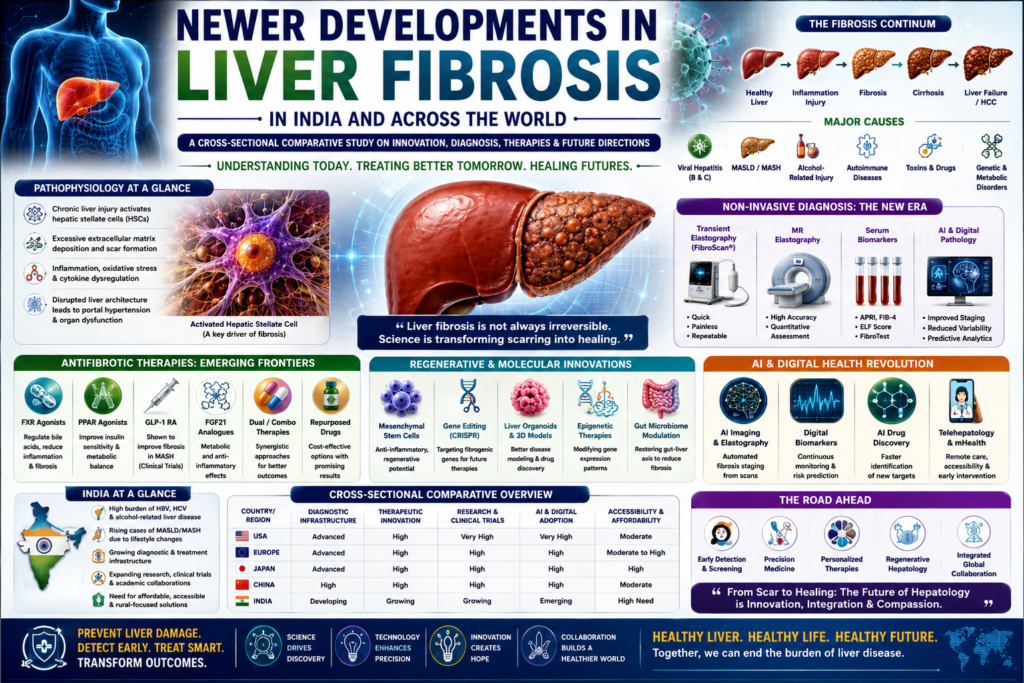
Introduction
Liver fibrosis represents a progressive pathological process characterized by excessive extracellular matrix deposition following chronic hepatic injury. Historically regarded as an irreversible precursor to cirrhosis, portal hypertension, hepatocellular carcinoma, and liver failure, liver fibrosis has emerged as one of the most intensively researched areas in modern hepatology because of growing evidence that fibrosis progression can potentially be halted, slowed, or reversed under specific therapeutic conditions.
The global burden of liver fibrosis has increased dramatically because of epidemiological transitions involving obesity, diabetes mellitus, sedentary lifestyles, alcohol consumption, and metabolic dysfunction-associated steatotic liver disease (MASLD). Simultaneously, chronic viral hepatitis remains a major contributor in several low- and middle-income nations including India. The increasing prevalence of fibrosis-related chronic liver disease has transformed hepatology into a strategic healthcare priority worldwide.
Modern liver fibrosis research increasingly integrates:
- Molecular hepatology
- Immunology
- Regenerative medicine
- Artificial intelligence
- Multi-omics analysis
- Stem cell therapeutics
- Precision pharmacology
- Digital pathology
The central mechanism underlying fibrosis involves activation of hepatic stellate cells (HSCs), which transform into myofibroblast-like cells and produce collagen-rich extracellular matrix proteins leading to architectural distortion of hepatic tissue. Recent advances demonstrate that fibrosis is regulated by complex interactions involving inflammatory pathways, macrophages, cytokines, oxidative stress, gut microbiota, metabolic dysregulation, and epigenetic signaling. (ResearchGate)
India represents a particularly important nation in the global liver fibrosis landscape because of its enormous population burden, high prevalence of viral hepatitis, rising diabetes incidence, and rapidly increasing obesity-related liver disease. Simultaneously, India possesses expanding biomedical research infrastructure, pharmaceutical manufacturing capabilities, and growing hepatology expertise.
This article presents a detailed cross-sectional comparative review examining newer developments in liver fibrosis in India and across the world, focusing on pathophysiology, diagnostics, therapeutics, emerging technologies, global trends, and future directions.
Pathophysiology of Liver Fibrosis
Liver fibrosis develops in response to chronic hepatic injury caused by infectious, metabolic, toxic, autoimmune, or cholestatic insults. Persistent hepatocyte damage initiates inflammatory cascades resulting in activation of hepatic stellate cells and extracellular matrix accumulation.
Hepatic Stellate Cells
Hepatic stellate cells remain central to fibrosis pathogenesis. Under physiological conditions, these cells store vitamin A and maintain extracellular matrix homeostasis. Following injury, stellate cells undergo activation into collagen-producing myofibroblasts.
Activated stellate cells:
- Produce type I collagen
- Promote matrix deposition
- Release profibrotic cytokines
- Induce inflammatory signaling
- Contribute to vascular remodeling
Research increasingly targets stellate cell activation pathways as therapeutic opportunities. (ResearchGate)
Cytokines and Molecular Signaling
Several molecular pathways regulate fibrosis progression:
- Transforming growth factor-beta (TGF-β)
- Platelet-derived growth factor (PDGF)
- Wnt/β-catenin signaling
- Hedgehog pathways
- NF-kB signaling
- JAK/STAT pathways
Among these, TGF-β remains one of the most critical fibrogenic mediators.
Oxidative Stress
Oxidative stress contributes substantially to fibrosis progression by inducing mitochondrial dysfunction, lipid peroxidation, inflammatory signaling, and hepatocyte apoptosis.
Reactive oxygen species stimulate stellate cell activation and extracellular matrix production.
Immune-Mediated Fibrosis
Macrophages play dual roles in fibrosis. Pro-inflammatory macrophages accelerate injury, whereas restorative macrophages contribute to fibrosis resolution.
Immunomodulation is therefore becoming an important therapeutic target.
Epidemiology of Liver Fibrosis
Global Burden
Globally, chronic liver disease affects hundreds of millions of individuals. The shift from viral hepatitis dominance toward MASLD and MASH has significantly altered disease patterns.
Recent reviews emphasize that liver fibrosis now represents a major determinant of morbidity and mortality in metabolic liver disease. (ScienceDirect)
Indian Scenario
India experiences a dual burden:
- Viral hepatitis-associated fibrosis
- Rapidly increasing obesity-related liver disease
Major Indian contributors include:
- Hepatitis B virus infection
- Hepatitis C virus infection
- Alcohol-associated liver disease
- Type 2 diabetes mellitus
- Obesity
- Environmental toxins
Urbanization and dietary transition are accelerating metabolic liver disease prevalence.
Non-Invasive Diagnostics: Revolutionizing Fibrosis Detection
Traditionally, liver biopsy remained the gold standard for fibrosis staging. However, biopsy possesses several limitations:
- Invasiveness
- Sampling error
- Pain
- Bleeding risk
- Interobserver variability
Modern hepatology increasingly favors non-invasive diagnostics.
Transient Elastography
FibroScan technology measures liver stiffness using elastography.
Advantages include:
- Rapid assessment
- Non-invasive staging
- Repeatability
- Outpatient applicability
India increasingly utilizes elastography in tertiary hepatology centers.
Magnetic Resonance Elastography
MRI-based elastography provides highly accurate fibrosis assessment.
Emerging AI-assisted MRI analysis systems demonstrate promising fibrosis staging accuracy. (arXiv)
Serum Biomarkers
Biomarkers increasingly assist fibrosis detection:
- Hyaluronic acid
- FibroTest
- APRI score
- FIB-4 index
- Enhanced liver fibrosis score
Future diagnostics may integrate proteomics, metabolomics, and genomic profiling.
Artificial Intelligence in Liver Fibrosis
Artificial intelligence represents one of the most transformative developments in hepatology.
AI applications include:
- Fibrosis staging
- Imaging interpretation
- Histopathology automation
- Risk prediction
- Drug response prediction
- Personalized medicine
Recent AI-driven MRI segmentation systems demonstrate strong accuracy for fibrosis quantification. (arXiv)
Digital Pathology
Machine learning algorithms increasingly analyze:
- Histopathological fibrosis patterns
- Collagen distribution
- Inflammatory infiltrates
- Cellular architecture
These systems may reduce observer variability and improve diagnostic consistency.
AI in India
India is increasingly integrating AI-based radiology and pathology into hepatology research, though accessibility remains concentrated in urban tertiary centers.
Antifibrotic Therapies: The New Era
Historically, fibrosis management focused primarily on removing causative factors. However, modern research increasingly aims at direct antifibrotic therapy.
FXR Agonists
Farnesoid X receptor agonists regulate bile acid metabolism, inflammation, and fibrosis.
Several FXR-targeted drugs are under clinical investigation for MASH-related fibrosis.
PPAR Agonists
Peroxisome proliferator-activated receptor agonists improve:
- Insulin sensitivity
- Lipid metabolism
- Inflammation
- Fibrosis progression
GLP-1 Receptor Agonists
Semaglutide and related agents demonstrate promising antifibrotic potential in MASH.
Recent phase III studies demonstrated significant fibrosis improvement with semaglutide therapy. (Frontiers)
FGF21 Analogues
Fibroblast growth factor-21 analogues show encouraging metabolic and antifibrotic effects.
Combination Therapies
Emerging evidence suggests combination therapy may provide synergistic antifibrotic effects.
A recent study demonstrated synergistic fibrosis suppression using silybin and carvedilol through Wnt4/β-catenin pathway inhibition. (Newswise)
Stem Cell Therapy and Regenerative Hepatology
Regenerative medicine represents one of the most exciting frontiers in fibrosis management.
Mesenchymal Stem Cells
Mesenchymal stem cells demonstrate:
- Anti-inflammatory effects
- Immunomodulation
- Regenerative signaling
- Fibrosis reduction potential
Induced Pluripotent Stem Cells
Induced pluripotent stem cells may eventually facilitate personalized hepatic regeneration.
Liver Organoids
Organoid technology allows:
- Disease modeling
- Drug screening
- Precision medicine development
Although promising, these technologies remain largely experimental.
Gene Editing and Molecular Therapeutics
CRISPR-based gene editing represents a potential future therapeutic strategy.
Potential applications include:
- Fibrogenic gene suppression
- Viral eradication
- Metabolic pathway correction
- Precision molecular modulation
Epigenetic therapies targeting fibrosis-associated signaling are also emerging.
Gut Microbiome and Liver Fibrosis
The gut-liver axis has become a major research focus.
Gut dysbiosis contributes to:
- Endotoxemia
- Inflammation
- Immune activation
- Fibrosis progression
Microbiome-targeted therapies include:
- Probiotics
- Prebiotics
- Fecal microbiota transplantation
- Microbial metabolite modulation
Liver Fibrosis in India: Current Landscape
India faces major fibrosis-related healthcare challenges because of:
- Large population burden
- Limited screening programs
- Variable healthcare infrastructure
- Rural diagnostic limitations
Viral Hepatitis Burden
Hepatitis B and C continue contributing substantially to fibrosis and cirrhosis in India.
Rising MASLD Burden
India is witnessing explosive growth in:
- Obesity
- Diabetes
- Metabolic syndrome
- Sedentary lifestyles
Consequently, MASH-related fibrosis is rapidly increasing.
Alcohol-Associated Liver Disease
Alcohol-related fibrosis remains a major public health challenge, particularly among economically vulnerable populations.
Comparative Global Analysis
United States
The United States leads in:
- Clinical trials
- Molecular hepatology
- AI integration
- Antifibrotic drug development
Large pharmaceutical investment accelerates therapeutic innovation.
Europe
European nations emphasize:
- Population screening
- Precision medicine
- Translational hepatology
- Non-invasive diagnostics
Japan
Japan demonstrates strong leadership in:
- Regenerative medicine
- Hepatic imaging
- Molecular diagnostics
China
China has dramatically expanded fibrosis research infrastructure and translational pharmacology.
India
India increasingly contributes through:
- Generic therapeutics
- Affordable diagnostics
- Clinical hepatology research
- Public health programs
However, healthcare inequality remains substantial.
Liver Transplantation and Advanced Fibrosis
Liver transplantation remains definitive therapy for end-stage fibrosis and cirrhosis.
India’s transplant infrastructure has expanded substantially, though:
- Cost barriers
- Organ shortages
- Geographic inequality
remain major challenges.
Pharmacological Pipelines and Future Drugs
Several antifibrotic drug classes are under development:
- FXR agonists
- THR-β agonists
- CCR2/CCR5 inhibitors
- ASK1 inhibitors
- Galectin inhibitors
- Integrin antagonists
The global liver fibrosis treatment market is projected to expand substantially over the next decade. (Future Market Insights)
Imaging Innovations
Advanced imaging technologies increasingly enable:
- Quantitative fibrosis mapping
- Perfusion analysis
- Collagen visualization
- Functional hepatic assessment
AI-assisted multimodal imaging is expected to redefine fibrosis diagnostics.
Precision Hepatology
Precision hepatology integrates:
- Genomics
- Proteomics
- Metabolomics
- Imaging
- Artificial intelligence
Future fibrosis management may involve individualized therapeutic selection based on molecular profiling.
Pediatric Liver Fibrosis
Pediatric fibrosis is increasingly recognized in:
- Obesity-associated fatty liver disease
- Genetic disorders
- Autoimmune disease
Childhood obesity trends raise concerns regarding future fibrosis burden globally.
Public Health Implications
Liver fibrosis imposes enormous:
- Economic burden
- Healthcare costs
- Productivity losses
- Transplantation expenses
Preventive strategies remain essential.
Strategic Recommendations for India
Screening Expansion
- National fibrosis screening initiatives
- Rural elastography deployment
- Community hepatitis screening
Public Health Policies
- Obesity prevention
- Alcohol regulation
- Diabetes control
- Hepatitis vaccination
Research Investment
- AI-hepatology integration
- Indigenous antifibrotic drug development
- Translational biomedical research
Accessibility Enhancement
- Affordable diagnostics
- Generic therapeutics
- Expanded transplant networks
Future Directions
The future of liver fibrosis management will likely involve:
- AI-assisted diagnostics
- Molecular precision therapy
- Combination antifibrotic drugs
- Regenerative hepatology
- Genomic medicine
- Digital pathology
- Personalized treatment algorithms
Fibrosis may increasingly become a manageable chronic condition rather than an irreversible terminal disease.
Cross-Sectional Comparative Perspective
Cross-sectional comparative analysis demonstrates significant variation in fibrosis burden, diagnostic accessibility, therapeutic innovation, and healthcare infrastructure across nations.
Developed nations demonstrate:
- Strong research ecosystems
- Advanced imaging integration
- AI deployment
- Robust clinical trials
Developing nations face:
- Diagnostic limitations
- Resource constraints
- Delayed detection
- Treatment affordability challenges
India occupies a strategically important middle position characterized by rapidly expanding hepatology infrastructure alongside persistent healthcare inequities.
Conclusion
Liver fibrosis represents one of the most important and rapidly evolving fields in modern medicine. The understanding of fibrosis has transformed dramatically from a passive scar-formation paradigm toward recognition of a dynamic, biologically regulated, and potentially reversible disease process. Major advances in molecular hepatology, artificial intelligence, regenerative medicine, imaging sciences, immunology, and pharmacology are fundamentally redefining the future of fibrosis diagnosis and treatment.
India faces a substantial fibrosis burden because of viral hepatitis, metabolic syndrome, alcohol-associated liver disease, and rapidly changing lifestyles. However, India also possesses remarkable potential through expanding hepatology expertise, biomedical research infrastructure, generic pharmaceutical capability, and digital healthcare innovation.
Comparative global analysis demonstrates that nations integrating precision diagnostics, AI-assisted medicine, regenerative therapeutics, and population-level preventive strategies achieve superior fibrosis management outcomes. The future of hepatology will likely depend upon multidisciplinary integration involving molecular biology, computational medicine, pharmacogenomics, imaging sciences, and systems biology.
The coming decades may witness the emergence of precision hepatology capable of individualized fibrosis prediction, targeted molecular therapy, regenerative tissue restoration, and AI-guided disease monitoring. Liver fibrosis is therefore transitioning from an irreversible pathological endpoint toward a modifiable and increasingly manageable biological condition, representing one of the most transformative developments in contemporary medicine.
References
- Jangra A et al. Recent Advancements in Antifibrotic Therapies for Regression of Liver Fibrosis. 2022. (PMC)
- Schwabe RF et al. Antifibrotic Therapies for MASLD and MASH. 2025. (ScienceDirect)
- Nair DG et al. Liver Fibrosis: Current Treatments and Future Strategies. 2026. (MDPI)
- Hammerich L et al. Hepatic Inflammatory Responses in Liver Fibrosis. Nature Reviews Gastroenterology. (Nature)
- Wills Q. MASH and the Race for Liver Antifibrotics. 2025. (Frontiers)
- Wang H et al. Synergistic Drug Therapy for Liver Fibrosis. 2026. (Newswise)
- Zhou Y et al. MRI-Based AI Staging of Liver Fibrosis. 2025. (arXiv)
- Liu Y et al. LiQA Dataset for Liver Fibrosis Quantification. 2025. (arXiv)
- Zhao Jinhua. Pegylated Interferon and Liver Fibrosis Cohort Study. 2025. (arXiv)
- WHO Global Hepatitis Report.
- EASL Clinical Practice Guidelines on Liver Fibrosis.
- AASLD Practice Guidance for MASLD and MASH.
- Friedman SL. Hepatic Stellate Cells and Fibrosis Biology.
- Tacke F. Immune Mechanisms in Liver Fibrosis.
- Bataller R et al. Mechanisms of Hepatic Fibrogenesis.
- Nature Reviews Gastroenterology and Hepatology. Liver Fibrosis Reviews.
- Journal of Hepatology Reports. Advances in Antifibrotic Therapy.
- Indian National Association for Study of the Liver Guidelines.
- Future Market Insights. Liver Fibrosis Treatment Market 2026–2036. (Future Market Insights)
- DataIntelo. Global Antifibrotic Drug Market Forecast. (Dataintelo)