

Effective Treatment of Shingles (Herpes Zoster): Current Approaches and Best Practices
Author: Devanssh Mehta
Abstract
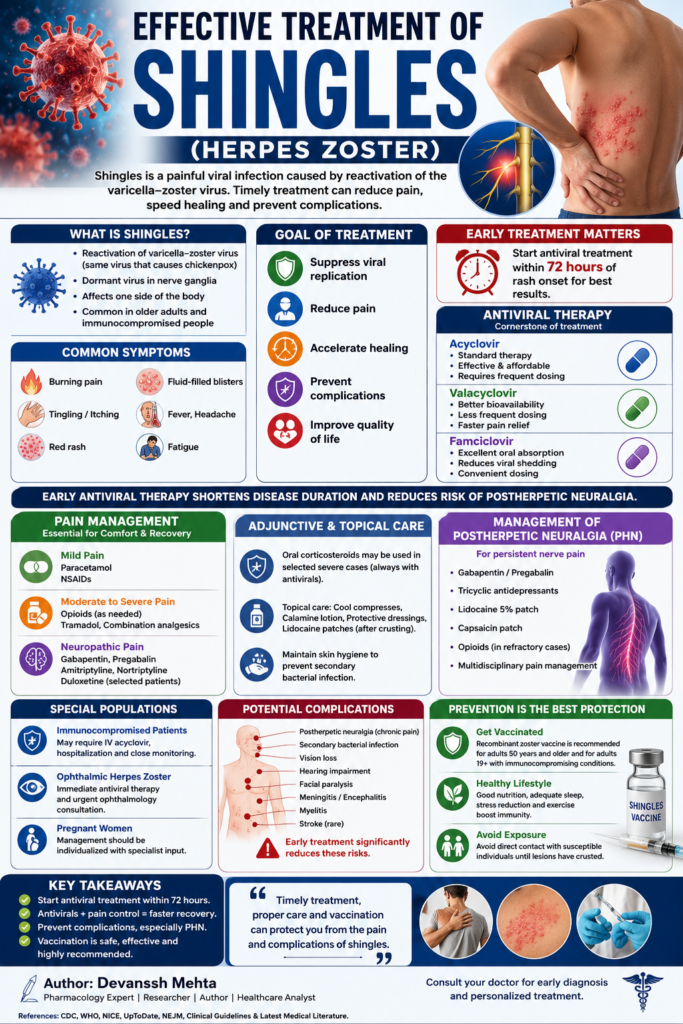
Shingles, medically known as herpes zoster, is a painful viral disease caused by the reactivation of the varicella-zoster virus (VZV), the same virus responsible for chickenpox. After an individual recovers from chickenpox, the virus remains dormant in nerve ganglia for years and may reactivate later in life, particularly when immunity declines. The disease primarily affects older adults and immunocompromised individuals and is characterized by a painful, unilateral blistering rash. Timely diagnosis and early initiation of antiviral therapy are essential to reduce symptom severity, accelerate healing, and minimize complications such as postherpetic neuralgia. This article reviews current treatment strategies, supportive care, prevention, and future therapeutic developments.
Introduction
Shingles is a common viral neurological disorder affecting millions of people worldwide. Approximately one in three individuals develops shingles during their lifetime. The incidence increases significantly after 50 years of age because of age-related decline in cell-mediated immunity.
Although shingles is usually self-limiting, delayed treatment may result in prolonged pain, bacterial infections, ocular complications, hearing loss, neurological disorders, and chronic nerve pain. Modern treatment focuses on reducing viral replication, controlling pain, preventing complications, and improving quality of life.
Causes and Pathophysiology
Following primary infection with varicella (chickenpox), the varicella-zoster virus migrates to sensory dorsal root ganglia, where it remains dormant for decades.
Reactivation occurs due to factors including:
- Increasing age
- Immunosuppression
- HIV infection
- Cancer chemotherapy
- Organ transplantation
- Long-term corticosteroid therapy
- Severe stress
- Chronic illnesses such as diabetes
Upon reactivation, the virus travels along sensory nerves to the skin, producing inflammation, nerve damage, and the characteristic painful vesicular rash.
Clinical Features
Typical symptoms include:
- Burning pain
- Tingling sensation
- Itching
- Fever
- Headache
- Fatigue
- Fluid-filled blisters
- Rash confined to one side of the body
- Severe nerve pain
The thoracic region is the most commonly affected site, followed by the face, neck, and lumbar region.
Diagnosis
Diagnosis is primarily clinical.
Laboratory investigations may include:
- PCR for VZV DNA
- Direct fluorescent antibody testing
- Viral culture (less commonly used)
- Tzanck smear (limited value)
- Serological tests in selected cases
PCR remains the most sensitive diagnostic method, particularly in atypical presentations.
Goals of Treatment
Treatment aims to:
- Suppress viral replication
- Reduce pain
- Accelerate healing
- Prevent complications
- Reduce transmission risk
- Improve patient comfort
Early therapy—preferably within 72 hours of rash onset—provides the greatest benefit.
Antiviral Therapy
Antiviral drugs are the cornerstone of treatment.
Acyclovir
Acyclovir inhibits viral DNA polymerase and has long been the standard therapy.
Advantages:
- Well established
- Cost-effective
- Widely available
Limitations:
- Requires frequent dosing
- Lower oral bioavailability
Valacyclovir
Valacyclovir is a prodrug of acyclovir with improved bioavailability.
Advantages:
- Less frequent dosing
- Better patient compliance
- Faster pain reduction
- Superior convenience
Famciclovir
Famciclovir is another effective antiviral with excellent oral absorption.
Benefits include:
- Reduced viral shedding
- Improved healing
- Convenient dosing schedule
These antiviral agents shorten disease duration and decrease the risk of postherpetic neuralgia when started promptly.
Pain Management
Pain control is a major component of treatment.
Mild Pain
- Paracetamol (acetaminophen)
- Non-steroidal anti-inflammatory drugs (NSAIDs)
Moderate to Severe Pain
- Opioids (selected cases)
- Tramadol
- Combination analgesics
Neuropathic Pain
For nerve-related pain:
- Gabapentin
- Pregabalin
- Amitriptyline
- Nortriptyline
- Duloxetine (selected patients)
These medications are particularly useful in persistent pain syndromes.
Corticosteroids
Oral corticosteroids may be considered in carefully selected immunocompetent adults with severe acute pain, always in combination with antiviral therapy.
Potential benefits include:
- Reduced inflammation
- Improved quality of life
- Earlier return to daily activities
Routine use is not recommended for all patients because of potential adverse effects.
Topical Therapy
Topical management includes:
- Cool compresses
- Calamine lotion
- Protective dressings
- Lidocaine patches (after lesions have crusted)
- Capsaicin preparations (primarily for postherpetic neuralgia)
Maintaining good skin hygiene helps prevent secondary bacterial infection.
Management of Postherpetic Neuralgia
Postherpetic neuralgia (PHN) is the most common complication, particularly in adults over 60 years of age.
Treatment options include:
- Gabapentin
- Pregabalin
- Tricyclic antidepressants
- Lidocaine 5% patch
- Capsaicin patch
- Opioids in selected refractory cases
- Multidisciplinary pain management
Early antiviral treatment reduces the risk of developing PHN.
Special Populations
Immunocompromised Patients
These individuals may require:
- Intravenous acyclovir
- Hospitalization
- Close monitoring for disseminated disease
Ophthalmic Herpes Zoster
When the ophthalmic branch of the trigeminal nerve is involved:
- Immediate antiviral therapy
- Urgent ophthalmology consultation
- Close follow-up to prevent vision-threatening complications
Pregnant Women
Management should be individualized in consultation with specialists. Antiviral therapy may be considered when the benefits outweigh potential risks.
Complications
Potential complications include:
- Postherpetic neuralgia
- Secondary bacterial infection
- Vision loss
- Hearing impairment
- Facial paralysis
- Meningitis
- Encephalitis
- Myelitis
- Stroke (rare but recognized)
Early recognition and treatment substantially reduce these risks.
Prevention
Vaccination remains the most effective preventive strategy.
The recombinant zoster vaccine is recommended for:
- Adults aged 50 years and older
- Adults aged 19 years and older with immunocompromising conditions
Additional preventive measures include:
- Good nutrition
- Adequate sleep
- Stress reduction
- Optimal management of chronic diseases
- Avoiding direct contact with susceptible individuals until lesions have crusted
Recent Advances
Current research is focused on:
- Improved antiviral formulations
- Long-acting antiviral agents
- Novel pain therapies
- Therapeutic vaccines
- Personalized treatment strategies
- Immune-based therapies
- Biomarkers to predict chronic pain risk
These developments aim to further reduce disease burden and improve long-term outcomes.
Conclusion
Shingles is a common yet potentially debilitating disease resulting from reactivation of the varicella-zoster virus. Prompt diagnosis and initiation of antiviral therapy within the first 72 hours are critical for improving clinical outcomes. Comprehensive management includes antiviral medication, effective pain control, supportive skin care, and prevention of complications. Vaccination has become a highly effective strategy to reduce the incidence and severity of herpes zoster, particularly in older adults and individuals with weakened immune systems. Continued advances in antiviral agents, immunology, and pain management are expected to further improve patient care.
References
- Dooling KL, Guo A, Patel M, et al. Recommendations of the Advisory Committee on Immunization Practices for Use of Herpes Zoster Vaccines. MMWR. 2018;67(3):103–108.
- Cohen JI. Clinical practice: Herpes Zoster. New England Journal of Medicine. 2013;369:255–263.
- Johnson RW, Rice ASC. Postherpetic Neuralgia. New England Journal of Medicine. 2014;371:1526–1533.
- Gnann JW Jr, Whitley RJ. Clinical Practice: Herpes Zoster. New England Journal of Medicine. 2002;347:340–346.
- Schmader KE. Herpes Zoster. Clinical Geriatric Medicine. 2016;32(3):539–553.
- Kennedy PGE, Gershon AA. Clinical Features of Varicella-Zoster Virus Infection. Viruses. 2018;10(11):609.
- Whitley RJ. A 70-Year-Old Woman with Shingles. JAMA. 2009;302(1):73–80.
- Centers for Disease Control and Prevention (CDC). Shingles (Herpes Zoster): Clinical Overview.
- World Health Organization (WHO). Varicella and Herpes Zoster: Position Papers.
- National Institute for Health and Care Excellence (NICE). Herpes Zoster: Clinical Knowledge Summary.