

Ethical Conduct in Professional Circles: The Foundation of Trust, Excellence, and Sustainable Success
Abstract
Ethical conduct is the cornerstone of every successful profession. Regardless of whether an individual works in healthcare, education, law, business, engineering, the military, public administration, or scientific research, ethical behavior establishes trust, credibility, and long-term professional success. In an increasingly interconnected and competitive world, technical competence alone is insufficient. Professionals are expected to uphold integrity, fairness, accountability, confidentiality, and respect while making decisions that affect individuals, organizations, and society. This article explores the significance of ethical conduct in professional circles, discusses its fundamental principles, examines common ethical challenges, and presents practical strategies for cultivating an ethical professional culture.
Introduction
Professional ethics refers to the moral principles and standards that govern the conduct of individuals in their professional lives. These standards guide decision-making, define acceptable behavior, and protect the interests of clients, colleagues, employers, and society.
Ethical conduct extends beyond compliance with laws and regulations. While laws establish minimum standards of behavior, ethics encourages professionals to pursue the highest standards of honesty, responsibility, fairness, and integrity even when no one is watching. Organizations that cultivate ethical cultures consistently demonstrate stronger teamwork, improved public confidence, reduced legal risks, and greater long-term success.
Importance of Ethical Conduct
Ethical conduct creates the foundation upon which professional relationships are built. Clients trust ethical professionals with confidential information, employers rely on ethical employees to safeguard organizational interests, and society depends on ethical leadership to ensure justice and accountability.
Professionals who consistently demonstrate ethical behavior enjoy stronger reputations, greater career opportunities, improved leadership potential, and increased public confidence. Ethical workplaces also experience higher employee satisfaction, reduced conflicts, and greater organizational stability.
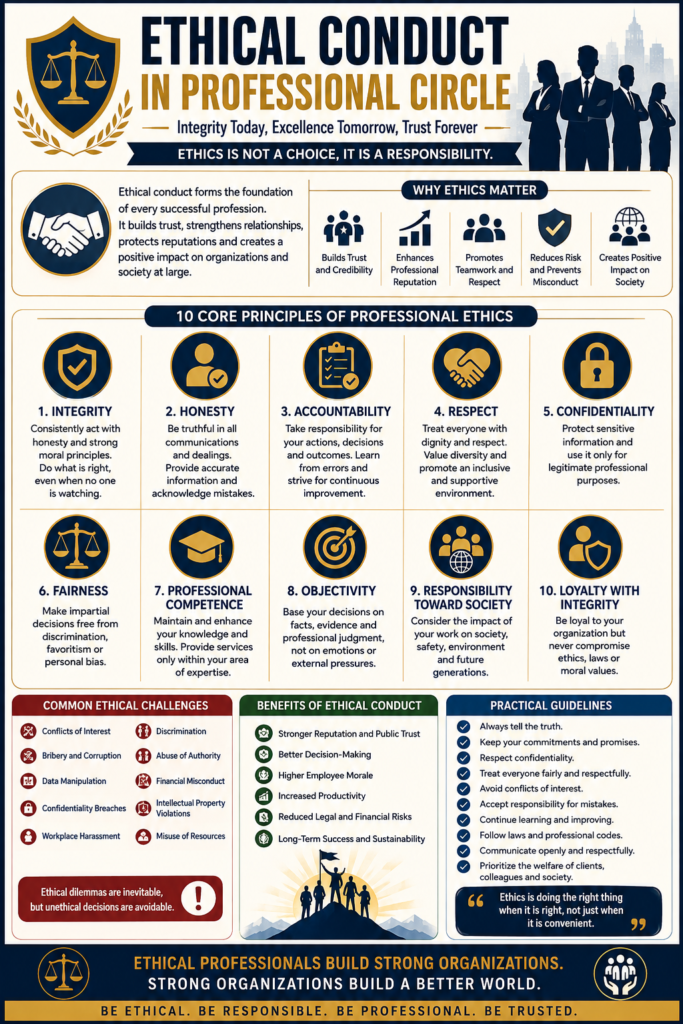
Core Principles of Professional Ethics
1. Integrity
Integrity involves consistently acting honestly and adhering to strong moral principles. Professionals should avoid fraud, deception, plagiarism, manipulation, and conflicts of interest while maintaining consistency between their words and actions.
2. Honesty
Honesty requires truthful communication in all professional interactions. Ethical professionals provide accurate information, acknowledge limitations, report mistakes promptly, and avoid misleading statements or false claims.
3. Accountability
Professionals must accept responsibility for their decisions, actions, and outcomes. Accountability includes acknowledging errors, correcting mistakes, learning from failures, and maintaining transparency throughout professional practice.
4. Respect
Respect involves treating every individual with dignity regardless of age, gender, religion, ethnicity, nationality, social status, or personal beliefs. Respectful professionals promote inclusive environments and value diverse perspectives.
5. Confidentiality
Many professions involve handling sensitive information. Ethical professionals protect confidential data and disclose information only when legally or ethically justified.
6. Fairness
Fairness requires impartial decision-making free from discrimination, favoritism, or personal bias. Equal opportunity and objective evaluation strengthen organizational credibility.
7. Professional Competence
Ethics demands continuous learning and skill development. Professionals should maintain current knowledge, improve competencies, and avoid undertaking responsibilities beyond their expertise.
8. Objectivity
Professionals should make decisions based on evidence, facts, and professional judgment rather than emotions, prejudice, or external pressures.
9. Responsibility Toward Society
Professional decisions often influence communities and future generations. Ethical professionals consider social welfare, environmental sustainability, and public safety while performing their duties.
10. Loyalty with Integrity
Loyalty to an employer or organization should never justify unethical behavior. Ethical professionals balance organizational interests with legal obligations and moral responsibility.
Ethical Conduct Across Different Professions
In healthcare, ethical conduct ensures patient safety, informed consent, confidentiality, and compassionate care.
In business, ethics promotes transparency, honest financial reporting, fair competition, consumer protection, and responsible corporate governance.
In education, ethical teachers maintain academic honesty, fairness in assessment, and respect for students.
In scientific research, ethical conduct includes accurate data reporting, avoidance of plagiarism, responsible experimentation, and proper acknowledgment of contributors.
In public service, ethical behavior emphasizes impartiality, accountability, transparency, and responsible use of public resources.
In law enforcement and the military, ethics supports discipline, justice, courage, respect for human rights, and responsible exercise of authority.
Common Ethical Challenges
Professionals frequently encounter situations where ethical decision-making becomes difficult. Common challenges include:
- Conflicts of interest
- Bribery and corruption
- Data manipulation
- Confidentiality breaches
- Workplace harassment
- Discrimination
- Abuse of authority
- Financial misconduct
- Intellectual property violations
- Misuse of organizational resources
Addressing these challenges requires strong moral judgment, organizational support, and adherence to professional codes of conduct.
Building an Ethical Professional Culture
Organizations play a crucial role in promoting ethical behavior by establishing clear policies, encouraging transparency, providing ethics training, protecting whistleblowers, recognizing ethical leadership, and enforcing accountability without favoritism.
Leaders must demonstrate ethical behavior through their own actions, as employees are more likely to follow ethical standards when leadership consistently models integrity and fairness.
Benefits of Ethical Conduct
Strong ethical practices produce significant advantages, including:
- Enhanced professional reputation
- Increased public trust
- Stronger teamwork and collaboration
- Better decision-making
- Reduced legal and financial risks
- Greater customer and client satisfaction
- Improved employee morale
- Higher organizational credibility
- Sustainable business growth
- Long-term career success
Practical Guidelines for Professionals
Every professional should strive to:
- Always tell the truth.
- Keep commitments and promises.
- Respect confidentiality.
- Treat everyone fairly.
- Avoid conflicts of interest.
- Accept responsibility for mistakes.
- Continue professional learning.
- Follow applicable laws and professional codes.
- Communicate respectfully.
- Prioritize the welfare of clients, colleagues, and society.
Conclusion
Ethical conduct is not merely an optional professional attribute; it is the foundation of excellence, leadership, and public confidence. Knowledge and technical expertise may open professional opportunities, but ethical character determines whether success is respected and sustained. Professionals who consistently practice integrity, honesty, accountability, fairness, respect, and responsibility contribute not only to organizational success but also to the advancement of society. In an era where reputation can be built or damaged rapidly, ethical conduct remains one of the most valuable assets a professional can possess. By embracing ethical principles in every decision and interaction, professionals strengthen trust, inspire confidence, and create lasting positive impact in their organizations and communities.