

How to Effectively Deal with People: A Practical Guide to Building Better Relationships
Abstract
Success in life is determined not only by intelligence, education, or technical skills but also by the ability to deal effectively with people. Whether in personal relationships, professional settings, business, or public life, strong interpersonal skills help build trust, reduce conflicts, and create opportunities for growth. Effective communication, emotional intelligence, empathy, patience, and integrity form the foundation of successful human interactions. This article explores practical principles and strategies for dealing with different kinds of people while maintaining professionalism, confidence, and emotional balance.
Introduction
Human beings are social creatures. Every aspect of life—from family and friendships to workplaces and communities—involves interacting with people. Some individuals are supportive and encouraging, while others may be difficult, critical, manipulative, or confrontational. Learning how to manage these interactions effectively is an essential life skill.
Dealing with people effectively does not mean pleasing everyone or avoiding disagreements. Instead, it means communicating clearly, understanding different perspectives, setting healthy boundaries, and responding wisely rather than reacting emotionally. Developing these skills leads to stronger relationships, greater influence, and improved mental well-being.
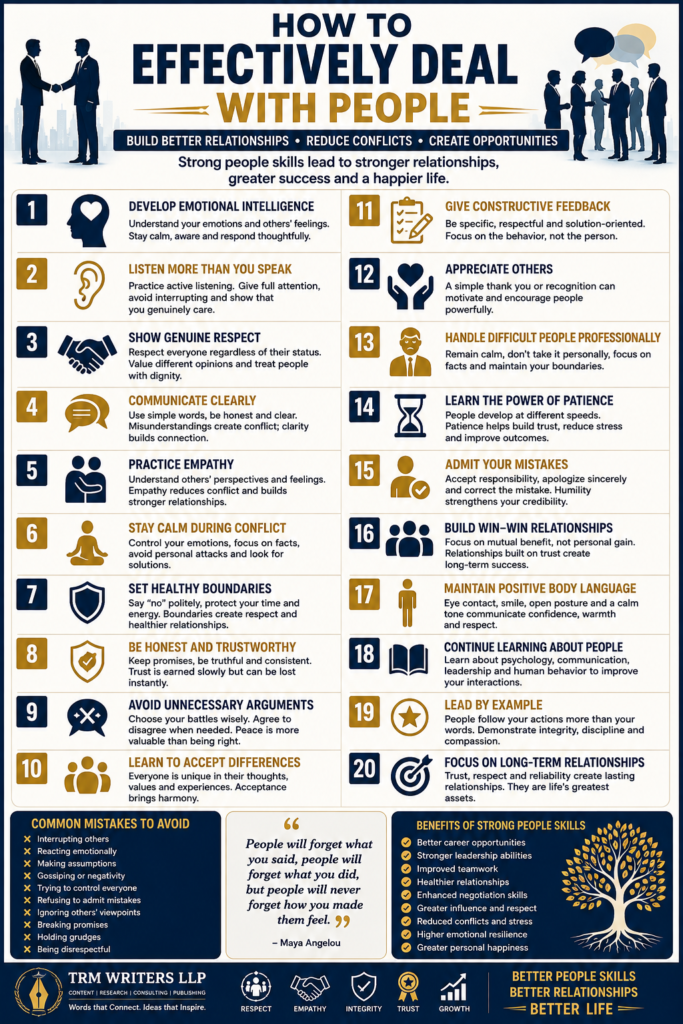
1. Develop Emotional Intelligence
Emotional intelligence (EQ) is the ability to recognize, understand, and manage both your own emotions and those of others.
High emotional intelligence enables you to:
- Stay calm during disagreements.
- Recognize emotional triggers.
- Respond thoughtfully instead of impulsively.
- Build stronger relationships.
Before responding in emotionally charged situations, pause briefly and consider whether your response will improve or worsen the situation.
2. Listen More Than You Speak
One of the greatest communication skills is active listening.
Effective listeners:
- Give full attention.
- Avoid interrupting.
- Ask thoughtful questions.
- Confirm understanding before responding.
People naturally appreciate those who genuinely listen to them.
3. Show Genuine Respect
Respect is the cornerstone of every healthy relationship.
Respect includes:
- Valuing different opinions.
- Speaking politely.
- Avoiding insults or humiliation.
- Appreciating people’s dignity regardless of their status.
Respect encourages cooperation and builds long-term trust.
4. Communicate Clearly
Many conflicts arise from misunderstandings rather than bad intentions.
Good communication involves:
- Using simple language.
- Being honest.
- Avoiding unnecessary criticism.
- Clarifying expectations.
- Confirming important information.
Clear communication minimizes confusion and improves teamwork.
5. Practice Empathy
Empathy means understanding another person’s perspective without necessarily agreeing with it.
Ask yourself:
- Why might they feel this way?
- What pressures are they facing?
- What experiences shaped their opinion?
Empathy reduces unnecessary conflict and improves cooperation.
6. Stay Calm During Conflict
Conflict is inevitable.
Effective people:
- Control their emotions.
- Focus on facts.
- Avoid personal attacks.
- Seek solutions instead of assigning blame.
Remaining calm often influences others to become calmer as well.
7. Set Healthy Boundaries
Being kind does not mean allowing others to misuse your time, energy, or emotions.
Healthy boundaries include:
- Saying “no” politely.
- Protecting your personal values.
- Limiting toxic interactions.
- Respecting your own well-being.
Strong boundaries create healthier relationships.
8. Be Honest and Trustworthy
Trust is built slowly but can be lost quickly.
Develop trust by:
- Keeping promises.
- Being truthful.
- Admitting mistakes.
- Maintaining confidentiality.
- Acting consistently.
People naturally gravitate toward trustworthy individuals.
9. Avoid Unnecessary Arguments
Winning every argument rarely strengthens relationships.
Instead:
- Choose important battles.
- Agree to disagree when appropriate.
- Focus on understanding rather than winning.
Wisdom often lies in knowing when not to argue.
10. Learn to Accept Differences
Every individual has unique:
- Personalities
- Values
- Experiences
- Beliefs
- Communication styles
Accepting diversity improves teamwork and reduces unnecessary frustration.
11. Give Constructive Feedback
Criticism should help people improve rather than make them feel inferior.
Constructive feedback should be:
- Specific
- Respectful
- Solution-oriented
- Timely
Focus on behavior rather than attacking someone’s character.
12. Appreciate Others
Recognition is a powerful motivator.
Simple appreciation can include:
- Saying thank you.
- Acknowledging effort.
- Celebrating achievements.
- Offering sincere compliments.
People remember those who value their contributions.
13. Handle Difficult People Professionally
Some individuals may be:
- Aggressive
- Manipulative
- Negative
- Arrogant
- Highly critical
When dealing with difficult people:
- Remain calm.
- Do not mirror their behavior.
- Focus on facts.
- Maintain boundaries.
- Limit unnecessary confrontation.
Professionalism often neutralizes difficult situations.
14. Learn the Power of Patience
People develop at different speeds.
Patience helps you:
- Build trust.
- Reduce stress.
- Improve communication.
- Make better decisions.
Quick reactions often create lasting problems.
15. Admit Your Mistakes
Nobody is perfect.
When wrong:
- Accept responsibility.
- Apologize sincerely.
- Correct the mistake.
- Learn from the experience.
Humility strengthens credibility rather than weakening it.
16. Build Win-Win Relationships
Healthy relationships benefit everyone involved.
Instead of asking:
“What can I gain?”
Ask:
“How can both of us benefit?”
Win-win thinking creates long-lasting partnerships.
17. Maintain Positive Body Language
Non-verbal communication often speaks louder than words.
Positive body language includes:
- Eye contact
- Genuine smile
- Open posture
- Confident handshake (where culturally appropriate)
- Calm voice
Your attitude is often communicated before you even begin speaking.
18. Continue Learning About Human Behavior
Understanding psychology improves communication.
Study topics such as:
- Emotional intelligence
- Personality types
- Negotiation
- Leadership
- Conflict management
- Behavioral psychology
Greater understanding leads to more effective interactions.
19. Lead by Example
People observe actions more than words.
Demonstrate:
- Integrity
- Discipline
- Compassion
- Accountability
- Professionalism
Leadership begins with personal conduct.
20. Focus on Long-Term Relationships
Short-term victories achieved through manipulation rarely create lasting success.
Instead, build relationships based on:
- Trust
- Respect
- Reliability
- Mutual growth
- Ethical behavior
Strong relationships often become one of life’s greatest assets.
Common Mistakes to Avoid
Many interpersonal problems arise from avoidable habits, including:
- Interrupting others frequently.
- Reacting emotionally without thinking.
- Making assumptions without verification.
- Gossiping or spreading negativity.
- Trying to control everyone.
- Refusing to admit mistakes.
- Ignoring others’ viewpoints.
- Breaking promises.
- Holding grudges.
- Being disrespectful during disagreements.
Avoiding these behaviors significantly improves interpersonal effectiveness.
Benefits of Strong People Skills
Individuals who communicate and interact effectively often experience:
- Better career opportunities.
- Stronger leadership abilities.
- Improved teamwork.
- Healthier family relationships.
- Greater customer satisfaction.
- Enhanced negotiation skills.
- Reduced workplace conflicts.
- Higher emotional resilience.
- Strong professional reputation.
- Greater personal happiness and life satisfaction.
Conclusion
The ability to deal effectively with people is one of the most valuable skills a person can develop. Technical knowledge may open doors, but interpersonal competence determines how far one progresses. Respect, empathy, emotional intelligence, honesty, patience, effective communication, and integrity are timeless principles that foster meaningful relationships and professional success.
Every interaction presents an opportunity to build trust, demonstrate character, and create positive influence. By consistently practicing these principles, individuals can navigate challenging situations with confidence, strengthen personal and professional relationships, and become respected leaders in every sphere of life.