

In-Depth Pharmacological Profile of Calendula officinalis: Current Evidence, Mechanisms, and Therapeutic Potential
Author: Devanssh Mehta
Abstract
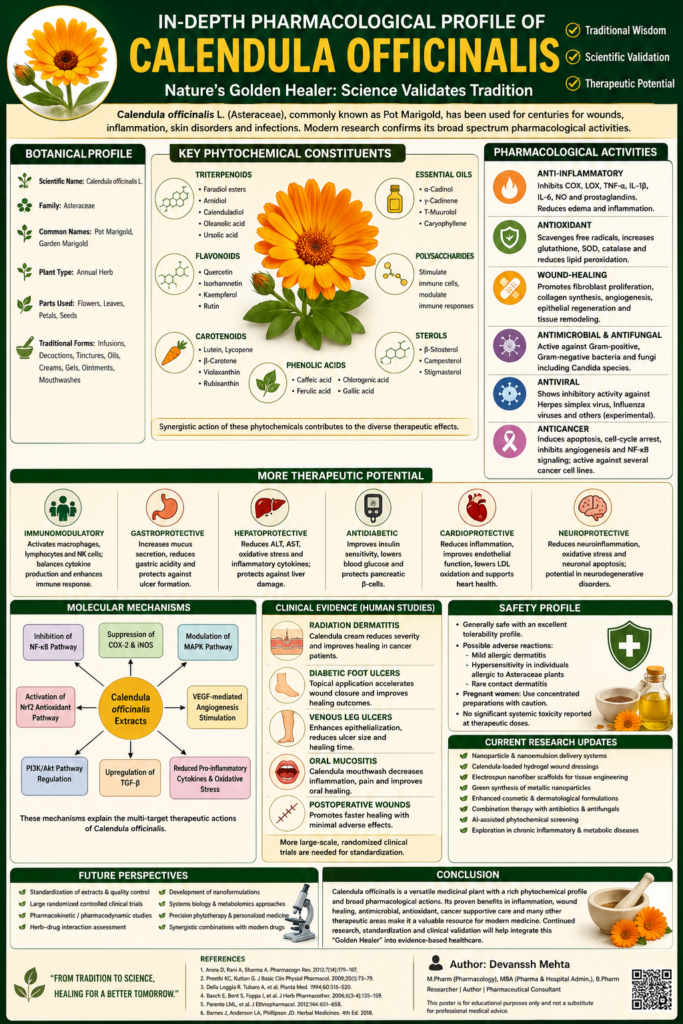
Calendula officinalis L., commonly known as pot marigold, is one of the most extensively investigated medicinal plants in traditional and modern phytotherapy. Belonging to the family Asteraceae, it has been widely used for centuries for wound healing, inflammation, skin disorders, gastrointestinal ailments, and infections. Recent pharmacological research has validated many of these traditional claims through experimental and clinical studies. The therapeutic efficacy of Calendula officinalis is attributed to its rich phytochemical profile comprising triterpenoids, flavonoids, carotenoids, essential oils, phenolic acids, polysaccharides, saponins, and sterols. These bioactive constituents collectively exhibit anti-inflammatory, antioxidant, antimicrobial, wound-healing, immunomodulatory, anticancer, hepatoprotective, gastroprotective, neuroprotective, cardioprotective, antidiabetic, and antiviral activities. Modern investigations have also explored its role in cosmetic formulations, radiation-induced dermatitis, oral mucositis, diabetic wound care, and regenerative medicine. This review comprehensively discusses the pharmacological profile of Calendula officinalis, highlighting its phytochemistry, mechanisms of action, therapeutic applications, safety profile, current updates, and future research directions.
Keywords: Calendula officinalis, medicinal plants, phytochemistry, pharmacology, wound healing, anti-inflammatory, antioxidant, herbal medicine
Introduction
Medicinal plants continue to serve as valuable sources of therapeutic agents across traditional and modern healthcare systems. Among these, Calendula officinalis has gained exceptional attention because of its diverse pharmacological activities and excellent safety profile. Native to the Mediterranean region but cultivated worldwide, Calendula officinalis is recognized for its bright orange-yellow flowers rich in medicinal compounds.
Traditional systems including Ayurveda, Unani, European herbal medicine, and homeopathy have recommended Calendula preparations for treating burns, wounds, ulcers, eczema, dermatitis, menstrual disorders, gastric ulcers, and infections. Scientific investigations over the last three decades have substantially strengthened the evidence supporting these therapeutic applications.
The growing global demand for herbal medicines, natural cosmetics, and plant-derived pharmaceuticals has renewed interest in understanding the molecular pharmacology of Calendula officinalis. Researchers are exploring its potential not only as a standalone herbal medicine but also as an adjunct therapy in cancer care, dermatology, dentistry, regenerative medicine, and metabolic diseases.
Botanical Description
- Scientific name: Calendula officinalis L.
- Family: Asteraceae
- Common names: Pot Marigold, Garden Marigold
- Plant type: Annual herb
- Parts used: Flowers, leaves, petals, seeds
- Traditional dosage forms:
- Infusions
- Decoctions
- Tinctures
- Ointments
- Creams
- Oils
- Gels
- Mouthwashes
Phytochemical Composition
The remarkable pharmacological activity of Calendula results from the synergistic effects of numerous phytochemicals.
1. Triterpenoids
These represent the principal anti-inflammatory constituents.
Major compounds include:
- Faradiol esters
- Arnidiol
- Calenduladiol
- Taraxasterol
- Oleanolic acid
- Ursolic acid
These compounds inhibit inflammatory mediators and promote tissue regeneration.
2. Flavonoids
Major flavonoids include:
- Quercetin
- Isorhamnetin
- Kaempferol
- Rutin
Flavonoids contribute to:
- antioxidant activity
- capillary stabilization
- anti-inflammatory effects
- cardiovascular protection
3. Carotenoids
Calendula flowers possess abundant carotenoids including:
- Lutein
- Lycopene
- β-Carotene
- Violaxanthin
- Rubixanthin
These pigments possess strong antioxidant activity while protecting ocular and skin tissues.
4. Essential Oils
Essential oils contain:
- α-Cadinol
- γ-Cadinene
- T-Muurolol
- Caryophyllene
These compounds demonstrate antimicrobial and anti-inflammatory properties.
5. Phenolic Acids
Major phenolics include:
- Caffeic acid
- Chlorogenic acid
- Ferulic acid
- Gallic acid
These reduce oxidative stress and cellular injury.
6. Polysaccharides
Plant polysaccharides stimulate macrophages and modulate immune responses.
7. Sterols
Important sterols include:
- β-Sitosterol
- Campesterol
- Stigmasterol
These contribute to anti-inflammatory and cholesterol-lowering activities.
Pharmacological Activities
Anti-inflammatory Activity
The anti-inflammatory effect of Calendula is among its best-established pharmacological properties.
Mechanisms include inhibition of:
- Cyclooxygenase (COX)
- Lipoxygenase (LOX)
- TNF-α
- IL-1β
- IL-6
- Nitric oxide
- Prostaglandin synthesis
Faradiol esters significantly suppress edema formation in experimental animal models.
These mechanisms explain its widespread use in:
- dermatitis
- eczema
- burns
- psoriasis
- arthritis
- mucositis
Antioxidant Activity
Oxidative stress contributes to aging and chronic diseases.
Calendula exhibits strong antioxidant effects by:
- scavenging free radicals
- increasing glutathione
- enhancing catalase activity
- increasing superoxide dismutase activity
- reducing lipid peroxidation
Flavonoids and carotenoids are primarily responsible for these actions.
Wound-Healing Activity
Calendula has become one of the most recognized herbal wound-healing agents.
Mechanisms include:
- fibroblast proliferation
- collagen synthesis
- angiogenesis
- epithelial regeneration
- extracellular matrix remodeling
- reduction of inflammation
- antimicrobial protection
Clinical studies demonstrate faster healing of:
- burns
- diabetic ulcers
- venous ulcers
- surgical wounds
- radiation injuries
Antimicrobial Activity
Extracts inhibit various microorganisms including:
Gram-positive bacteria
- Staphylococcus aureus
- Streptococcus pyogenes
Gram-negative bacteria
- Escherichia coli
- Pseudomonas aeruginosa
Fungi
- Candida albicans
Mechanisms include:
- membrane disruption
- enzyme inhibition
- oxidative damage
- biofilm inhibition
Antifungal Activity
Calendula demonstrates significant activity against:
- dermatophytes
- Candida species
- Aspergillus species
Topical formulations are increasingly used in fungal skin infections.
Antiviral Activity
Experimental evidence suggests inhibition against:
- Herpes simplex virus
- Influenza viruses
- Hepatitis-related viral replication (experimental)
Further clinical investigations remain necessary.
Anticancer Activity
Modern oncology research has identified promising anticancer properties.
Mechanisms include:
- apoptosis induction
- cell-cycle arrest
- inhibition of angiogenesis
- suppression of NF-κB signaling
- oxidative stress modulation
Experimental studies report activity against:
- breast cancer
- colon cancer
- leukemia
- melanoma
- cervical cancer
Calendula extracts also reduce chemotherapy-induced mucositis.
Immunomodulatory Activity
Polysaccharides activate:
- macrophages
- lymphocytes
- natural killer cells
They stimulate cytokine production while maintaining immune homeostasis.
Gastroprotective Activity
Calendula protects gastric mucosa through:
- increased mucus secretion
- antioxidant activity
- reduced gastric acidity
- enhanced epithelial repair
Animal studies demonstrate protection against ethanol-induced ulcers.
Hepatoprotective Activity
Calendula reduces liver injury by:
- decreasing ALT
- decreasing AST
- reducing oxidative stress
- preventing lipid peroxidation
- suppressing inflammatory cytokines
Potential applications include drug-induced liver injury and non-alcoholic fatty liver disease, although more clinical studies are needed.
Antidiabetic Activity
Animal studies indicate:
- improved insulin sensitivity
- reduced blood glucose
- antioxidant protection of pancreatic β-cells
- decreased diabetic complications
Its flavonoids may modulate glucose metabolism and insulin signaling.
Cardioprotective Activity
Calendula contributes to cardiovascular protection through:
- antioxidant effects
- reduced inflammation
- improved endothelial function
- inhibition of LDL oxidation
- lipid-lowering effects
These actions may reduce the risk of atherosclerosis.
Neuroprotective Activity
Emerging studies indicate neuroprotective potential via:
- reduction of neuroinflammation
- antioxidant defense
- inhibition of neuronal apoptosis
- protection against oxidative neuronal injury
These findings suggest possible roles in neurodegenerative disorders, although human evidence remains limited.
Dermatological Applications
Dermatology represents one of the largest clinical applications of Calendula.
Conditions treated include:
- eczema
- dermatitis
- acne
- burns
- psoriasis
- radiation dermatitis
- diaper rash
- pressure ulcers
Calendula creams improve skin hydration while reducing irritation and inflammation.
Oral Health Applications
Calendula mouthwash has demonstrated benefits in:
- gingivitis
- periodontitis
- oral ulcers
- chemotherapy-induced oral mucositis
Its antimicrobial and anti-inflammatory properties improve oral healing and reduce discomfort.
Molecular Mechanisms
Recent pharmacological studies have identified multiple signaling pathways influenced by Calendula:
- NF-κB inhibition
- MAPK pathway modulation
- COX-2 suppression
- iNOS inhibition
- VEGF-mediated angiogenesis
- TGF-β activation
- Nrf2 antioxidant pathway activation
- PI3K/Akt pathway regulation
These mechanisms explain the plant’s multitarget therapeutic profile.
Clinical Evidence
Human studies support several applications:
Radiation Dermatitis
Calendula cream reduces severity of radiation-induced skin toxicity in cancer patients.
Diabetic Foot Ulcers
Topical application accelerates wound closure.
Venous Leg Ulcers
Improves epithelialization and reduces healing time.
Oral Mucositis
Calendula mouthwash decreases inflammation and pain.
Postoperative Wound Care
Promotes faster healing with minimal adverse effects.
Although encouraging, larger multicenter randomized controlled trials are still required to establish standardized treatment protocols.
Safety Profile
Calendula possesses a favorable safety profile.
Possible adverse reactions include:
- mild allergic dermatitis
- hypersensitivity in individuals allergic to Asteraceae plants
- rare contact dermatitis
Pregnant women should use concentrated preparations cautiously due to limited clinical safety data.
No significant systemic toxicity has been reported at therapeutic doses.
Current Research Updates
Recent advances include:
- Nanoparticle-mediated Calendula delivery systems
- Calendula-loaded hydrogel wound dressings
- Electrospun nanofiber scaffolds for tissue engineering
- Green synthesis of metallic nanoparticles using Calendula extracts
- Cosmetic formulations with enhanced skin penetration
- Combination therapies with antibiotics and antifungals
- AI-assisted phytochemical screening to identify novel bioactive compounds
- Evaluation of standardized extracts for chronic inflammatory disorders and metabolic diseases
These developments are expanding the therapeutic scope of Calendula officinalis beyond traditional herbal medicine.
Future Perspectives
Future research should focus on:
- Standardization of phytochemical composition
- Large-scale randomized clinical trials
- Pharmacokinetic and pharmacodynamic studies
- Herb–drug interaction assessment
- Development of nanoformulations
- Systems biology and metabolomics approaches
- Precision phytotherapy based on individual patient characteristics
- Exploration of synergistic combinations with conventional drugs
Such efforts will help integrate Calendula into evidence-based clinical practice.
Conclusion
Calendula officinalis represents one of the most scientifically validated medicinal plants with broad pharmacological potential. Its diverse phytochemical constituents—including triterpenoids, flavonoids, carotenoids, phenolic acids, and polysaccharides—act through multiple molecular pathways to produce anti-inflammatory, antioxidant, antimicrobial, wound-healing, immunomodulatory, anticancer, gastroprotective, hepatoprotective, cardioprotective, neuroprotective, and antidiabetic effects. Among these, its role in wound management, dermatology, and supportive cancer care is supported by the strongest clinical evidence. Emerging technologies such as nanotechnology, biomaterial-based delivery systems, and molecular pharmacology are further enhancing its therapeutic prospects. Continued standardization of extracts, rigorous clinical trials, and mechanistic research will be essential for translating the full pharmacological potential of Calendula officinalis into mainstream healthcare.
References
- Arora D, Rani A, Sharma A. A review on phytochemistry and ethnopharmacological aspects of Calendula officinalis. Pharmacognosy Reviews. 2013;7(14):179–187.
- Preethi KC, Kuttan G. Wound healing activity of flower extract of Calendula officinalis. Journal of Basic and Clinical Physiology and Pharmacology. 2009;20(1):73–79.
- Della Loggia R, Tubaro A, et al. The role of triterpenoids in the topical anti-inflammatory activity of Calendula officinalis. Planta Medica. 1994;60:516–520.
- Efstratiou E, Hussain AI, Nigam PS, et al. Antimicrobial activity of Calendula officinalis petal extracts. Complementary Therapies in Clinical Practice. 2012;18(3):173–176.
- Parente LML, et al. Wound healing and anti-inflammatory effects of Calendula officinalis. Journal of Ethnopharmacology. 2012;144:651–658.
- Basch E, Bent S, Foppa I, et al. Marigold (Calendula officinalis L.): An evidence-based systematic review. Journal of Herbal Pharmacotherapy. 2006;6(3–4):135–159.
- Fonseca YM, et al. Development of topical formulations containing Calendula officinalis extract. Brazilian Journal of Pharmaceutical Sciences. 2010;46(4):693–701.
- Nicolaus C, et al. Herbal therapies in dermatology: Current evidence for Calendula officinalis. Phytotherapy Research. 2021;35(8):4201–4218.
- World Health Organization. WHO Monographs on Selected Medicinal Plants. Geneva: WHO.
- Barnes J, Anderson LA, Phillipson JD. Herbal Medicines. 4th ed. Pharmaceutical Press; 2018.