

From Affordable Biologics to Next-Generation Bioinnovation: The Strategic Evolution of Reengineered Biosimilars in India
Author: Devanssh Mehta (M.Pharm., MBA, B.Pharm.)
Abstract
The rapid evolution of biotechnology has transformed the therapeutic landscape of modern medicine. Among the most significant developments in this field is the emergence of biosimilars, biological products designed to replicate the therapeutic effects of complex biologic drugs after patent expiry. India has emerged as a global hub for biosimilar manufacturing, driven by strong biopharmaceutical capabilities, cost-efficient manufacturing infrastructure, and a progressive regulatory framework.
However, the next frontier of innovation lies not merely in replication but in reengineering biosimilars—developing enhanced biologics through advanced analytical technologies, improved manufacturing platforms, and next-generation bioengineering approaches. These reengineered biosimilars, often referred to as biobetters or next-generation biosimilars, promise improved pharmacokinetics, reduced immunogenicity, enhanced therapeutic efficacy, and greater patient accessibility.
This article provides a comprehensive exploration of the scientific, regulatory, economic, and strategic dimensions of reengineered biosimilars in India, examining the country’s current capabilities and future trajectory in the global biopharmaceutical ecosystem.
1. Introduction: The Biological Revolution in Modern Medicine
The pharmaceutical industry is undergoing a profound transformation. For decades, drug development was dominated by small-molecule chemistry, where synthetic compounds formed the backbone of therapeutic interventions. However, the late twentieth and early twenty-first centuries witnessed the emergence of biologic medicines, complex therapeutic molecules derived from living cells using recombinant DNA technology.
Biologics have revolutionized treatment in numerous therapeutic areas, including:
- Oncology
- Autoimmune diseases
- Rheumatology
- Endocrinology
- Rare genetic disorders
Despite their clinical effectiveness, biologics are notoriously expensive due to complex manufacturing processes and stringent regulatory requirements. The high cost of biologics has limited their accessibility in many parts of the world.
The concept of biosimilars emerged as a strategic solution to this challenge. A biosimilar is a biological product that is highly similar to an already approved reference biologic, demonstrating no clinically meaningful differences in safety, purity, or efficacy. (PharmaRegulatory)
Once the patent of an innovator biologic expires, other manufacturers can develop biosimilars, thereby increasing competition and reducing treatment costs.
India has become one of the leading producers of biosimilars globally, with a rapidly expanding biotechnology sector and a strong regulatory framework for similar biologics. (PMC)
Yet the next phase of development is far more ambitious: reengineering biosimilars to create improved therapeutic molecules.
2. Understanding Biosimilars: Scientific Foundations
2.1 What Are Biosimilars?
Biosimilars are biologic products designed to mimic the structure, function, and therapeutic effects of an already approved reference biologic drug.
Unlike generic drugs, which are chemically identical to their reference products, biosimilars cannot be exact copies because biologics are extremely complex molecules produced in living systems.
Biologics often consist of:
- Recombinant proteins
- Monoclonal antibodies
- Fusion proteins
- Hormones
- Enzymes
Minor variations in manufacturing processes may influence:
- Protein folding
- Glycosylation patterns
- Immunogenic potential
Therefore, biosimilar development requires a comparability exercise involving extensive analytical, preclinical, and clinical studies to demonstrate similarity with the reference product. (PharmaRegulatory)
2.2 Key Characteristics of Biosimilars
Biosimilars must demonstrate:
- Structural similarity with the reference biologic
- Comparable pharmacokinetics and pharmacodynamics
- Equivalent clinical efficacy
- Comparable immunogenicity
Regulatory agencies require a stepwise development approach, beginning with analytical characterization followed by nonclinical and clinical studies.
2.3 Therapeutic Applications of Biosimilars
Biosimilars have transformed treatment in many therapeutic areas:
Oncology
Examples include biosimilars of:
- Trastuzumab
- Rituximab
- Bevacizumab
Autoimmune Diseases
Biosimilars targeting TNF-alpha pathways are used in:
- Rheumatoid arthritis
- Psoriasis
- Crohn’s disease
Endocrinology
Insulin biosimilars are critical for diabetes management.
Hematology
Biosimilars of erythropoietin and filgrastim have improved treatment accessibility for anemia and neutropenia.
These therapies have significantly improved patient outcomes while reducing healthcare costs.
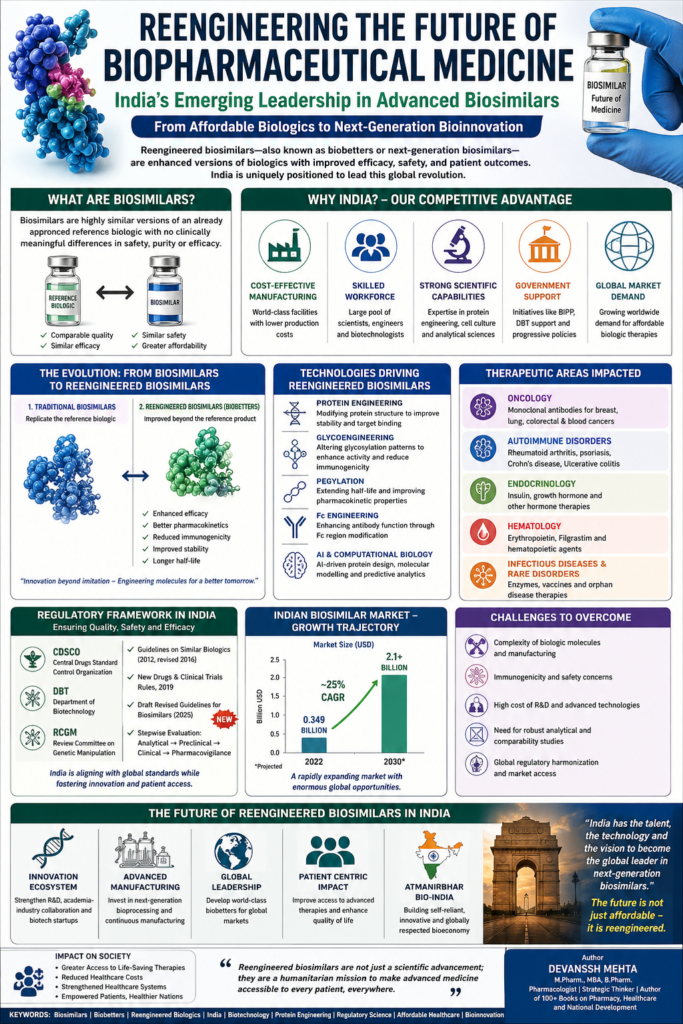
3. Evolution of the Biosimilar Ecosystem in India
India has been one of the earliest adopters of biosimilars, often referred to locally as “similar biologics.”
The country’s biotechnology ecosystem includes more than 100 companies engaged in biosimilar manufacturing and development, making India one of the largest producers of these therapies worldwide. (PMC)
Several factors have contributed to India’s leadership in biosimilars:
3.1 Cost-Efficient Manufacturing
India possesses strong capabilities in:
- Fermentation technology
- Recombinant protein production
- Bioprocess engineering
Lower manufacturing costs enable Indian companies to produce biologics at significantly lower prices compared to Western pharmaceutical firms.
3.2 Skilled Scientific Workforce
India produces thousands of graduates annually in:
- Biotechnology
- Biochemistry
- Pharmacology
- Pharmaceutical sciences
This intellectual capital has played a critical role in building the biosimilar industry.
3.3 Government Support
The Indian government has introduced multiple initiatives to promote biotechnology innovation.
One example is the Biotechnology Industry Partnership Program (BIPP), designed to support biotech startups and SMEs involved in biosimilar development. (Artixio)
3.4 Expanding Market Potential
The Indian biosimilar market is projected to grow dramatically.
Estimates suggest that the market could expand from approximately $349 million in 2022 to over $2.1 billion by 2030, reflecting strong global demand for affordable biologics. (Artixio)
4. Regulatory Framework for Biosimilars in India
The regulatory oversight of biosimilars in India involves multiple institutions:
- Central Drugs Standard Control Organization (CDSCO)
- Department of Biotechnology (DBT)
- Review Committee on Genetic Manipulation (RCGM)
The regulatory pathway is governed by:
- Drugs and Cosmetics Act (1940)
- New Drugs and Clinical Trials Rules (2019)
- Guidelines on Similar Biologics (2012, revised 2016) (Kan and Krishme –)
These guidelines define requirements for:
- Analytical comparability studies
- Preclinical safety evaluation
- Clinical efficacy trials
- Post-marketing pharmacovigilance
The regulatory framework ensures that biosimilars demonstrate comparable safety, efficacy, and quality to reference biologics before market approval.
4.1 Recent Regulatory Developments
In 2025, the CDSCO introduced draft revised guidelines for biosimilars, incorporating next-generation analytical methodologies and aligning India’s regulatory framework with global standards. (Pearce IP)
These revisions emphasize:
- advanced analytical characterization
- increased reliance on in vitro studies
- reduced dependence on animal testing
- improved statistical methods for similarity evaluation
Such reforms are expected to accelerate biosimilar development while maintaining safety standards.
5. Reengineered Biosimilars: The Next Frontier
The traditional biosimilar paradigm focuses on replicating the original biologic molecule.
However, modern biotechnology now enables scientists to reengineer biologics, producing improved therapeutic molecules.
These advanced products are often called:
- Biobetters
- Next-generation biosimilars
- Reengineered biologics
5.1 What Are Reengineered Biosimilars?
Reengineered biosimilars are modified versions of existing biologics designed to enhance therapeutic performance.
These modifications may include:
- improved pharmacokinetics
- longer half-life
- reduced immunogenicity
- enhanced target specificity
Unlike conventional biosimilars, these products offer clinical advantages beyond the reference drug.
5.2 Technologies Enabling Reengineered Biosimilars
Several advanced technologies are enabling the development of improved biologics.
1. Protein Engineering
Structural modification of proteins to improve stability and receptor binding.
2. Glycoengineering
Altering glycosylation patterns to enhance therapeutic efficacy.
3. PEGylation
Attachment of polyethylene glycol chains to extend drug half-life.
4. Fc Engineering
Modification of antibody Fc regions to improve immune activation.
5. AI-Driven Protein Design
Artificial intelligence is increasingly used to optimize molecular structures and predict biological behavior.
6. Strategic Advantages of India in Reengineered Biosimilars
India possesses several structural advantages that may enable leadership in next-generation biosimilars.
6.1 Large Biotech Manufacturing Infrastructure
India already operates large-scale facilities for:
- recombinant protein production
- monoclonal antibody manufacturing
- vaccine production
This infrastructure can be adapted for advanced biologics.
6.2 Experience in Biosimilar Development
Indian companies have accumulated extensive experience in:
- comparability studies
- analytical characterization
- bioprocess optimization
These competencies form the foundation for advanced biologic innovation.
6.3 Global Market Demand
The global biologics market exceeds hundreds of billions of dollars annually, and many blockbuster biologics will lose patent protection in the coming decade.
This creates enormous opportunities for biosimilars and biobetters.
7. Scientific Challenges in Reengineering Biosimilars
Despite its promise, the development of reengineered biosimilars involves significant scientific challenges.
7.1 Structural Complexity
Biologics often consist of large proteins with intricate three-dimensional structures.
Even small changes in manufacturing conditions can alter:
- protein folding
- glycosylation
- biological activity
7.2 Immunogenicity Risks
Biologics can trigger immune responses in patients.
Any modification in protein structure may influence immunogenicity.
7.3 Manufacturing Challenges
Biologic manufacturing requires highly controlled bioprocesses.
Critical factors include:
- cell line stability
- fermentation conditions
- purification techniques
8. Economic Impact of Reengineered Biosimilars
Reengineered biosimilars may reshape the global pharmaceutical economy.
1. Reduced Treatment Costs
Biosimilars already reduce biologic costs by 20–50 percent in many markets.
Next-generation biosimilars could further enhance affordability.
2. Expansion of Global Biotech Markets
Developing countries will gain greater access to advanced biologic therapies.
3. Growth of Biopharmaceutical Industry
Countries investing in biosimilar innovation will strengthen their biotechnology sectors.
9. India’s Future in Advanced Biosimilars
India’s future in reengineered biosimilars depends on several strategic priorities.
9.1 Investment in Biotechnology Research
India must strengthen research infrastructure in:
- protein engineering
- cell line development
- structural biology
9.2 Academia-Industry Collaboration
Collaboration between universities and biotechnology companies will accelerate innovation.
9.3 Strengthening Regulatory Science
Regulatory agencies must develop frameworks for evaluating biobetters and modified biologics.
9.4 Global Regulatory Harmonization
Indian biosimilars must meet standards established by:
- US FDA
- European Medicines Agency
- WHO
10. Ethical and Societal Implications
The expansion of biosimilars carries profound ethical implications.
Access to biologic medicines remains unequal worldwide.
Affordable biosimilars could democratize advanced therapies for millions of patients.
India’s leadership in biosimilars therefore represents not only an economic opportunity but also a humanitarian mission.
11. The Vision of a Bioinnovation Nation
The future of pharmaceutical innovation will not be defined solely by synthetic chemistry.
Instead, it will be shaped by biotechnology, systems biology, and precision medicine.
India stands at a historic crossroads.
The country that once became known as the “pharmacy of the developing world” now has the opportunity to become a global powerhouse in biopharmaceutical innovation.
Reengineered biosimilars represent the bridge between affordability and advanced science.
Conclusion
The evolution of biosimilars marks one of the most important developments in modern medicine. India has already established itself as a global leader in biosimilar manufacturing, supported by a strong regulatory framework, advanced biotechnology capabilities, and a rapidly expanding market.
However, the next chapter in this journey lies in reengineering biosimilars into superior therapeutic molecules.
Through strategic investment in biotechnology research, regulatory innovation, and global collaboration, India can transform from a manufacturer of affordable medicines into a global innovator in advanced biologics.
In the coming decades, reengineered biosimilars may redefine the future of pharmaceutical science, and India has the potential to stand at the forefront of this revolution.
References
- CDSCO & DBT. Guidelines on Similar Biologics: Regulatory Requirements for Marketing Authorization in India. Government of India. (CDSCO)
- Central Drugs Standard Control Organization. Revised Draft Guidelines on Similar Biologics (2025). (Pearce IP)
- Meher BR. Biosimilars in India: Current Status and Future Perspectives. National Center for Biotechnology Information. (PMC)
- Sasidhar B. Biosimilars and Biobetters in India: Regulatory Framework and Scientific Challenges. World Journal of Pharmaceutical Sciences. (World Journal of Pharmaceutical Sciences)
- Artixio Regulatory Sciences. Biologics and Biosimilars Regulation in India. (Artixio)
- CDSCO. Biological Products Regulatory Framework in India. (CDSCO)
- International Journal of Drug Regulatory Affairs. Principles for Development of Biosimilars. (IJDRA)