

The Culinary Heritage, Street Food Culture, Traditional Flavors, and Gastronomic Identity of Meerut
By Devanssh Mehta
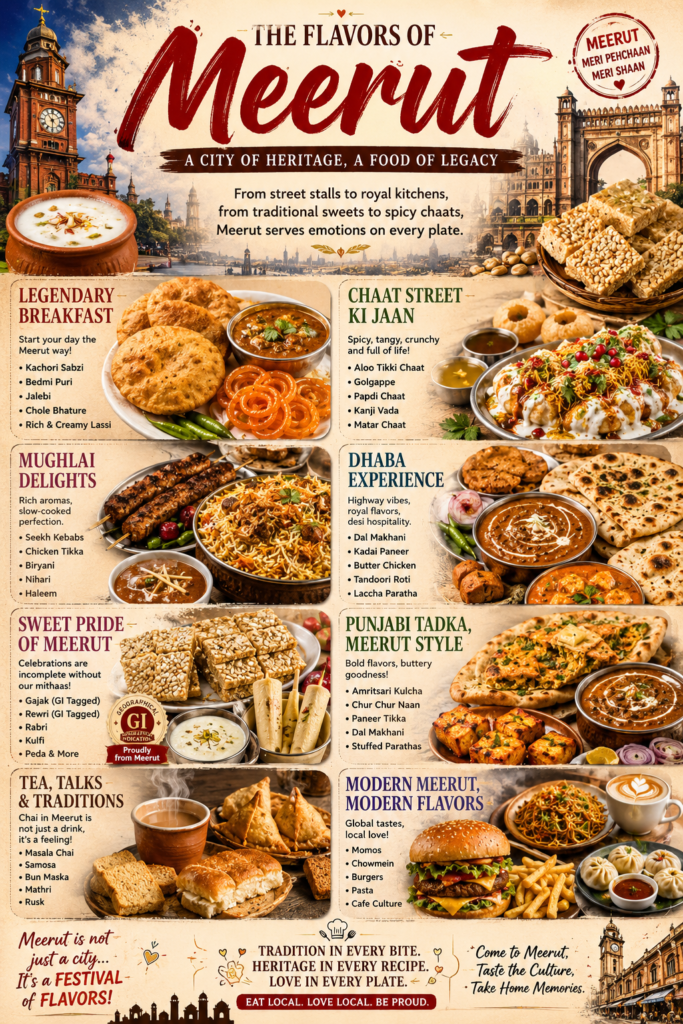
Meerut, one of the most historically significant cities of North India, is widely recognized for its military legacy, commercial vibrancy, sports industry, educational institutions, and cultural richness. However, beyond its historical and economic importance lies another extraordinary identity that has evolved silently through centuries—the magnificent culinary heritage of Meerut. The city possesses one of the richest and most vibrant food cultures in Western Uttar Pradesh, where traditional North Indian cuisine, Mughlai culinary influence, Punjabi richness, rustic rural flavors, and evolving urban street-food innovations collectively create an unforgettable gastronomic ecosystem.
Food in Meerut is not merely a medium of nutrition; it represents emotion, hospitality, social bonding, tradition, memory, celebration, and identity. Every corner of the city—from the bustling lanes of Sadar Bazaar to the crowded streets of Abu Lane, from the old city markets to modern cafés and restaurants—reflects a deep-rooted passion for flavorful food. The aroma of freshly fried kachoris in the morning, the fragrance of butter-loaded naan and paneer curries in the afternoon, and the spicy scent of evening chaats and kebabs collectively define the culinary soul of Meerut.
The cuisine of Meerut evolved under multiple historical and cultural influences. The Mughal era contributed refined gravies, kebabs, biryanis, and slow-cooked delicacies. Punjabi influence introduced rich dairy-based preparations, dhaba culture, tandoori cuisine, and stuffed breads. Traditional Uttar Pradesh cuisine brought spicy potato curries, sweets, snacks, and festive foods, while local rural culture added earthy simplicity through jaggery, wheat-based dishes, lentils, and seasonal vegetables. This unique convergence transformed Meerut into a remarkable food destination where every dish narrates a story of migration, civilization, adaptation, and tradition.
One of the most iconic culinary traditions of Meerut is its legendary breakfast culture. Morning food in Meerut is treated almost like a ritual. Streets begin to awaken early with the sizzling sounds of giant kadhais filled with hot oil where kachoris, bedmi puris, samosas, and jalebis are freshly prepared. Long queues outside famous breakfast shops reflect how deeply these foods are integrated into the everyday life of the people.
Kachori occupies a legendary status within Meerut’s food culture. Unlike ordinary snack preparations, Meerut-style kachori is intensely flavorful, crispy, aromatic, and generously stuffed with spiced lentil or potato filling. The accompanying potato curry is often fiery, tangy, and rich in asafoetida, cumin, coriander, black pepper, and garam masala. This combination of crunchy kachori and spicy curry creates a deeply satisfying sensory experience. When paired with syrup-rich jalebis, the meal achieves a remarkable balance between sweetness and spice, representing the essence of North Indian breakfast philosophy.
The popularity of traditional breakfast establishments in Meerut demonstrates the city’s emotional connection with food heritage. Families often continue visiting the same shops for generations, preserving culinary continuity and nostalgia. Food here becomes an inherited family memory rather than simply a commercial commodity.
Another immensely popular breakfast delicacy in Meerut is chole bhature. Influenced significantly by Punjabi cuisine, Meerut developed its own distinctive interpretation of this dish. The bhaturas are often larger, softer, and richer, while the chickpea curry carries a stronger spice profile with tangy and smoky undertones. Served alongside onions, pickles, and green chilies, chole bhature in Meerut has become one of the city’s most beloved comfort foods.
The influence of dairy culture in Meerut is profoundly visible through its famous lassi tradition. Thick creamy lassi served in steel glasses or earthen kulhads forms an inseparable part of the city’s culinary identity. Unlike commercially diluted beverages, traditional Meerut lassi is dense, nutritious, and indulgent. Prepared with fresh curd, malai, dry fruits, saffron, and occasionally rabri, this beverage reflects the agricultural and dairy abundance of Western Uttar Pradesh. In many ways, lassi in Meerut symbolizes hospitality itself, as serving guests with rich dairy products has historically represented prosperity and warmth in North Indian culture.
The street food culture of Meerut deserves exceptional recognition because it represents one of the city’s most dynamic social and culinary ecosystems. Evening food markets in Meerut transform into vibrant public spaces where people from all social backgrounds gather around food stalls to enjoy conversations, laughter, and local delicacies. The atmosphere is energetic, colorful, and deeply expressive of Indian urban culture.
Chaat occupies a central position within Meerut’s street-food civilization. Chaat in Meerut is not simply fast food; it is a carefully balanced culinary art involving multiple sensory dimensions including crunchiness, tanginess, sweetness, spice, temperature contrast, and texture variation. Every vendor possesses a unique spice blend and preparation style passed through generations.
Aloo tikki chaat remains one of the most celebrated evening snacks in Meerut. Crispy potato patties fried on large iron tavas are topped with spicy chickpeas, yogurt, tamarind chutney, green chutney, onions, coriander, pomegranate seeds, and various masalas. The resulting flavor profile becomes extraordinarily layered and addictive.
Golgappas or pani puri also dominate Meerut’s evening food landscape. Vendors prepare multiple varieties of flavored water including spicy mint water, tamarind water, asafoetida-infused water, and sweet-spicy combinations. The intense burst of flavor experienced while consuming golgappas reflects the theatrical and interactive nature of Indian street food culture.
Papdi chaat, dahi bhalla, kanji vada, matar chaat, and sev puri further enrich Meerut’s street-food identity. Kanji vada, particularly during seasonal transitions, represents a unique fermented preparation combining lentil dumplings with mustard-flavored fermented water. Modern nutritional science increasingly recognizes fermented foods for their probiotic and digestive benefits, indicating how traditional Indian cuisine often incorporated scientifically valuable dietary practices centuries before modern nutritional awareness emerged.
Meerut’s Mughlai culinary heritage forms another extraordinarily important pillar of its gastronomic identity. Historical interaction with Mughal culinary traditions introduced rich gravies, aromatic rice dishes, kebabs, nihari, haleem, and slow-cooked meat preparations into the city’s food culture. Even today, several traditional eateries continue preserving these culinary methods with remarkable authenticity.
Kebab culture in Meerut possesses exceptional popularity. Seekh kebabs, shammi kebabs, chicken tikka, and mutton preparations are marinated with complex spice blends and cooked over charcoal fires to achieve smoky depth and tenderness. The culinary sophistication associated with Mughlai food reflects centuries of refinement where cooking evolved into an art form emphasizing aroma, texture, patience, and layered flavor development.
Biryani culture also thrives strongly in Meerut. Local variations combine influences from Delhi, Awadh, and Mughlai traditions. Long-grain rice infused with saffron, aromatic spices, caramelized onions, herbs, and slow-cooked meat creates one of the most emotionally satisfying meals within North Indian cuisine. The fragrance of freshly prepared biryani spreading through the streets during evenings and festive seasons represents an essential sensory memory for many residents of Meerut.
Nihari and haleem also possess devoted followers within the city. Slow-cooked over several hours, these dishes symbolize patience-oriented cooking traditions that modern fast-food culture increasingly threatens. Yet Meerut continues preserving these culinary philosophies through family-owned establishments and traditional Muslim food culture.
One of the defining features of Meerut’s food identity is its robust dhaba culture. Due to its strategic highway connectivity and proximity to Delhi, Haridwar, and other important North Indian regions, Meerut became an important transit and hospitality center. Consequently, dhabas evolved not merely as eateries but as cultural institutions serving travelers, truck drivers, families, students, and local residents.
Traditional dhabas in Meerut are famous for their generous portions, buttery gravies, rustic ambiance, and tandoori preparations. Dal makhani, shahi paneer, kadai paneer, butter chicken, stuffed naan, lachha paratha, tandoori roti, and mixed vegetable curries dominate these menus. The philosophy of dhaba food revolves around abundance, warmth, and satisfaction rather than minimalistic sophistication.
The use of butter, cream, desi ghee, and slow cooking contributes to the rich texture and comforting depth associated with North Indian dhaba cuisine. Open kitchens, massive tandoors, steel utensils, wooden benches, and highway environments collectively create a uniquely authentic dining experience deeply associated with North Indian travel culture.
Meerut’s sweet culture is equally legendary and forms one of the city’s most emotionally significant culinary dimensions. Sweets in Meerut are deeply connected with religious rituals, festivals, weddings, celebrations, family gatherings, and business relationships. Among all sweet products associated with the city, gajak and rewri stand as iconic symbols of Meerut’s winter culinary heritage.
Gajak production in Meerut reflects remarkable craftsmanship requiring precision in sesame roasting, jaggery caramelization, temperature control, and texture management. The resulting product achieves a perfect combination of crunchiness, sweetness, nuttiness, and warmth. During winter, Meerut markets become filled with countless varieties of gajak including sesame gajak, peanut gajak, dry-fruit gajak, gud gajak, and modern flavored variants.
Rewri similarly represents an integral part of the city’s sweet identity. Prepared primarily from sesame seeds and jaggery or sugar syrup, rewri reflects traditional Indian understanding of seasonal nutrition. Both sesame and jaggery are considered warming foods according to Ayurvedic principles, making them particularly suitable for cold winter climates.
The recent Geographical Indication recognition associated with Meerut’s gajak and rewri further validates their historical and cultural significance. Such recognition highlights how food products can evolve into important symbols of regional identity and heritage preservation.
Milk-based sweets also occupy a central position within Meerut’s culinary landscape. Rabri, kulfi, peda, rasmalai, gulab jamun, kalakand, and thickened milk desserts remain immensely popular. The dairy richness of Western Uttar Pradesh contributes significantly to the exceptional quality of these preparations.
Traditional halwais in Meerut often continue using slow-reduction methods rather than industrial shortcuts. Milk is boiled for extended durations to achieve natural caramelization and texture concentration. This patience-oriented preparation philosophy distinguishes authentic traditional sweets from mass-produced alternatives.
Festivals in Meerut possess strong culinary dimensions. Holi brings gujiya, mathri, namakpare, and thandai. Diwali transforms the city into a marketplace of sweets, dry fruits, snacks, and festive foods. Eid introduces sevaiyan, kebabs, biryanis, and rich Mughlai delicacies. Lohri and Makar Sankranti enhance demand for gajak, rewri, peanuts, and jaggery-based sweets. Thus, food becomes an active participant in cultural and religious continuity.
Punjabi influence upon Meerut cuisine remains remarkably strong due to historical migration and geographical proximity. Chur chur naan, Amritsari kulcha, paneer tikka, dal makhani, and tandoori cuisine became deeply integrated into the city’s urban food culture. Modern restaurants continue innovating these dishes while preserving their traditional richness.
The popularity of stuffed breads in Meerut particularly reflects Punjabi culinary integration. Paneer kulchas, potato naan, garlic naan, stuffed parathas, and butter-loaded breads remain staple foods across households and restaurants. These foods symbolize comfort, abundance, and family-oriented dining traditions.
Tea culture forms another emotionally important aspect of Meerut’s culinary identity. Tea stalls function not merely as beverage points but as intellectual and social gathering spaces. Political debates, business discussions, literary conversations, cricket analysis, and everyday storytelling unfold continuously around cups of masala chai.
Tea in Meerut is often accompanied by samosas, rusks, bread pakoras, mathri, biscuits, or bun-maska. The sensory combination of hot tea with fried snacks during winters represents one of the most comforting experiences associated with North Indian urban culture.
The younger generation in Meerut increasingly embraces globalized fast-food trends including burgers, pizzas, pasta, sandwiches, and café culture. However, unlike many metropolitan cities where traditional food gradually loses relevance, Meerut demonstrates a fascinating coexistence between modern fast-food trends and deeply rooted local culinary traditions.
Street-style chowmein and Indo-Chinese cuisine became especially popular among students and urban youth. Chili potato, spring rolls, momos, fried rice, and Manchurian represent localized adaptations of Chinese cuisine into Indian spice preferences. These dishes highlight how Indian culinary systems continuously absorb and reinterpret external influences while preserving regional flavor identities.
Modern cafés and fine-dining establishments in Meerut further transformed the city’s gastronomic environment. Contemporary restaurants increasingly combine traditional Indian dishes with aesthetic presentation, global plating techniques, thematic interiors, and fusion experimentation. Nevertheless, even modern culinary spaces in Meerut often retain strong North Indian flavor foundations, illustrating the enduring power of regional food culture.
Another remarkable feature of Meerut cuisine is the generosity associated with food portions and hospitality. North Indian culture traditionally equates feeding guests generously with respect, affection, and honor. Consequently, meals in Meerut are often abundant, heavily garnished, rich in dairy content, and emotionally satisfying.
Seasonality plays an essential role within Meerut’s food traditions. Winter foods emphasize warmth, energy, and richness through dishes such as sarson ka saag, makke ki roti, gajak, rewri, dry-fruit milk, and buttery curries. Summer encourages lassi, chaach, kulfi, sugarcane juice, fresh fruits, and lighter foods. Monsoon intensifies cravings for chai, pakoras, spicy chaats, and fried snacks. Such seasonal adaptation reflects ecological intelligence embedded within traditional Indian dietary systems.
The agricultural landscape surrounding Meerut significantly influences ingredient availability and culinary quality. Fertile farmlands provide wheat, sugarcane, vegetables, dairy products, pulses, and jaggery in abundance. This agricultural richness historically shaped local food habits emphasizing freshness, dairy usage, and seasonal produce.
Religious diversity within Meerut also contributed significantly to culinary diversity. Hindu, Muslim, Sikh, and Jain communities introduced distinct food traditions while collectively enriching the city’s gastronomic ecosystem. Vegetarian temple foods coexist with Mughlai meat preparations, demonstrating how culinary pluralism mirrors India’s broader cultural coexistence.
Food in Meerut also possesses strong emotional and psychological dimensions. Traditional dishes prepared during festivals evoke nostalgia and family memories. Grandmother recipes preserve cultural continuity. Street-food outings strengthen friendships and social interaction. Weddings become gastronomic spectacles displaying abundance and hospitality. Thus, food in Meerut functions simultaneously as nutrition, emotional expression, cultural preservation, and social communication.
The economic significance of Meerut’s food industry is equally substantial. Thousands of individuals depend upon restaurants, sweet shops, tea stalls, street-food vending, dairy businesses, catering services, bakery operations, and food manufacturing for livelihood. The city’s culinary economy supports employment generation, entrepreneurship, tourism, and small-scale family businesses.
Digital media and food blogging recently amplified Meerut’s culinary visibility beyond regional boundaries. Food vloggers, YouTube creators, restaurant reviewers, and social-media influencers increasingly showcase Meerut’s street-food culture and traditional specialties to national audiences. This digital exposure contributes positively toward culinary tourism and regional branding.
From a nutritional perspective, Meerut cuisine contains both strengths and challenges. Traditional diets rich in lentils, dairy products, fermented foods, spices, and seasonal ingredients provide substantial nutritional value. However, increasing dependence on refined flour, excessive oil usage, sugary beverages, and sedentary lifestyles also raises concerns regarding obesity, diabetes, hypertension, and metabolic disorders.
Therefore, the future of Indian food culture requires balancing culinary authenticity with nutritional awareness. Traditional recipes can be preserved while adopting healthier preparation methods and portion control. Such balance is essential for sustaining cultural heritage alongside modern public health priorities.
Meerut possesses enormous potential as a culinary tourism destination. Organized food walks, heritage restaurant documentation, GI-tag promotion, culinary festivals, traditional recipe archives, and gastronomic storytelling could significantly strengthen the city’s tourism identity. Culinary tourism today represents one of the fastest-growing sectors globally because food allows travelers to experience culture at its most intimate and authentic level.
The preservation of traditional food knowledge is particularly important in the modern era. Rapid commercialization, industrial food production, and fast-food standardization threaten localized culinary identities worldwide. Meerut therefore carries an important responsibility in preserving its traditional halwais, street vendors, family-owned eateries, and indigenous recipes as living cultural institutions.
Educational institutions, historians, anthropologists, nutrition scientists, and culinary researchers should collaboratively document the recipes, spice combinations, preparation techniques, food histories, and sociocultural significance associated with Meerut cuisine. Such efforts would contribute substantially toward India’s broader culinary heritage preservation initiatives.
Ultimately, the story of Meerut’s cuisine is far greater than a discussion of recipes or restaurants. It is a story of civilization, migration, resilience, agriculture, social bonding, cultural continuity, adaptation, and human creativity. Every bowl of spicy chaat, every buttery naan, every fragrant biryani, every glass of lassi, and every piece of gajak represents centuries of accumulated cultural experience.
In many ways, Meerut’s food culture reflects the soul of North India itself—warm, expressive, generous, flavorful, emotionally rich, historically layered, and socially vibrant. The city demonstrates how cuisine can function simultaneously as sustenance, memory, identity, art, economy, and heritage.
As India rapidly modernizes, cities like Meerut become increasingly important in preserving authentic regional culinary traditions. Their food culture reminds future generations that cuisine is not merely about eating; it is about preserving civilization through taste, aroma, ritual, and collective memory.
Thus, the famous foods and cuisines of Meerut are not simply local delicacies. They are edible expressions of history, community, tradition, celebration, and identity. From humble tea stalls to royal Mughlai kitchens, from winter gajak markets to crowded evening chaat lanes, Meerut continues nourishing not only the body but also the emotional and cultural consciousness of its people.