

Abstract
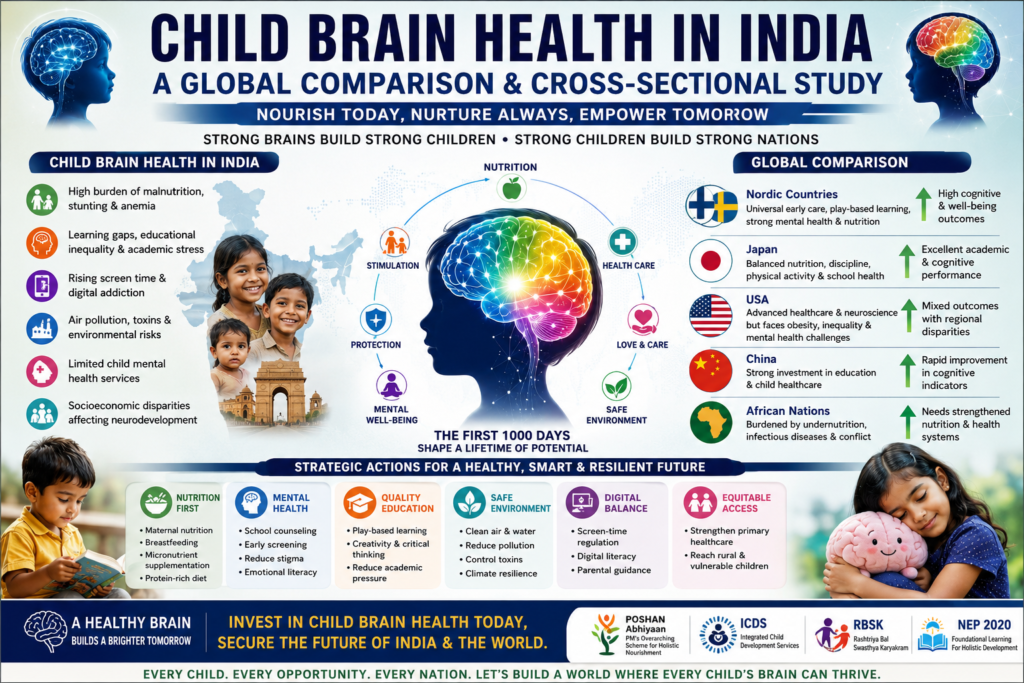
Child brain health represents one of the most critical determinants of human capital formation, educational achievement, psychosocial stability, and long-term national productivity. Across the world, increasing attention is being directed toward the neurodevelopmental foundations established during fetal life, infancy, and early childhood. In India, despite major improvements in healthcare infrastructure, immunization, maternal health, and nutritional interventions, a substantial burden of neurodevelopmental impairment continues to exist because of malnutrition, micronutrient deficiencies, environmental pollution, socioeconomic disparities, psychosocial stress, inadequate stimulation, digital overexposure, and mental health neglect. This cross-sectional comparative review study evaluates the status of child brain health in India and compares it with trends and interventions across developed and developing nations. The article integrates evidence from neuroscience, pediatrics, pharmacology, psychiatry, nutrition, developmental psychology, and public health literature to examine the multifactorial determinants of pediatric brain development. Particular emphasis is placed upon the first 1000 days of life, neuroplasticity, cognitive nutrition, early childhood stimulation, school mental health, neuroinflammation, and the socioeconomic determinants of cognitive outcomes. Comparative analysis reveals that countries with strong early childhood development policies, maternal nutrition programs, universal preschool systems, and robust pediatric mental health frameworks demonstrate superior neurodevelopmental indicators compared with low- and middle-income nations. India presents a paradoxical scenario wherein advanced pediatric neuroscience coexists with high burdens of stunting, anemia, educational inequity, and digital addiction among children. The review further evaluates national initiatives including ICDS, Poshan Abhiyaan, Rashtriya Bal Swasthya Karyakram, and NEP 2020 in the context of child cognitive development. Strategic recommendations are proposed for integrated neurodevelopmental policymaking, nutritional optimization, mental health strengthening, school-based cognitive interventions, digital hygiene regulation, and equitable pediatric healthcare access. The study concludes that child brain health should be recognized as a national developmental priority equivalent to economic infrastructure and defense preparedness because the cognitive resilience of future generations will determine the strategic trajectory of nations in the twenty-first century. (UNICEF)
Keywords: Child brain health; Neurodevelopment; India; Cognitive nutrition; Early childhood development
Introduction
Child brain health has emerged as one of the most decisive scientific, medical, educational, and geopolitical concerns of the modern world. The human brain undergoes extraordinary structural and functional maturation during fetal development and the first years of life, and this period determines lifelong cognitive potential, emotional regulation, behavioral adaptability, and socioeconomic productivity. Modern neuroscience increasingly demonstrates that the foundations of intelligence, resilience, creativity, emotional stability, and social cognition are deeply influenced by early-life nutritional status, environmental exposures, caregiving quality, emotional security, and educational stimulation.
The developing brain is characterized by intense neuroplasticity, synaptogenesis, myelination, neuronal migration, neurotransmitter regulation, and cortical network formation. UNICEF estimates that more than one million neural connections are formed every second during early childhood, making the early developmental period uniquely vulnerable and uniquely modifiable. (UNICEF) Inadequate nutrition, chronic stress, infections, environmental toxins, trauma, and neglect during this period can permanently impair brain architecture.
India houses one of the world’s largest pediatric populations and therefore represents one of the most important nations in determining the future trajectory of global child cognitive health. However, India simultaneously faces severe public health challenges including childhood malnutrition, micronutrient deficiency, environmental pollution, poor mental health infrastructure, socioeconomic disparities, educational inequality, and increasing digital dependency among children. According to UNICEF and WHO-linked data, India continues to account for a large proportion of the global burden of childhood stunting and anemia. (UNICEF) Since stunting is strongly associated with impaired neurodevelopment, learning deficits, reduced school performance, and diminished future earnings, the implications extend far beyond healthcare into economic development and national competitiveness.
In developed countries such as Finland, Sweden, Norway, Japan, Canada, and South Korea, early childhood development has become a strategic national priority integrated into education policy, maternal healthcare, nutrition programs, parental support systems, and mental health services. These nations demonstrate superior cognitive outcomes, literacy rates, emotional resilience indices, and educational performance partly because of strong investment in pediatric neurodevelopmental health.
This article presents a detailed cross-sectional comparative review of child brain health in India and globally. The study synthesizes evidence regarding biological determinants, nutritional influences, mental health parameters, educational impacts, digital exposure, environmental toxins, socioeconomic factors, and policy interventions affecting child cognitive development.
Neurobiology of Child Brain Development
The human brain develops through highly coordinated biological mechanisms beginning during embryogenesis and extending into adolescence. Neurodevelopment includes neuronal proliferation, differentiation, migration, synapse formation, pruning, neurotransmitter maturation, and myelination. The prenatal period and the first 1000 days of life are especially critical because these stages determine long-term structural and functional brain architecture.
The cerebral cortex, hippocampus, limbic system, cerebellum, and prefrontal cortex all undergo rapid maturation during infancy and early childhood. Adequate protein intake, essential fatty acids, micronutrients, and emotional stimulation are indispensable during these developmental phases. Disturbances during sensitive windows can result in irreversible deficits in cognition, attention, executive functioning, and emotional regulation.
Environmental stimulation plays a major role in synaptic reinforcement. Children exposed to responsive caregiving, language-rich environments, storytelling, social interaction, music, and play-based learning demonstrate stronger neural connectivity and superior executive function development. UNICEF reports that nurturing care involving nutrition, protection, hygiene, emotional support, and responsive stimulation is essential for optimal brain development. (UNICEF)
Neuroplasticity represents the brain’s ability to reorganize neural pathways based on experience. Although neuroplasticity continues throughout life, it is maximal during childhood. Therefore, early interventions in nutrition, education, and mental health produce disproportionately greater benefits compared with interventions later in life.
Chronic stress during childhood elevates cortisol levels and disrupts hippocampal development, emotional processing, memory consolidation, and learning capacity. Children exposed to domestic violence, poverty, abuse, conflict, or severe emotional neglect often demonstrate long-term neuropsychiatric consequences including anxiety disorders, depression, impaired impulse control, and cognitive dysfunction.
Nutritional Determinants of Child Brain Health
Nutrition constitutes one of the most powerful determinants of pediatric neurodevelopment. Brain tissue requires continuous supply of glucose, amino acids, essential fatty acids, vitamins, minerals, and trace elements for neurotransmitter synthesis, myelination, mitochondrial function, and neuronal signaling.
Protein-Energy Malnutrition
Protein-energy malnutrition remains highly prevalent in many low- and middle-income countries. India continues to struggle with stunting, wasting, and underweight children despite economic growth. UNICEF highlights that stunting is strongly associated with underdeveloped brains, diminished mental ability, poor school performance, and reduced adult productivity. (UNICEF)
Malnutrition impairs dendritic growth, synaptic density, neurotransmitter production, and cerebral metabolism. Severe early malnutrition has been associated with lower IQ scores, poor attention span, delayed language development, and impaired memory.
Cross-sectional studies from India reveal alarming neurodevelopmental delays among severely malnourished children, including cognitive, language, and motor deficits. (medRxiv)
Iron Deficiency
Iron is essential for dopamine synthesis, myelination, and mitochondrial energy production. Iron deficiency anemia during infancy impairs attention, learning, emotional regulation, and psychomotor development. India continues to report high prevalence of childhood anemia, especially among socioeconomically disadvantaged populations.
Iodine Deficiency
Iodine deficiency remains a major preventable cause of intellectual disability globally. Thyroid hormones regulate neuronal migration and cortical maturation. Maternal iodine deficiency during pregnancy may result in irreversible cognitive impairment.
Omega-3 Fatty Acids
Docosahexaenoic acid (DHA) constitutes a major structural component of neuronal membranes. Adequate omega-3 intake improves synaptic plasticity, visual development, and cognitive performance.
Zinc and Choline
Zinc participates in synaptic signaling and neurogenesis, whereas choline contributes to acetylcholine synthesis and hippocampal memory formation. Nutritional neuroscience increasingly emphasizes the role of micronutrients in cognitive resilience. (Unique Scientific Publishers)
Child Brain Health in India
India presents a unique and complex neurodevelopmental landscape characterized by rapid technological advancement alongside persistent childhood undernutrition and educational inequity.
Burden of Malnutrition
India possesses one of the highest numbers of stunted children globally. UNICEF India reports that millions of Indian children experience stunting-associated developmental compromise. (UNICEF)
NFHS-5 data demonstrate continuing prevalence of undernutrition, anemia, and growth failure among Indian children. Socioeconomic inequality, maternal malnutrition, poor sanitation, low maternal education, and food insecurity remain major contributors.
Educational Stress and Cognitive Burden
The Indian educational environment frequently emphasizes rote memorization, examination pressure, and academic competition over emotional intelligence, creativity, and cognitive well-being. Chronic academic stress contributes to anxiety disorders, depression, sleep disturbances, and burnout among school-going children.
Digital Addiction
Rapid smartphone penetration has produced growing concerns regarding excessive screen exposure among children. Excessive digital stimulation affects sleep cycles, attention span, language development, emotional regulation, and social interaction.
Children increasingly demonstrate symptoms resembling attention-deficit patterns because of fragmented attention induced by continuous short-form digital content exposure.
Environmental Pollution
India’s major metropolitan regions experience severe air pollution. Fine particulate matter exposure during childhood has been linked with neuroinflammation, impaired cognitive development, reduced IQ, and behavioral abnormalities.
Lead exposure, industrial contamination, pesticides, and unsafe water sources also contribute to neurotoxicity in vulnerable populations.
Mental Health Challenges
Child psychiatry infrastructure in India remains insufficient relative to population burden. Pediatric depression, anxiety disorders, autism spectrum disorders, ADHD, learning disabilities, and behavioral disorders remain underdiagnosed and undertreated.
Social stigma surrounding mental health further delays intervention.
Comparative Global Analysis
Nordic Countries
Finland, Norway, Sweden, and Denmark emphasize universal early childhood care, parental leave, emotional well-being, play-based education, and nutritional security. These countries consistently achieve high literacy rates, cognitive performance, and mental well-being indices.
Children receive structured psychological support, developmental monitoring, and inclusive educational services from early childhood.
Japan
Japan integrates nutritional discipline, social responsibility, physical activity, and structured school health systems into childhood development. Japanese school meal programs are globally recognized for nutritional quality and behavioral education.
Low childhood obesity and strong educational outcomes partly reflect integrated public health and educational strategies.
United States
The United States possesses advanced pediatric neuroscience and mental health services but faces challenges related to childhood obesity, digital dependency, socioeconomic inequality, and rising psychiatric disorders among adolescents.
ADHD diagnosis rates and pediatric antidepressant use have risen substantially in recent decades.
African Nations
Many African countries continue to struggle with undernutrition, infectious diseases, conflict-related trauma, and limited healthcare access affecting pediatric neurodevelopment. However, international nutrition programs and maternal-child interventions have shown positive outcomes in several regions.
China
China has aggressively invested in educational infrastructure, pediatric healthcare, and cognitive development initiatives. Urban Chinese children increasingly benefit from advanced educational systems, although concerns regarding academic pressure and digital overexposure remain significant.
The First 1000 Days and Cognitive Outcomes
The concept of the first 1000 days—from conception to approximately two years of age—has become central in developmental neuroscience. UNICEF and WHO emphasize that nutritional deprivation during this period may produce irreversible physical and cognitive consequences. (UNICEF)
Key interventions during this window include:
- Maternal nutrition optimization
- Exclusive breastfeeding
- Timely complementary feeding
- Micronutrient supplementation
- Infection prevention
- Responsive caregiving
- Early stimulation
- Emotional bonding
Countries investing heavily in first-1000-day interventions demonstrate superior educational and economic outcomes in later generations.
Mental Health and Pediatric Neurodevelopment
Mental health is inseparable from brain health. Childhood depression, anxiety, trauma exposure, bullying, emotional neglect, and social isolation impair neural circuitry associated with emotional regulation and executive functioning.
School-based mental health interventions are increasingly recognized globally. Scandinavian countries integrate psychological counseling into educational systems. In contrast, India’s school mental health infrastructure remains limited.
COVID-19 significantly worsened pediatric mental health worldwide. Social isolation, disrupted schooling, parental stress, and digital dependency produced rising rates of anxiety, sleep disorders, emotional instability, and behavioral problems among children.
Socioeconomic Determinants
Socioeconomic inequality strongly influences child cognitive development. Poverty affects nutrition, educational access, healthcare utilization, emotional stability, housing quality, sanitation, and exposure to environmental toxins.
Maternal education strongly correlates with improved child cognitive outcomes because educated mothers are more likely to provide nutritional care, stimulation, and healthcare access.
Urban-rural disparities remain substantial in India. Rural children often experience inadequate healthcare infrastructure, educational limitations, and nutritional insecurity.
Neuroinflammation and Environmental Toxicology
Emerging neuroscience increasingly recognizes neuroinflammation as a major mechanism linking environmental exposures with cognitive dysfunction.
Air pollution exposure has been associated with:
- Reduced cognitive performance
- Neurodevelopmental delay
- Autism spectrum disorders
- ADHD-like symptoms
- Neurobehavioral abnormalities
Heavy metals such as lead and mercury impair synaptic signaling and neuronal development. Industrial contamination and pesticide exposure remain major public health concerns in developing nations.
Climate change also threatens child brain health through nutritional insecurity, displacement, infectious disease spread, and environmental stressors. (Press Information Bureau)
Government Policies and Interventions in India
Integrated Child Development Services (ICDS)
ICDS remains one of India’s largest child nutrition and development programs. Anganwadi centers provide supplementary nutrition, preschool education, immunization support, and health services.
Research indicates that ICDS participation contributes to reductions in stunting and undernutrition. (ResearchGate)
Poshan Abhiyaan
Poshan Abhiyaan focuses on reducing stunting, wasting, anemia, and low birth weight through convergent nutrition strategies.
Rashtriya Bal Swasthya Karyakram (RBSK)
RBSK aims to identify developmental delays, congenital disorders, nutritional deficiencies, and childhood diseases.
National Education Policy 2020
NEP 2020 recognizes early childhood care and foundational literacy as critical developmental priorities.
School Systems and Cognitive Development
Educational systems profoundly influence brain health. Excessive academic pressure without emotional support can impair creativity, motivation, and mental resilience.
Countries emphasizing:
- Play-based learning
- Critical thinking
- Creativity
- Physical activity
- Emotional intelligence
- Art and music education
often demonstrate stronger long-term cognitive outcomes.
Indian educational reforms increasingly recognize the need for holistic learning models.
Digital Technology and the Pediatric Brain
Digital technology represents both an opportunity and a threat.
Positive effects include:
- Educational access
- Cognitive training
- Language development tools
- Telemedicine
- Neurodevelopmental therapies
Negative effects include:
- Attention fragmentation
- Sleep disruption
- Dopamine dysregulation
- Reduced social interaction
- Internet addiction
- Emotional dysregulation
Balanced digital exposure with parental supervision is essential.
Pharmacological and Neuroscientific Interventions
Modern pediatric neuroscience increasingly explores:
- Nutraceuticals
- Cognitive enhancers
- Neuroprotective compounds
- Gut-brain axis modulation
- Omega-3 supplementation
- Micronutrient therapies
ADHD pharmacotherapy, autism interventions, and pediatric psychiatric medications continue to evolve, though ethical and developmental considerations remain important.
Cross-Sectional Study Perspective
Cross-sectional evidence from India demonstrates strong associations between:
- Malnutrition and cognitive delay
- Poverty and reduced educational outcomes
- Maternal education and child cognitive performance
- Urban pollution and neurobehavioral abnormalities
- Screen addiction and attention deficits
Comparative international data indicate that integrated child development systems produce superior long-term outcomes compared with fragmented healthcare approaches.
Strategic Recommendations
Nutritional Strategies
- Universal maternal nutrition screening
- Iron and iodine supplementation
- Promotion of breastfeeding
- School nutrition strengthening
- Protein-rich diet accessibility
Mental Health Strategies
- School counseling systems
- Child psychiatry expansion
- Suicide prevention programs
- Emotional literacy education
Educational Reforms
- Reduced rote learning
- Play-based pedagogy
- Cognitive flexibility training
- Creativity-centered curricula
Environmental Policies
- Air pollution control
- Heavy metal monitoring
- Safe water systems
- Climate resilience planning
Digital Health Policies
- Pediatric screen-time regulation
- Digital literacy programs
- Parental awareness campaigns
Future Directions
The future of child brain health lies in integrated multidisciplinary approaches involving:
- Neuroscience
- Pediatrics
- Psychiatry
- Nutrition
- Education
- Environmental science
- Artificial intelligence
- Public policy
Precision neurodevelopmental medicine may eventually enable individualized cognitive interventions based on genetic, nutritional, and environmental profiles.
Conclusion
Child brain health is not merely a pediatric concern but a national strategic imperative. The future intellectual, emotional, scientific, military, technological, and economic capabilities of nations depend upon the neurological development of their children. India stands at a critical crossroads. The nation possesses extraordinary demographic potential yet continues to confront major neurodevelopmental challenges related to malnutrition, inequality, environmental toxicity, educational stress, and inadequate mental health infrastructure.
Comparative global analysis demonstrates that nations investing systematically in maternal nutrition, early childhood care, emotional well-being, cognitive stimulation, environmental protection, and equitable education achieve superior developmental outcomes. India has initiated several important programs including ICDS, Poshan Abhiyaan, and NEP 2020, but sustained implementation, funding, monitoring, and scientific integration remain essential.
The first years of life determine the architecture of the human brain and therefore the architecture of civilization itself. Investments in child brain health generate lifelong returns in productivity, innovation, national stability, and human well-being. The cognitive resilience of future generations will increasingly determine the geopolitical strength of nations in the twenty-first century. India’s rise as a global power will therefore depend not only upon economic growth or technological advancement, but equally upon its success in nurturing the neurological potential of every child.
References
- UNICEF India. Stop Stunting.
- UNICEF. Early Childhood Nutrition.
- UNICEF. Early Childhood Development.
- WHO. Fact Sheets on Malnutrition, 2024.
- UNICEF India. Nutrition First: From Surviving to Thriving.
- UNICEF India. Early Moments Matter Campaign.
- Mishra M. Indian Perspective on Childhood Malnutrition. 2024.
- Shah G et al. Decoding India’s Child Malnutrition Puzzle. 2024.
- WHO. Global Child Nutrition Statistics.
- UNICEF India. Early Childhood Development Initiatives.
- De P et al. Effects of Malnutrition on Child Development. 2019.
- UNICEF. Child Nutrition Data Repository.
- UNICEF. Early Childhood Nutrition Programs in India.
- Khandelwal et al. Developmental Delays in Severe Acute Malnutrition.
- World Bank. Child Growth and Nutrition in India.
- UNICEF. Nutrition and Cognitive Development Reports.
- Singh SK et al. ICDS and Child Nutrition in India. 2024.
- Nutriepigenomics and Neurodevelopment Literature.
- WHO and UNICEF Joint Child Development Reports.
- Global Pediatric Neurodevelopmental Health Reviews.
(UNICEF)