
By TRM WRITERS LLP
Introduction: Why Pest Control Is No Longer Optional
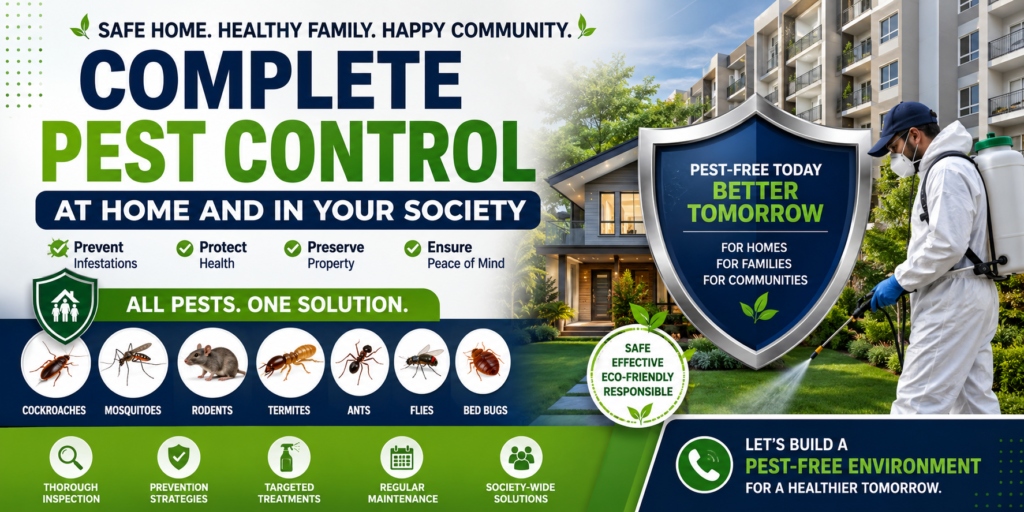
Pest control is often misunderstood as a temporary solution for visible insects or rodents. In reality, complete pest management is an essential component of modern healthy living. Whether it is a small apartment, an independent house, a residential society, or a multi-storey commercial building, uncontrolled pests can damage property, contaminate food, spread diseases, trigger allergies, reduce quality of life, and increase maintenance expenses.
Many people only act when pests become visible. However, by the time insects, termites, cockroaches, mosquitoes, rodents, or ants appear in large numbers, infestation has usually already developed inside hidden spaces.
Effective pest control is not about spraying chemicals repeatedly. It is a systematic approach involving prevention, inspection, sanitation, structural maintenance, targeted treatment, and continuous monitoring.
This comprehensive guide explains how to carry out complete pest control at home and across residential societies or buildings in a practical, safe, and sustainable manner.
Understanding Pest Control: What Does Complete Pest Management Mean?
Complete pest control means controlling all major categories of pests through organized methods rather than isolated treatments.
The objective includes:
- Eliminate existing infestations
- Prevent future infestations
- Reduce breeding conditions
- Protect health and hygiene
- Preserve infrastructure
- Maintain environmental safety
A complete pest control program covers:
- Inspection
- Identification
- Prevention
- Treatment
- Monitoring
- Maintenance
Common Household and Society Pests
Before treatment, identification is essential.
1. Cockroaches
Cockroaches are among the most common urban pests.
Common hiding locations:
- Kitchen cabinets
- Drains
- Storage areas
- Electrical panels
- False ceilings
Health risks:
- Food contamination
- Asthma triggers
- Bacterial spread
2. Mosquitoes
Mosquitoes remain one of the most dangerous public health pests.
Breeding areas:
- Water tanks
- Plant trays
- Construction sites
- Stagnant water
Associated diseases:
- Dengue
- Malaria
- Chikungunya
- Viral infections
3. Rodents (Rats and Mice)
Rodents cause extensive damage.
Problems:
- Food contamination
- Electrical wire damage
- Disease transmission
Entry points:
- Pipe openings
- Utility shafts
- Drainage systems
4. Termites
Termites silently destroy infrastructure.
Targets:
- Wooden furniture
- Flooring
- Books
- Doors
- Structural wood
Signs:
- Hollow wood
- Mud tubes
- Powder deposits
5. Ants
Ant infestations indicate food access and moisture.
Common locations:
- Kitchens
- Gardens
- Bathrooms
6. Bed Bugs
Bed bugs affect sleep quality and comfort.
Typical hiding places:
- Mattresses
- Upholstery
- Wall cracks
7. Flies
Flies indicate sanitation concerns.
Common breeding:
- Garbage
- Organic waste
- Drains
Step 1: Conduct a Complete Pest Inspection
Inspection is the foundation of successful pest control.
Create a building map including:
Indoor Areas
- Kitchen
- Bedrooms
- Bathrooms
- Store rooms
- Balconies
Outdoor Areas
- Gardens
- Water tanks
- Parking areas
- Garbage zones
Document:
- Pest sightings
- Moisture areas
- Entry points
- Structural damage
Maintain an inspection record.
Step 2: Eliminate Conditions That Attract Pests
Food Control
Store food in:
- Airtight containers
- Sealed cabinets
Avoid:
- Open snacks
- Dirty dishes overnight
Water Management
Repair:
- Leaking taps
- Broken pipes
- Water seepage
Maintain:
- Dry kitchen counters
- Ventilated bathrooms
Waste Management
Waste handling should include:
- Daily garbage disposal
- Covered bins
- Cleaning collection points
Clutter Reduction
Remove:
- Cardboard
- Old furniture
- Paper piles
Step 3: Home Pest Control Room-by-Room Strategy
Kitchen Pest Control
Kitchen is the highest-risk area.
Checklist:
Daily:
- Wipe surfaces
- Clean sinks
- Empty trash
Weekly:
- Deep clean cabinets
- Inspect food stocks
Monthly:
- Move appliances
- Sanitize corners
Bathroom Pest Control
Prevent:
- Drain breeding
- Mold
- Cockroach hiding
Use:
- Drain cleaning
- Ventilation
Bedroom Pest Control
Inspect:
- Beds
- Curtains
- Furniture joints
Wash:
- Bedding regularly
Balcony and Utility Areas
Monitor:
- Water accumulation
- Plant containers
Step 4: Mosquito Control Program
Mosquito management requires multiple interventions.
Source Reduction
Remove standing water every 3–5 days.
Inspect:
- Buckets
- Roof drains
- Flower pots
Physical Protection
Install:
- Window screens
- Door mesh
- Air curtains
Environmental Measures
Maintain:
- Garden trimming
- Drain cleaning
Step 5: Cockroach Elimination Strategy
Cockroach control requires persistence.
Mechanical Methods
- Vacuum removal
- Sealing cracks
Sanitation
- Food control
- Grease cleaning
Targeted Treatment Areas
- Sink base
- Appliance gaps
- Cabinet edges
Avoid excessive spraying.
Step 6: Rodent Control Across Buildings
Rodent control should combine exclusion and monitoring.
Entry Prevention
Seal:
- Pipe penetrations
- Structural gaps
Habitat Reduction
Control:
- Food sources
- Garbage
Monitoring
Inspect:
- Droppings
- Gnaw marks
- Tracks
Step 7: Complete Termite Protection
Termites require long-term planning.
Structural Prevention
Maintain:
- Dry foundations
- Ventilation
Furniture Protection
Inspect:
- Wooden units
- Storage spaces
Landscaping Control
Avoid direct soil-wood contact.
Step 8: Society-Wide Pest Control Program
Residential societies require organized management.
Monthly Activities
- Drain cleaning
- Water inspection
- Garbage review
Quarterly Activities
- Basement inspection
- Termite assessment
Semi-Annual Activities
- Building sanitation
- Structural review
Annual Activities
- Complete pest audit
Society Areas That Require Special Attention
Basement
Monitor:
- Moisture
- Rodent activity
Lift Areas
Maintain:
- Clean pits
- Dry surfaces
Parking Areas
Control:
- Water pooling
Terrace
Inspect:
- Water tanks
- Drainage
Waste Management for Pest Prevention
Implement:
Segregation
- Wet waste
- Dry waste
Collection
- Daily movement
Cleaning
- Regular disinfection
Safe Use of Pest Control Chemicals
Safety principles:
Never:
- Mix products
- Overapply
Always:
- Follow instructions
- Ventilate spaces
Keep away:
- Children
- Pets
- Food
Natural and Low-Chemical Pest Control Methods
Neem-Based Approaches
Useful for reducing insect pressure.
Vinegar Cleaning
Helps maintain hygiene.
Essential Oils
May support repellence.
Physical Barriers
Use:
- Mesh
- Door seals
Integrated Pest Management (IPM): The Gold Standard
IPM combines:
- Monitoring
- Prevention
- Mechanical control
- Targeted treatment
- Evaluation
Benefits:
- Lower chemical use
- Better long-term outcomes
- Reduced cost
Seasonal Pest Control Calendar
Summer
Focus:
- Mosquitoes
- Ants
Monsoon
Focus:
- Cockroaches
- Mosquitoes
- Termites
Winter
Focus:
- Rodents
- Indoor pests
Signs That Immediate Professional Intervention May Be Required
Seek specialized support if you observe:
- Large termite damage
- Severe rodent activity
- Repeated infestations
- Structural contamination
- Building-wide spread
Building a Long-Term Pest-Free Lifestyle
Adopt these habits:
Daily:
- Clean surfaces
Weekly:
- Inspect hidden spaces
Monthly:
- Deep clean
Quarterly:
- Structural review
Annually:
- Full pest assessment
Mistakes People Commonly Make
Avoid:
- Ignoring first signs
- Excessive chemical spraying
- Poor waste management
- Leaving water standing
- Skipping maintenance
Future of Pest Control
Modern pest management increasingly uses:
- Digital monitoring
- Smart sensors
- Eco-friendly interventions
- Preventive maintenance systems
The future lies not in stronger chemicals but in smarter management.
Conclusion
Complete pest control at home and across societies is not a one-time activity but a continuous process of inspection, hygiene, prevention, maintenance, and responsible intervention. A clean and well-maintained environment naturally becomes less attractive to pests.
When homes and societies adopt organized pest management practices, the benefits extend beyond comfort—creating healthier communities, protecting infrastructure, reducing disease risk, and improving quality of life.
The goal should not simply be to kill pests. The real objective should be to design living spaces where pests do not thrive.
A pest-free home is ultimately a healthier, safer, and more sustainable home.
Article by TRM WRITERS LLP