

Author: Devanssh Mehta
M.Pharm (Pharmacology), MBA, B.Pharm
Pharmacologist | Author | Researcher
Meerut, Uttar Pradesh, India
Abstract
Tobacco remains one of the most widely consumed psychoactive substances in the world and represents a major global public health concern. The pharmacological effects of tobacco are primarily mediated by nicotine, a potent alkaloid that acts on the central and peripheral nervous systems. Nicotine exerts its biological activity by interacting with nicotinic acetylcholine receptors (nAChRs), leading to the release of neurotransmitters such as dopamine, serotonin, norepinephrine, and acetylcholine. These neurochemical interactions produce a combination of stimulatory and reinforcing effects that contribute to tobacco dependence and addiction.
In addition to nicotine, tobacco smoke contains thousands of chemical compounds, including tar, carbon monoxide, nitrosamines, and polycyclic aromatic hydrocarbons, many of which possess toxic and carcinogenic properties. These compounds contribute to the development of numerous diseases, including cardiovascular disorders, respiratory illnesses, and various forms of cancer. The pharmacological profile of tobacco therefore extends beyond its neuropsychological effects to include widespread systemic toxicity affecting multiple organ systems.
Despite extensive public health efforts to reduce tobacco consumption, nicotine addiction remains a significant challenge due to its strong reinforcing properties and widespread availability. Understanding the pharmacological mechanisms underlying tobacco use is essential for developing effective strategies for prevention, treatment, and tobacco control.
This review article provides a comprehensive examination of the pharmacology of tobacco, focusing on nicotine pharmacodynamics, pharmacokinetics, systemic physiological effects, and the neurobiological mechanisms of addiction. Additionally, the article explores the public health implications of tobacco use and emerging pharmacological approaches for smoking cessation, including nicotine replacement therapy and novel therapeutic agents targeting nicotinic receptors.
Keywords
Tobacco pharmacology; nicotine; addiction; nicotinic receptors; smoking-related diseases
Introduction
Tobacco use has a long and complex history, spanning centuries of cultural, social, and economic influence. Originally cultivated by indigenous communities in the Americas, tobacco was introduced to Europe during the sixteenth century and rapidly spread throughout the world. Over time, tobacco consumption evolved from ceremonial and medicinal uses to widespread recreational use, particularly in the form of cigarette smoking.
In modern society, tobacco consumption represents one of the leading causes of preventable disease and premature mortality. According to global health organizations, millions of deaths each year are attributed to tobacco-related illnesses, including lung cancer, cardiovascular disease, and chronic respiratory disorders. Despite increasing awareness of these health risks, tobacco remains widely consumed due to its addictive pharmacological properties.
The primary pharmacologically active compound in tobacco is nicotine, an alkaloid that exerts powerful effects on the nervous system. Nicotine acts as an agonist at nicotinic acetylcholine receptors (nAChRs) located throughout the central and peripheral nervous systems. Activation of these receptors leads to the release of several neurotransmitters involved in reward, arousal, and cognitive function.
One of the most significant neurochemical effects of nicotine is the stimulation of dopamine release in the mesolimbic reward pathway of the brain. This pathway, which includes structures such as the ventral tegmental area and nucleus accumbens, plays a critical role in reinforcing behaviors associated with pleasure and reward. By increasing dopamine levels in this pathway, nicotine produces sensations of pleasure and reinforcement that contribute to tobacco addiction.
In addition to dopamine, nicotine influences the release of several other neurotransmitters including serotonin, norepinephrine, glutamate, and gamma-aminobutyric acid (GABA). These neurotransmitters affect mood, attention, learning, and stress responses, further reinforcing tobacco use.
Beyond its effects on the nervous system, nicotine also produces a variety of physiological responses in the cardiovascular and respiratory systems. Nicotine stimulates the release of epinephrine and norepinephrine from the adrenal glands, resulting in increased heart rate, elevated blood pressure, and enhanced metabolic activity. These effects contribute to the cardiovascular risks associated with chronic tobacco use.
While nicotine is primarily responsible for the addictive properties of tobacco, cigarette smoke contains thousands of additional chemical substances that contribute to its harmful health effects. Among these substances are tar, carbon monoxide, formaldehyde, benzene, and tobacco-specific nitrosamines, many of which possess carcinogenic properties.
The inhalation of tobacco smoke exposes the respiratory system to these toxic compounds, leading to inflammation, oxidative stress, and cellular damage within lung tissues. Over time, these processes can result in chronic respiratory conditions such as chronic obstructive pulmonary disease (COPD), emphysema, and lung cancer.
Another important aspect of tobacco pharmacology is the development of tolerance and dependence. Repeated exposure to nicotine leads to adaptive changes in nicotinic receptors, resulting in decreased sensitivity to nicotine’s effects. As tolerance develops, individuals require increasing amounts of tobacco to achieve the desired pharmacological effects.
Dependence on nicotine is characterized by compulsive tobacco use and the presence of withdrawal symptoms when tobacco consumption is discontinued. These symptoms may include irritability, anxiety, difficulty concentrating, and increased appetite. The unpleasant nature of withdrawal symptoms often leads individuals to continue tobacco use despite awareness of its harmful consequences.
From a pharmacological perspective, understanding the mechanisms of nicotine addiction has led to the development of therapeutic interventions aimed at helping individuals quit smoking. Pharmacological treatments such as nicotine replacement therapy, bupropion, and varenicline have been designed to reduce withdrawal symptoms and decrease the reinforcing effects of nicotine.
The study of tobacco pharmacology therefore represents an important intersection of neuroscience, pharmacology, and public health. By understanding the biological mechanisms underlying tobacco addiction and its systemic health effects, researchers and healthcare professionals can develop more effective strategies for tobacco control and smoking cessation.
The objective of this review article is to examine the pharmacological properties of tobacco and nicotine, including their mechanisms of action, pharmacokinetics, physiological effects, and implications for public health and addiction treatment.
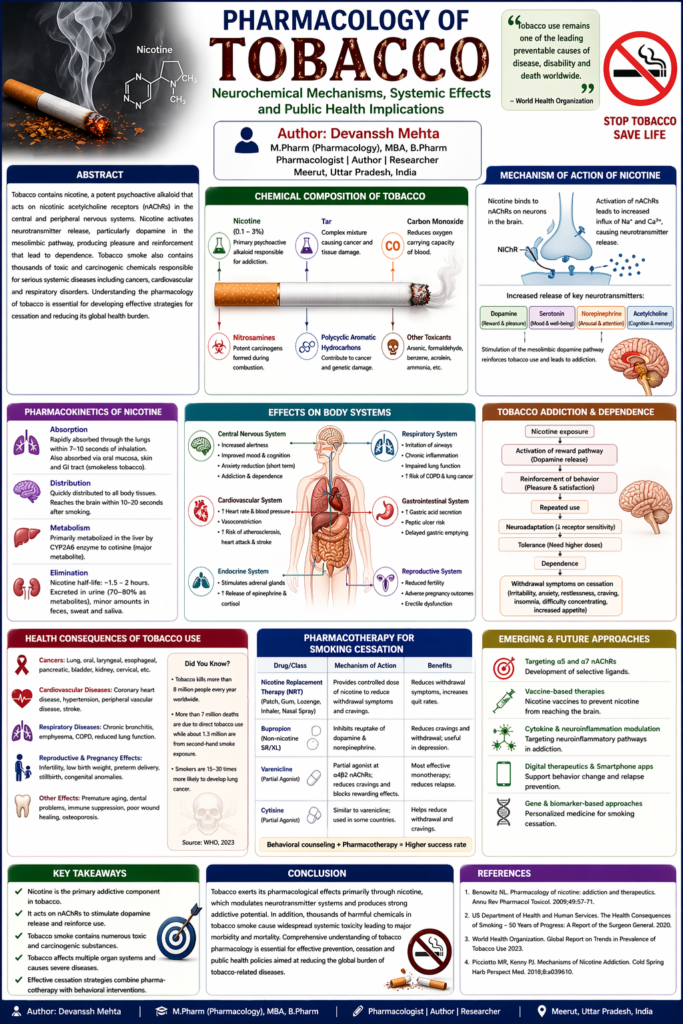
Chemical Composition of Tobacco
Tobacco contains a complex mixture of chemical compounds including:
• Nicotine (primary psychoactive alkaloid)
• Tar
• Carbon monoxide
• Nitrosamines
• Polycyclic aromatic hydrocarbons
Many of these compounds possess toxic and carcinogenic properties.
Mechanism of Action of Nicotine
Nicotine acts primarily on nicotinic acetylcholine receptors (nAChRs) in the nervous system.
Dopamine Release
Nicotine stimulates dopamine release in the brain’s reward pathway, reinforcing addictive behavior.
Neurotransmitter Modulation
Nicotine increases the release of several neurotransmitters including:
• Dopamine
• Serotonin
• Norepinephrine
• Acetylcholine
Pharmacokinetics of Nicotine
Absorption
Nicotine is rapidly absorbed through the lungs during cigarette smoking.
Distribution
The compound quickly reaches the brain within seconds of inhalation.
Metabolism
Nicotine is metabolized primarily in the liver by the enzyme CYP2A6.
Excretion
Nicotine metabolites are excreted in urine.
Systemic Physiological Effects
Tobacco affects multiple organ systems:
Cardiovascular System
• Increased heart rate
• Elevated blood pressure
• Increased risk of heart disease
Respiratory System
• Chronic inflammation
• Impaired lung function
• Increased risk of lung cancer
Central Nervous System
• Addiction and dependence
• Mood alterations
Tobacco Addiction and Dependence
Nicotine addiction involves neuroadaptations in the brain’s reward circuitry. Repeated exposure leads to tolerance and withdrawal symptoms upon cessation.
Smoking Cessation Pharmacotherapy
Pharmacological treatments for tobacco dependence include:
• Nicotine replacement therapy
• Bupropion
• Varenicline
These therapies help reduce withdrawal symptoms and cravings.
Public Health Implications
Tobacco use represents a major global health challenge. Effective tobacco control policies and smoking cessation programs are essential for reducing disease burden.
Conclusion
The pharmacology of tobacco is dominated by the complex neurochemical actions of nicotine, which influence multiple neurotransmitter systems and produce strong reinforcing effects leading to addiction. In addition to nicotine, numerous toxic compounds present in tobacco smoke contribute to the development of severe health conditions affecting the cardiovascular, respiratory, and nervous systems. Continued research in tobacco pharmacology and addiction neuroscience is essential for developing more effective interventions to reduce tobacco-related morbidity and mortality.
References (Harvard Style)
Benowitz, N.L., 2009. Pharmacology of nicotine: addiction and therapeutics. Annual Review of Pharmacology and Toxicology, 49, pp.57–71.
U.S. Surgeon General, 2020. Smoking Cessation: A Report of the Surgeon General. Washington DC.
WHO, 2021. Global Tobacco Epidemic Report. Geneva: World Health Organization.