

Devanssh Mehta
M.Pharm (Pharmacology), MBA, B.Pharm
Pharmacologist | Author | Researcher
Meerut, Uttar Pradesh, India
Abstract
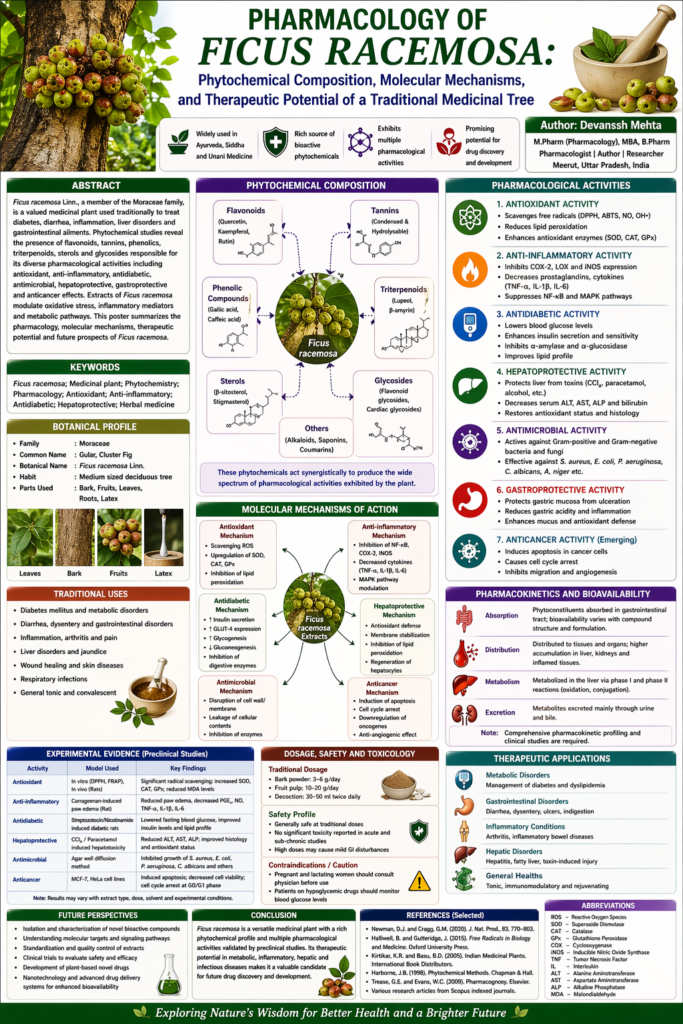
Ficus racemosa Linn., a member of the Moraceae family, is a widely distributed medicinal plant extensively used in traditional systems of medicine such as Ayurveda, Siddha, and Unani. The plant, commonly known as the cluster fig or gular tree, has been traditionally employed for the treatment of metabolic disorders, gastrointestinal diseases, inflammatory conditions, and hepatic dysfunctions. In recent decades, increasing scientific interest in plant-based therapeutics has prompted extensive pharmacological investigations into the bioactive constituents and biological activities of Ficus racemosa.
Phytochemical analyses have revealed that various parts of the plant contain a diverse array of secondary metabolites including flavonoids, phenolic compounds, tannins, sterols, triterpenoids, and glycosides. These bioactive constituents are believed to be responsible for the plant’s multiple pharmacological activities such as antioxidant, anti-inflammatory, antidiabetic, hepatoprotective, antimicrobial, gastroprotective, and anticancer effects. Experimental studies conducted using in vitro and in vivo models have demonstrated that extracts of Ficus racemosa modulate oxidative stress pathways, regulate inflammatory mediators, and influence metabolic processes involved in glucose homeostasis.
Furthermore, several phytoconstituents isolated from Ficus racemosa have shown promising therapeutic potential through modulation of molecular signaling pathways associated with cellular proliferation, apoptosis, and immune responses. Despite these promising findings, clinical investigations evaluating the efficacy and safety of Ficus racemosa-derived formulations remain limited.
This review article provides a comprehensive analysis of the pharmacology of Ficus racemosa, including its phytochemical composition, molecular mechanisms of action, pharmacokinetics, pharmacological activities, and therapeutic potential. The review also highlights current research gaps and future perspectives for the development of plant-derived pharmacotherapeutic agents based on this traditional medicinal plant.
Keywords
Ficus racemosa; phytopharmacology; medicinal plants; antioxidant activity; herbal therapeutics
1. Introduction
Natural products have historically served as a cornerstone for the discovery of pharmacologically active compounds and remain one of the most important sources of novel therapeutic agents in modern medicine. A substantial proportion of currently used pharmaceuticals are derived either directly or indirectly from plant-based compounds, highlighting the continuing relevance of medicinal plants in drug discovery and pharmacological research (Newman and Cragg, 2020).
Traditional systems of medicine such as Ayurveda, Traditional Chinese Medicine, and indigenous herbal practices have long recognized the therapeutic value of plant-based remedies. Many medicinal plants used in these systems contain complex mixtures of bioactive compounds that interact with multiple molecular targets within the human body. This multi-target pharmacological profile often contributes to their therapeutic efficacy in treating complex diseases.
Among the numerous medicinal plants utilized in traditional medicine, Ficus racemosa Linn. occupies a prominent position due to its extensive ethnomedicinal use and pharmacological potential. The plant belongs to the family Moraceae and is widely distributed in tropical and subtropical regions of Asia, including India, Sri Lanka, Bangladesh, and Southeast Asia.
Ficus racemosa is commonly known as the cluster fig tree or gular tree. It is characterized by a large deciduous structure with distinctive clusters of fig-like fruits that grow directly on the trunk and branches. Various parts of the plant, including bark, fruits, leaves, latex, and roots, have been traditionally used for medicinal purposes.
In Ayurvedic medicine, Ficus racemosa is described as possessing several therapeutic properties including antidiabetic, anti-inflammatory, astringent, and digestive actions. The bark of the plant is particularly valued for its medicinal applications and is commonly used in herbal formulations for the treatment of gastrointestinal disorders and metabolic diseases.
The increasing prevalence of chronic diseases such as diabetes mellitus, cardiovascular disorders, inflammatory diseases, and cancer has renewed interest in plant-derived pharmacotherapeutic agents. Natural compounds present in medicinal plants often possess antioxidant and anti-inflammatory properties that may help prevent or mitigate disease progression.
Phytochemical investigations of Ficus racemosa have revealed a rich diversity of secondary metabolites including flavonoids, phenolic acids, tannins, triterpenoids, sterols, and glycosides. Many of these compounds exhibit potent biological activities and have been implicated in the therapeutic effects of the plant.
Oxidative stress represents a key factor in the pathogenesis of numerous chronic diseases. Reactive oxygen species generated during oxidative stress can damage cellular components including DNA, proteins, and lipids. Antioxidant compounds derived from medicinal plants play an important role in neutralizing these reactive molecules and protecting cells from oxidative damage (Halliwell and Gutteridge, 2015).
In addition to their antioxidant properties, phytochemicals present in Ficus racemosa have demonstrated anti-inflammatory activity by modulating inflammatory signaling pathways. Chronic inflammation is associated with the development of numerous pathological conditions including arthritis, cardiovascular disease, neurodegenerative disorders, and cancer.
Recent pharmacological studies have also highlighted the potential antidiabetic properties of Ficus racemosa. Extracts of the plant have been shown to reduce blood glucose levels and improve glucose tolerance in experimental models of diabetes. These effects are believed to result from modulation of insulin secretion and inhibition of carbohydrate metabolism enzymes.
Another important therapeutic property of Ficus racemosa is its hepatoprotective activity. Liver diseases represent a significant global health problem, and many plant-derived compounds have demonstrated protective effects against toxin-induced liver damage.
The pharmacological effects of Ficus racemosa are likely mediated through multiple molecular mechanisms involving antioxidant activity, regulation of inflammatory mediators, modulation of metabolic enzymes, and interaction with cellular signaling pathways.
Despite significant progress in phytochemical and pharmacological research, further studies are required to fully understand the pharmacokinetic properties, molecular mechanisms, and clinical applications of Ficus racemosa.
The present review aims to provide a comprehensive overview of the pharmacological profile of Ficus racemosa, highlighting its phytochemical constituents, biological activities, and therapeutic potential in the context of modern pharmacology and drug discovery.
2. Botanical Description
Ficus racemosa is a medium-sized deciduous tree belonging to the Moraceae family.
Key botanical features include:
• Height ranging from 15–20 meters
• Smooth grey bark
• Broad ovate leaves
• Clustered figs growing on trunk and branches
The plant grows widely in tropical forests and rural landscapes.
3. Phytochemical Constituents
Phytochemical investigations have identified numerous bioactive compounds in Ficus racemosa, including:
• Flavonoids (quercetin, kaempferol)
• Phenolic acids
• Tannins
• Triterpenoids
• Sterols
• Glycosides
These compounds contribute to the plant’s pharmacological properties.
4. Pharmacological Activities
4.1 Antioxidant Activity
Extracts of Ficus racemosa demonstrate strong antioxidant activity by scavenging free radicals and enhancing endogenous antioxidant enzymes such as superoxide dismutase and catalase.
4.2 Anti-inflammatory Activity
The plant inhibits inflammatory mediators including prostaglandins, cytokines, and nitric oxide through modulation of inflammatory signaling pathways.
4.3 Antidiabetic Activity
Experimental studies indicate that Ficus racemosa extracts reduce blood glucose levels and improve glucose metabolism in diabetic animal models.
4.4 Hepatoprotective Activity
Extracts of the plant protect liver tissues from toxin-induced damage by enhancing antioxidant defense mechanisms.
4.5 Antimicrobial Activity
Several studies have demonstrated antimicrobial activity against bacterial pathogens including Staphylococcus aureus and Escherichia coli.
5. Pharmacokinetics and Bioavailability
Although pharmacokinetic data remain limited, phytochemicals present in Ficus racemosa are believed to undergo metabolism in the liver and elimination via renal pathways.
Further studies are required to characterize the absorption, distribution, metabolism, and excretion profiles of these compounds.
6. Therapeutic Applications
Traditional and experimental uses include:
• Management of diabetes mellitus
• Treatment of gastrointestinal disorders
• Liver protection
• Anti-inflammatory therapy
• Wound healing and antimicrobial treatment
7. Future Perspectives
Future research directions include:
• Isolation of novel bioactive compounds
• Standardization of herbal formulations
• Clinical trials evaluating therapeutic efficacy
• Development of plant-derived pharmacological agents
8. Conclusion
Ficus racemosa represents an important medicinal plant with diverse pharmacological properties supported by both traditional knowledge and modern scientific research. Its rich phytochemical composition contributes to antioxidant, anti-inflammatory, antidiabetic, hepatoprotective, and antimicrobial activities. Continued investigation of this plant may lead to the development of novel therapeutic agents for the treatment of metabolic and inflammatory diseases.
References
Halliwell, B. and Gutteridge, J., 2015. Free Radicals in Biology and Medicine. Oxford University Press.
Newman, D.J. and Cragg, G.M., 2020. Natural products as sources of new drugs. Journal of Natural Products, 83(3), pp.770-803.
Trease, G.E. and Evans, W.C., 2009. Pharmacognosy. Elsevier.
Kirtikar, K.R. and Basu, B.D., 2005. Indian Medicinal Plants. Dehradun.