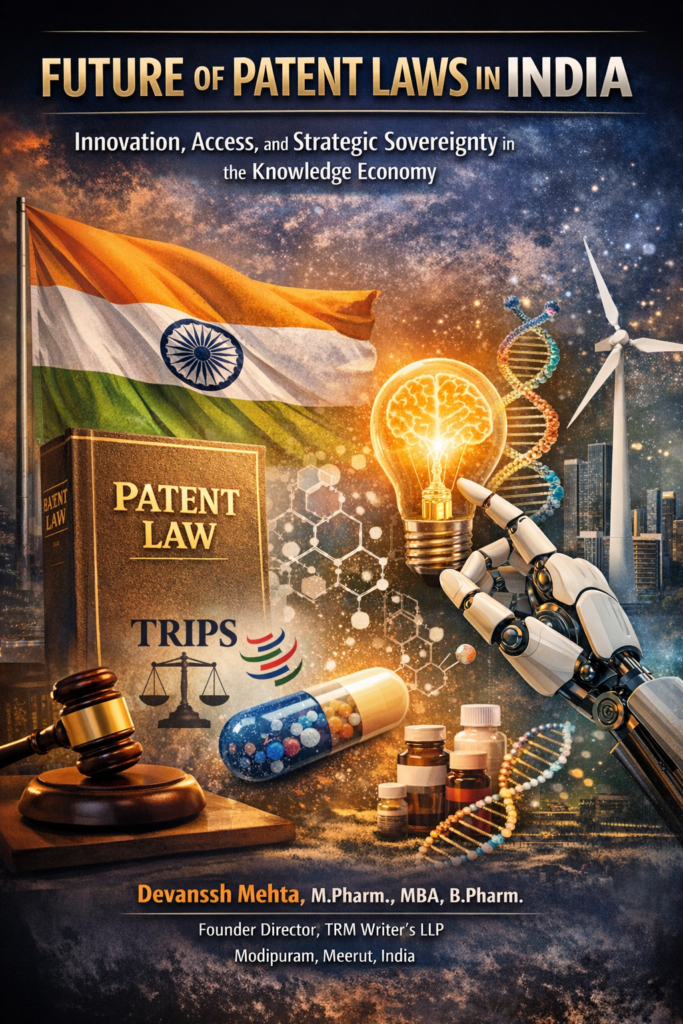
India’s patent regime stands at a decisive historical juncture where economic ambition, scientific transformation, and constitutional morality converge. Since the enactment of the Patents Act, 1970, India has consciously shaped its intellectual property architecture as an instrument of national development rather than a mere vehicle of private monopoly. The transition to a TRIPS-compliant product patent regime following India’s obligations under the World Trade Organization and the TRIPS Agreement marked a structural realignment with the global trade order. Yet compliance alone does not define the future. As India aspires to leadership in pharmaceuticals, biotechnology, artificial intelligence, green technologies, and digital therapeutics, patent governance must evolve beyond procedural administration toward strategic innovation stewardship. Simultaneously, constitutional guarantees under Article 21—judicially interpreted to include the right to health—require that exclusivity rights do not undermine equitable access to life-saving technologies. This refined review critically examines historical evolution, judicial doctrine, emerging technological complexities, administrative reform, geopolitical pressures, and ethical imperatives shaping India’s patent future. It argues for a calibrated intellectual property framework—balanced, development-oriented, and sovereignty-conscious—capable of harmonizing innovation incentives with social justice in an increasingly complex knowledge economy.
Keywords :
Patent Law; TRIPS; Pharmaceutical Innovation; Public Health; Intellectual Property Governance