

Author: Devanssh Mehta
M.Pharm (Pharmacology), MBA, B.Pharm
Pharmacologist | Author | Researcher
Meerut, Uttar Pradesh, India
Abstract
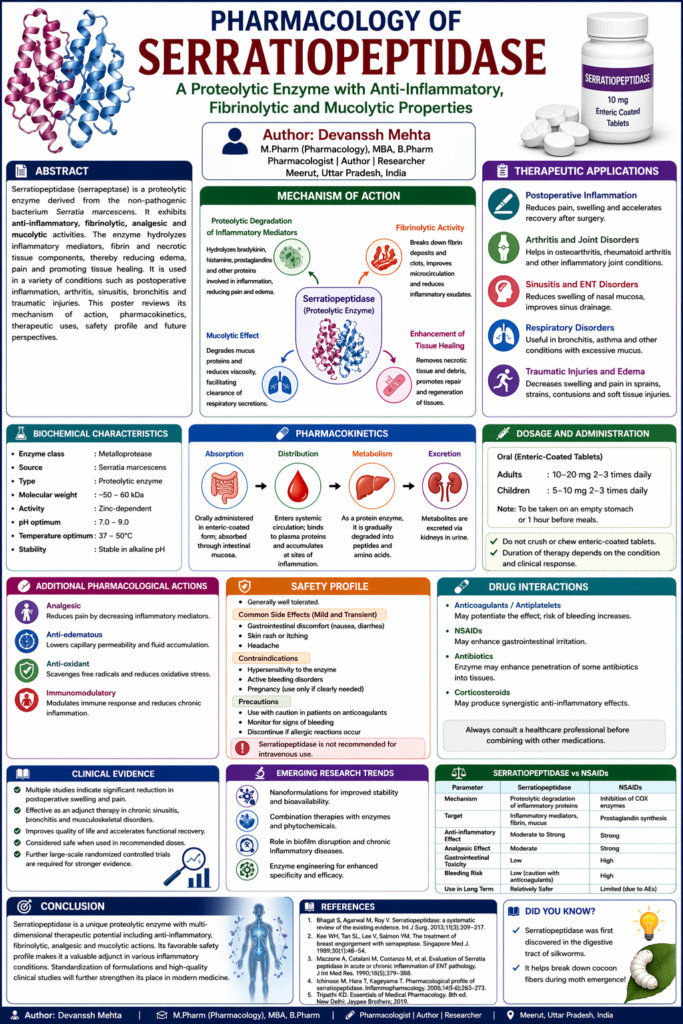
Serratiopeptidase, also known as serrapeptase, is a proteolytic enzyme widely recognized for its anti-inflammatory, fibrinolytic, and analgesic properties. Originally isolated from the non-pathogenic bacterium Serratia marcescens found in the digestive tract of silkworms, serratiopeptidase has gained considerable attention in modern pharmacology for its ability to reduce inflammation and promote tissue healing. The enzyme functions by hydrolyzing inflammatory mediators, fibrin, and necrotic tissue components, thereby facilitating improved microcirculation and accelerated resolution of inflammatory processes.
Unlike traditional non-steroidal anti-inflammatory drugs (NSAIDs), which primarily inhibit cyclooxygenase enzymes to suppress prostaglandin synthesis, serratiopeptidase exerts its therapeutic effects through enzymatic degradation of inflammatory proteins and biofilm components. This unique mechanism contributes to reduced edema, decreased pain, and enhanced recovery in various inflammatory conditions. Clinically, serratiopeptidase has been used in the management of postoperative inflammation, chronic sinusitis, arthritis, traumatic injuries, and respiratory disorders characterized by excessive mucus accumulation.
The pharmacokinetic properties of serratiopeptidase demonstrate that the enzyme can be absorbed through the intestinal mucosa when administered orally in enteric-coated formulations. Once absorbed into the bloodstream, it forms complexes with plasma proteins and accumulates preferentially at sites of inflammation. Despite its therapeutic benefits, questions regarding dosage standardization, long-term safety, and evidence-based clinical efficacy remain areas of ongoing research.
This review article provides a comprehensive overview of the pharmacology of serratiopeptidase, including its biochemical characteristics, mechanisms of action, pharmacokinetic properties, therapeutic applications, and safety considerations. Furthermore, the article discusses emerging research trends related to enzyme-based anti-inflammatory therapies and the potential role of serratiopeptidase in integrative medicine and advanced pharmaceutical formulations.
Keywords
Serratiopeptidase; proteolytic enzyme; anti-inflammatory pharmacology; fibrinolytic therapy; enzyme therapeutics
Introduction
Inflammation represents a fundamental biological response that occurs in reaction to tissue injury, infection, or immune system activation. While inflammation serves as a protective mechanism aimed at eliminating harmful stimuli and initiating tissue repair, excessive or prolonged inflammatory responses can lead to tissue damage and chronic disease. Consequently, the development of effective anti-inflammatory therapies remains a central focus in modern pharmacology.
Conventional anti-inflammatory medications, particularly non-steroidal anti-inflammatory drugs (NSAIDs), have long been used to alleviate pain and reduce inflammation. These drugs exert their pharmacological effects primarily through inhibition of cyclooxygenase enzymes responsible for prostaglandin synthesis. Although NSAIDs are effective in managing inflammatory conditions, their long-term use is associated with adverse effects including gastrointestinal irritation, renal dysfunction, and cardiovascular risks.
In recent decades, interest has grown in alternative anti-inflammatory agents that operate through different pharmacological mechanisms and may offer improved safety profiles. Among these agents, serratiopeptidase has emerged as a promising enzyme-based therapeutic with unique pharmacological properties.
Serratiopeptidase is a proteolytic enzyme produced by the bacterium Serratia marcescens. The enzyme was originally discovered in the digestive tract of silkworms, where it assists in the breakdown of cocoon fibers during the emergence of the moth. This natural biological function reflects the enzyme’s strong proteolytic activity and ability to degrade structural proteins.
In pharmaceutical applications, serratiopeptidase has been used for its ability to break down inflammatory proteins, fibrin deposits, and necrotic tissue components. These actions contribute to improved circulation, reduced swelling, and accelerated resolution of inflammatory processes.
The pharmacological significance of serratiopeptidase lies in its multifaceted therapeutic mechanisms. Unlike traditional anti-inflammatory drugs that target specific biochemical pathways, serratiopeptidase acts enzymatically on a variety of inflammatory substrates. This broad mechanism of action allows it to reduce edema, enhance drainage of inflammatory exudates, and promote tissue healing.
Another important feature of serratiopeptidase is its fibrinolytic activity. The enzyme can degrade fibrin, a protein involved in blood clot formation and inflammatory tissue remodeling. By breaking down fibrin deposits, serratiopeptidase helps restore normal microcirculation and reduce localized swelling.
In addition to its anti-inflammatory and fibrinolytic properties, serratiopeptidase has demonstrated potential mucolytic effects. The enzyme can break down mucus proteins in respiratory secretions, facilitating easier expectoration in conditions such as bronchitis and sinusitis. This property has led to its use as an adjunct therapy in respiratory disorders characterized by excessive mucus production.
From a pharmacokinetic perspective, serratiopeptidase presents unique characteristics compared with conventional small-molecule drugs. As a protein enzyme, it must be protected from degradation by gastric acid during oral administration. Consequently, serratiopeptidase formulations are typically manufactured as enteric-coated tablets, allowing the enzyme to reach the intestine where absorption occurs.
Once absorbed, serratiopeptidase enters systemic circulation and binds to plasma proteins, forming enzyme-protein complexes that remain enzymatically active. These complexes are believed to accumulate preferentially at sites of inflammation, where they exert therapeutic effects.
Despite its growing popularity as an anti-inflammatory agent, the clinical use of serratiopeptidase remains a topic of ongoing scientific discussion. While several studies have reported beneficial effects in reducing postoperative swelling and pain, other researchers have called for more rigorous clinical trials to establish definitive evidence of efficacy and safety.
In the context of modern pharmacology, enzyme-based therapeutics represent an emerging frontier in drug development. Advances in biotechnology and protein engineering are enabling the design of highly specific enzymatic drugs capable of targeting complex biological pathways.
Understanding the pharmacological properties of serratiopeptidase therefore holds significant relevance for the development of novel anti-inflammatory strategies and enzyme-based therapeutic agents.
The objective of the present review is to provide a comprehensive analysis of serratiopeptidase pharmacology, focusing on its biochemical characteristics, mechanisms of action, pharmacokinetics, therapeutic applications, safety profile, and future research directions.
Biochemical Characteristics of Serratiopeptidase
Serratiopeptidase is classified as a metalloprotease enzyme belonging to the group of proteolytic enzymes capable of hydrolyzing peptide bonds in proteins.
Key biochemical features include:
• Molecular weight approximately 50–60 kDa
• Zinc-dependent catalytic activity
• Ability to degrade fibrin and inflammatory mediators
Mechanism of Action
The pharmacological actions of serratiopeptidase arise from several biological mechanisms:
Proteolytic Degradation of Inflammatory Mediators
The enzyme breaks down proteins associated with inflammation, reducing swelling and tissue damage.
Fibrinolytic Activity
Serratiopeptidase dissolves fibrin deposits that accumulate at sites of inflammation.
Mucolytic Effects
The enzyme degrades mucus proteins, improving respiratory secretion clearance.
Pharmacokinetics
Absorption
Orally administered serratiopeptidase is absorbed through the intestinal mucosa in enteric-coated formulations.
Distribution
The enzyme binds to plasma proteins and accumulates at sites of inflammation.
Metabolism and Excretion
As a protein enzyme, it is eventually degraded into amino acids and eliminated from the body.
Therapeutic Applications
Serratiopeptidase is used in several clinical conditions:
• Postoperative inflammation
• Arthritis and joint pain
• Sinusitis and bronchitis
• Traumatic injuries and edema
Safety and Adverse Effects
Although generally considered safe, potential side effects include:
• Gastrointestinal discomfort
• Skin hypersensitivity reactions
• Rare bleeding complications
Emerging Research and Future Perspectives
Current research areas include:
• Enzyme-based anti-inflammatory drugs
• Biofilm disruption therapies
• Nanotechnology-based enzyme delivery
Conclusion
Serratiopeptidase represents a unique enzyme-based therapeutic agent with significant anti-inflammatory and fibrinolytic properties. Its ability to degrade inflammatory proteins and promote tissue healing distinguishes it from conventional anti-inflammatory drugs. Continued clinical research and pharmacological investigation are essential to fully understand its therapeutic potential and establish standardized treatment protocols.
References (Harvard Style)
Bhagat, S., Agarwal, M. and Roy, V., 2013. Serratiopeptidase: a systematic review of the existing evidence. International Journal of Surgery, 11(3), pp.209–217.
Kee, W.H., Tan, S.L., Lee, V. and Salmon, Y.M., 1989. The treatment of breast engorgement with serrapeptase. Singapore Medical Journal, 30(1), pp.48–54.
Mazzone, A., Catalani, M., Costanzo, M., Drusian, A., Mandoli, A., Russo, S., Guarini, E. and Vesperini, G., 1990. Evaluation of Serratia peptidase in acute or chronic inflammation of otorhinolaryngology pathology. Journal of International Medical Research, 18(5), pp.379–388.