

Author: Devanssh Mehta
M.Pharm (Pharmacology), MBA, B.Pharm
Pharmacologist | Author | Researcher
Meerut, Uttar Pradesh, India
Abstract
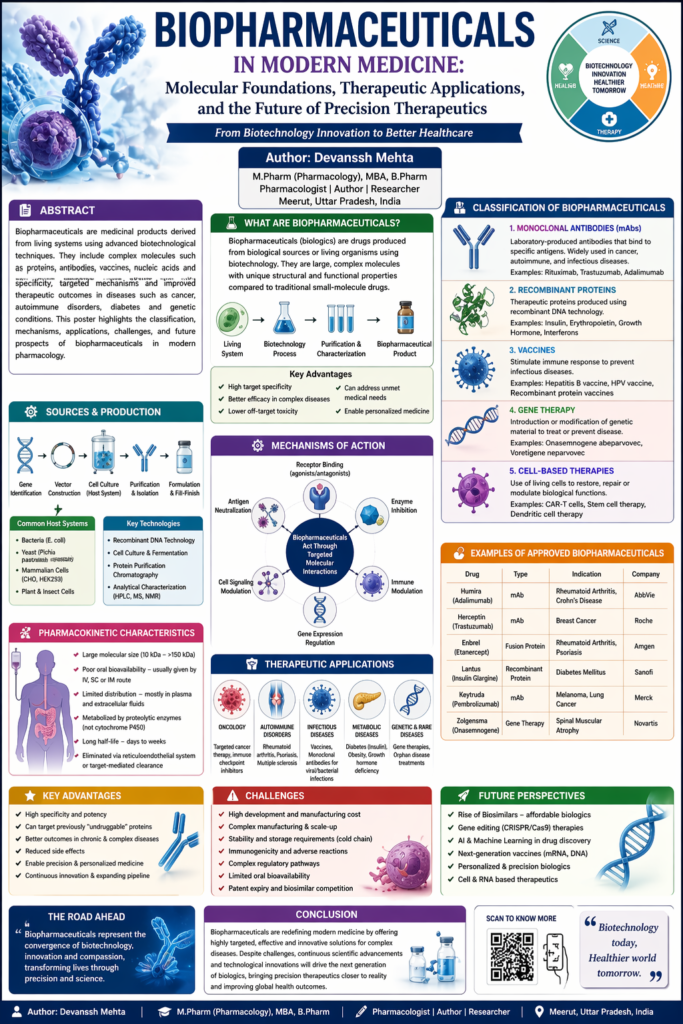
The rapid evolution of biotechnology has transformed the landscape of modern pharmacology, leading to the emergence of biopharmaceuticals as a major class of therapeutic agents. Biopharmaceuticals are medicinal products derived from biological sources using advanced biotechnological techniques such as recombinant DNA technology, monoclonal antibody production, and cell culture engineering. Unlike traditional small-molecule drugs synthesized through chemical processes, biopharmaceuticals consist of complex macromolecules including proteins, peptides, nucleic acids, and living cells. Over the past three decades, these therapeutics have revolutionized the treatment of numerous chronic and life-threatening diseases, including cancer, autoimmune disorders, metabolic diseases, and rare genetic conditions.
The pharmacological significance of biopharmaceuticals lies in their high specificity, targeted mechanisms of action, and ability to interact with biological pathways at the molecular level. Major categories of biopharmaceuticals include monoclonal antibodies, recombinant proteins, vaccines, gene therapies, and cell-based therapeutics. These agents offer advantages such as improved therapeutic efficacy and reduced off-target toxicity compared with conventional drugs. However, challenges related to manufacturing complexity, immunogenicity, stability, and regulatory approval remain significant considerations in the development and commercialization of biopharmaceutical products.
This review article provides a comprehensive overview of the scientific principles underlying biopharmaceuticals, including their classification, mechanisms of action, pharmacokinetic characteristics, therapeutic applications, and regulatory considerations. Additionally, the article explores emerging trends such as biosimilars, personalized medicine, gene-editing technologies, and the integration of artificial intelligence in biopharmaceutical discovery. Understanding the expanding role of biopharmaceuticals is essential for advancing precision medicine and addressing the growing burden of complex diseases in the twenty-first century.
Keywords
Biopharmaceuticals; biotechnology; monoclonal antibodies; recombinant proteins; precision medicine
Introduction
The development of modern pharmacology has historically been driven by the discovery and synthesis of small-molecule drugs derived from chemical compounds. These drugs have played a fundamental role in treating infectious diseases, metabolic disorders, and numerous other medical conditions. However, many complex diseases—including cancer, autoimmune disorders, and genetic abnormalities—are not adequately addressed by conventional small-molecule therapeutics. As scientific understanding of molecular biology and biotechnology has expanded, a new class of therapeutic agents known as biopharmaceuticals has emerged as a transformative force in modern medicine.
Biopharmaceuticals, also referred to as biological therapeutics or biologics, are medicinal products derived from living organisms using advanced biotechnological methods. These drugs typically consist of large, structurally complex molecules such as proteins, peptides, monoclonal antibodies, nucleic acids, or genetically modified cells. Unlike traditional pharmaceuticals synthesized through chemical reactions, biopharmaceuticals are produced using biological systems such as microbial fermentation, mammalian cell culture, or recombinant DNA technology.
The origins of the biopharmaceutical industry can be traced to the advent of recombinant DNA technology in the late twentieth century. One of the earliest and most significant milestones in this field was the development of recombinant human insulin in 1982, which replaced insulin extracted from animal sources and provided a safer and more consistent treatment option for patients with diabetes mellitus. This breakthrough demonstrated the immense potential of biotechnology in drug development and paved the way for the expansion of biopharmaceutical research.
Since then, the global biopharmaceutical industry has grown exponentially, with hundreds of biologic drugs approved for clinical use. These therapeutics have revolutionized the management of diseases such as cancer, rheumatoid arthritis, multiple sclerosis, and inflammatory bowel disease. Monoclonal antibodies, in particular, have become one of the most successful classes of biopharmaceuticals due to their ability to selectively target disease-associated molecules.
From a pharmacological perspective, the primary advantage of biopharmaceuticals lies in their specificity. Conventional small-molecule drugs often interact with multiple biological targets, leading to unintended side effects. In contrast, biopharmaceuticals are designed to interact with specific molecular pathways, thereby increasing therapeutic precision and reducing off-target toxicity.
Another important aspect of biopharmaceutical development is the integration of molecular biology and genetic engineering techniques. Recombinant DNA technology allows scientists to manipulate genetic material in order to produce therapeutic proteins with desired properties. This approach has enabled the development of a wide range of biologic drugs, including recombinant hormones, cytokines, and growth factors.
The growing importance of biopharmaceuticals is also reflected in the increasing prevalence of personalized medicine. Advances in genomics and molecular diagnostics have made it possible to identify specific genetic mutations associated with disease. Biopharmaceutical therapies can then be designed to target these molecular abnormalities, thereby improving treatment outcomes for individual patients.
Despite their therapeutic benefits, biopharmaceuticals also present several challenges. The production of biologic drugs is considerably more complex and expensive than that of traditional pharmaceuticals. Manufacturing processes require sophisticated bioreactor systems, stringent quality control measures, and highly specialized expertise. Additionally, the structural complexity of biologic molecules can lead to stability issues and potential immunogenic reactions in patients.
Regulatory considerations also play a critical role in the development and approval of biopharmaceutical products. Regulatory agencies such as the United States Food and Drug Administration and the European Medicines Agency have established rigorous guidelines for evaluating the safety, efficacy, and quality of biologic drugs.
Furthermore, the emergence of biosimilars has introduced a new dimension to the biopharmaceutical landscape. Biosimilars are biologic products that are highly similar to previously approved reference biologics. These products have the potential to increase patient access to biologic therapies by reducing treatment costs.
In the context of modern pharmacology, biopharmaceuticals represent a convergence of biotechnology, molecular biology, and clinical medicine. The continued advancement of this field is expected to play a pivotal role in addressing some of the most challenging diseases facing global healthcare systems.
Therefore, the objective of this review is to provide a comprehensive analysis of biopharmaceuticals, focusing on their molecular foundations, classification, mechanisms of action, therapeutic applications, and future prospects. By synthesizing current scientific knowledge, this article aims to highlight the transformative impact of biopharmaceuticals on modern medicine and their potential role in shaping the future of precision therapeutics.
Classification of Biopharmaceuticals
Biopharmaceuticals can be broadly categorized into several major groups based on their molecular structure and therapeutic applications.
Monoclonal Antibodies
Monoclonal antibodies are laboratory-produced molecules designed to bind to specific antigens. These antibodies are widely used in oncology, immunology, and infectious disease therapy.
Recombinant Proteins
Recombinant proteins include therapeutic proteins produced through recombinant DNA technology. Examples include insulin, growth hormone, and erythropoietin.
Vaccines
Vaccines stimulate the immune system to protect against infectious diseases. Modern vaccines may include recombinant protein vaccines and nucleic acid-based vaccines.
Gene Therapy
Gene therapy involves the introduction of genetic material into cells to correct or replace defective genes responsible for disease.
Cell-Based Therapies
Cell therapies involve the use of living cells to restore or modify biological functions.
Pharmacological Mechanisms of Biopharmaceuticals
Biopharmaceuticals exert their therapeutic effects through highly specific molecular interactions. These mechanisms may include receptor binding, enzyme inhibition, immune modulation, or gene expression regulation.
Monoclonal antibodies, for example, can bind to specific cell surface receptors or antigens, blocking signaling pathways involved in disease progression.
Pharmacokinetics of Biopharmaceuticals
Biopharmaceutical drugs exhibit unique pharmacokinetic characteristics due to their large molecular size and biological nature. Unlike small-molecule drugs, many biologics are administered via intravenous or subcutaneous injection.
Their absorption, distribution, metabolism, and elimination processes differ significantly from those of conventional pharmaceuticals.
Therapeutic Applications
Biopharmaceuticals have transformed the treatment of numerous diseases including:
• Cancer
• Autoimmune disorders
• Diabetes
• Genetic diseases
• Infectious diseases
Challenges in Biopharmaceutical Development
Major challenges include:
• High production costs
• Complex manufacturing processes
• Stability issues
• Immunogenicity risks
• Regulatory challenges
Future Perspectives
Future research directions include:
• Biosimilars development
• Gene editing technologies
• Artificial intelligence in drug discovery
• Personalized medicine
Conclusion
Biopharmaceuticals represent one of the most significant advancements in modern pharmacology. Their ability to target specific molecular pathways has revolutionized the treatment of many complex diseases. Continued research and technological innovation are expected to further expand the therapeutic potential of biopharmaceuticals in the coming decades.
References (Harvard Style)
Walsh, G., 2018. Biopharmaceutical benchmarks. Nature Biotechnology, 36(12), pp.1136–1145.
Leader, B., Baca, Q.J. and Golan, D.E., 2008. Protein therapeutics: a summary and pharmacological classification. Nature Reviews Drug Discovery, 7(1), pp.21–39.
Walsh, G., 2014. Biopharmaceuticals: recent approvals and likely directions. Trends in Biotechnology, 32(5), pp.245–250.
World Health Organization, 2021. Biological medicines and biosimilars. Geneva: WHO.