

Archives: articles
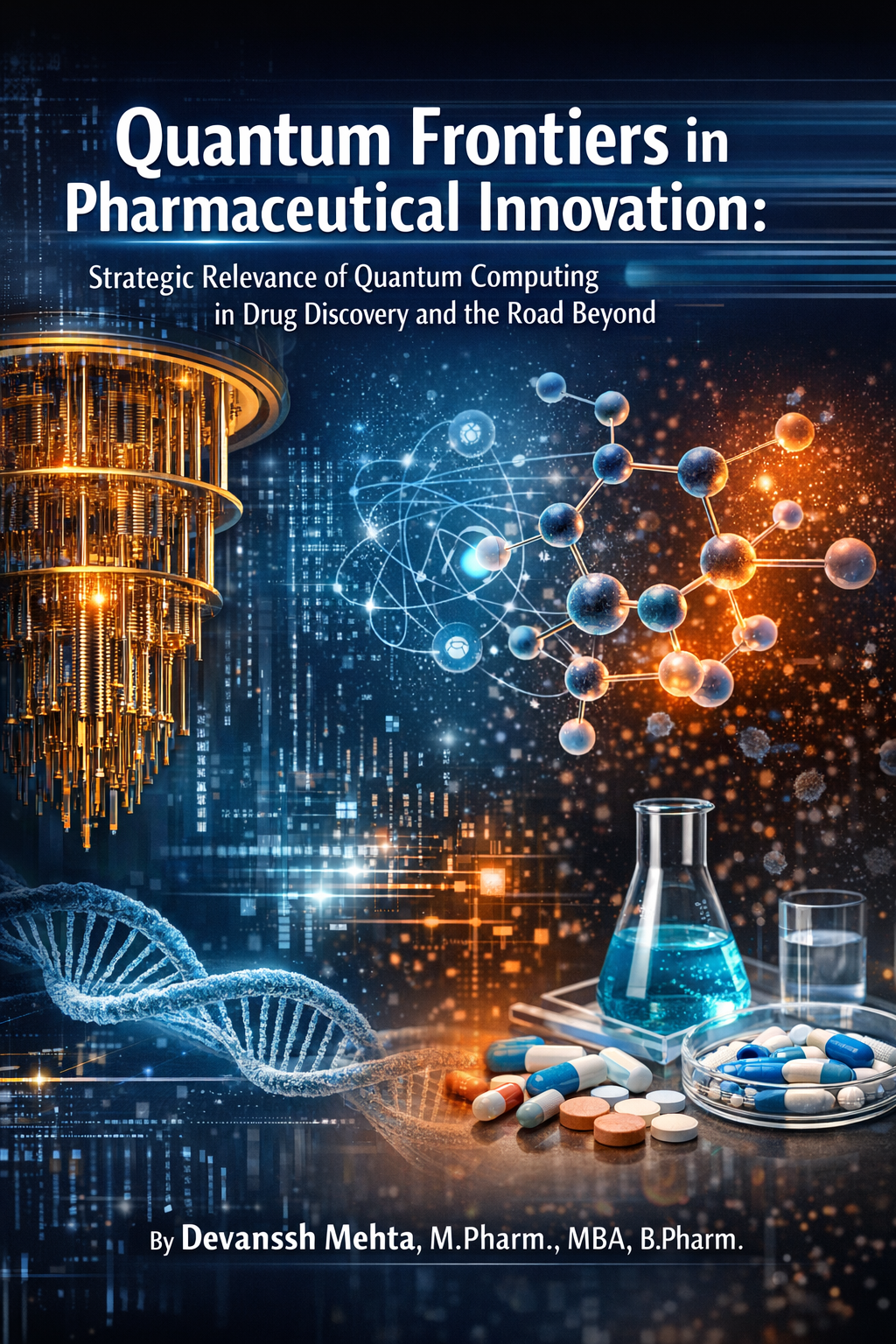
Quantum Frontiers in Pharmaceutical Innovation: Strategic Relevance of Quantum Computing in Drug Discovery and the Road Beyond
By Devanssh Mehta, M.Pharm., MBA, B.Pharm.
Emerging Trends in Bioprinting in the Field of Regenerative Medicine
Abstract Bioprinting stands at the frontier of regenerative medicine, redefining how tissues and organs are engineered, modeled, and ultimately translated into clinical solutions. This review synthesizes emerging trends that are accelerating the maturity of bioprinting from experimental paradigms to clinical relevance. Key advances include multi-material and multi-cellular printing architectures, integration of vascular and neural networks, incorporation of bioelectric and mechanical…
Neurophytotherapy in Cognitive Decline: Therapeutic Promise and Scientific Rationale of Plant-Based Medicines in Alzheimer’s Disease
Alzheimer’s disease (AD) represents the most common cause of dementia worldwide, accounting for approximately 60–70% of all dementia cases. It is characterized clinically by progressive memory loss, cognitive impairment, behavioral changes, and functional decline, ultimately leading to complete dependency and mortality. Pathologically, AD is marked by extracellular deposition of amyloid-β (Aβ) plaques, intracellular neurofibrillary tangles composed of hyperphosphorylated tau protein,…
Nano-Enabled Therapeutics and the Redefinition of Modern Pharmacy: Significance, Scope, and Strategic Implications of Nanotechnology in Pharmaceutical Sciences
The pharmaceutical sciences have historically evolved through progressive refinement of drug molecules, dosage forms, and delivery systems. Despite remarkable advances in medicinal chemistry and biotechnology, conventional pharmaceutical formulations continue to face intrinsic limitations, including poor aqueous solubility, low bioavailability, non-specific distribution, systemic toxicity, and inadequate therapeutic index. These challenges have prompted the exploration of novel technological paradigms capable of transcending…
Strategic Stability in a Hyperconnected Age: Reinterpreting John Nash’s Equilibrium for Learning, Competition, and Cooperation in the Digital World
The digital transformation of society has profoundly altered the nature of human interaction, economic exchange, and strategic decision-making. Digital platforms, algorithmic systems, artificial intelligence, and networked markets have created environments in which decisions are no longer isolated, linear, or purely human-driven. Instead, contemporary decision-making unfolds within complex, interdependent systems where outcomes depend not only on individual choices but on the…
Influence of Generative Artificial Intelligence in Business Development and Management
The digital transformation of business has historically progressed through distinct technological waves, including mechanization, computerization, and automation. The current emergence of generative artificial intelligence (AI) represents a qualitative shift within this trajectory, as it extends automation beyond routine and rule-based tasks into domains traditionally reserved for human cognition, creativity, and judgment. Generative AI systems, such as large language models and…
Molecular Signal Transduction in Immune-Mediated Neuropathy
Guillain–Barré syndrome (GBS) represents a spectrum of acute immune-mediated neuropathies affecting the peripheral nervous system. It is clinically characterized by ascending muscle weakness, areflexia, sensory abnormalities, and, in severe cases, respiratory failure and autonomic instability. GBS remains the leading cause of acute flaccid paralysis worldwide, with an incidence of approximately 1–2 cases per 100,000 population annually. Although the clinical presentation…